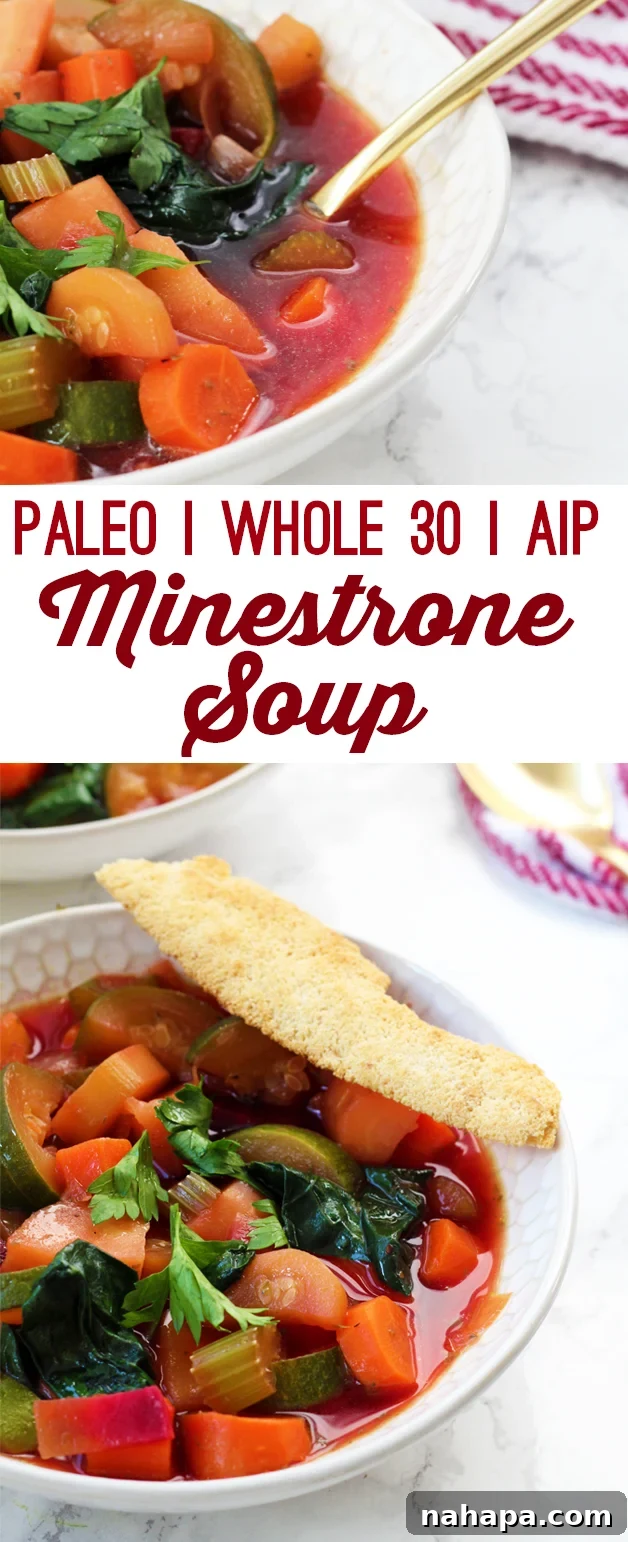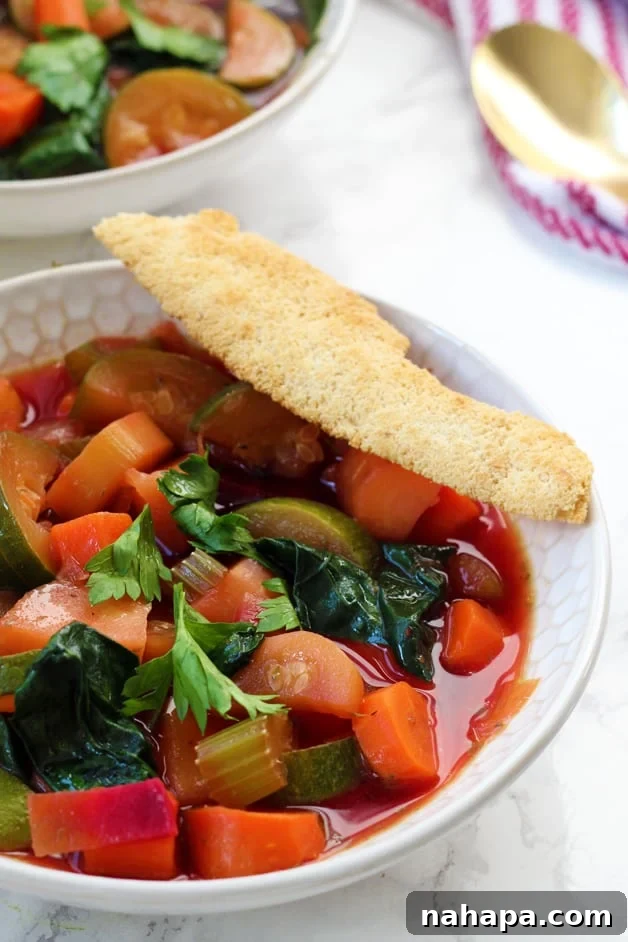
Nourishing Paleo Minestrone Soup: An AIP & Whole30 Compliant Italian Classic
For many, the rich, hearty flavors and comforting aromas of Italian cuisine hold a special place in their hearts. Growing up with Italian heritage on Long Island, it was certainly a staple in my life. The indulgence of cheese, the satisfaction of perfectly cooked pasta, and the warmth of a rustic sauce created an unforgettable culinary experience. As a child, while my dad often opted for a classic like chicken parmigiana and I inevitably gravitated towards pizza, my mom frequently chose minestrone soup. This choice always puzzled me; why soup when there was pizza? However, as my palate matured and my dietary needs evolved, I began to appreciate the profound beauty in warm, nourishing, and nutrient-dense soups. This journey led me to embrace a healthier lifestyle, adapting beloved recipes to fit dietary protocols like Paleo, Whole30, and the Autoimmune Protocol (AIP).
The desire to enjoy those cherished Italian flavors without compromising on my health goals sparked the creation of this Paleo Minestrone Soup. This recipe isn’t just a delicious meal; it’s a testament to how traditional comfort food can be transformed into something incredibly nourishing and compliant with even the strictest dietary guidelines. It’s designed to be completely free of grains, legumes, dairy, and nightshades (with an easy modification), making it perfect for anyone following an AIP, Whole30, or general Paleo diet. Prepare to rediscover the soulful essence of minestrone, crafted with wholesome ingredients that truly make you feel good from the inside out.
What is Minestrone Soup? A Traditional Italian Staple Reimagined
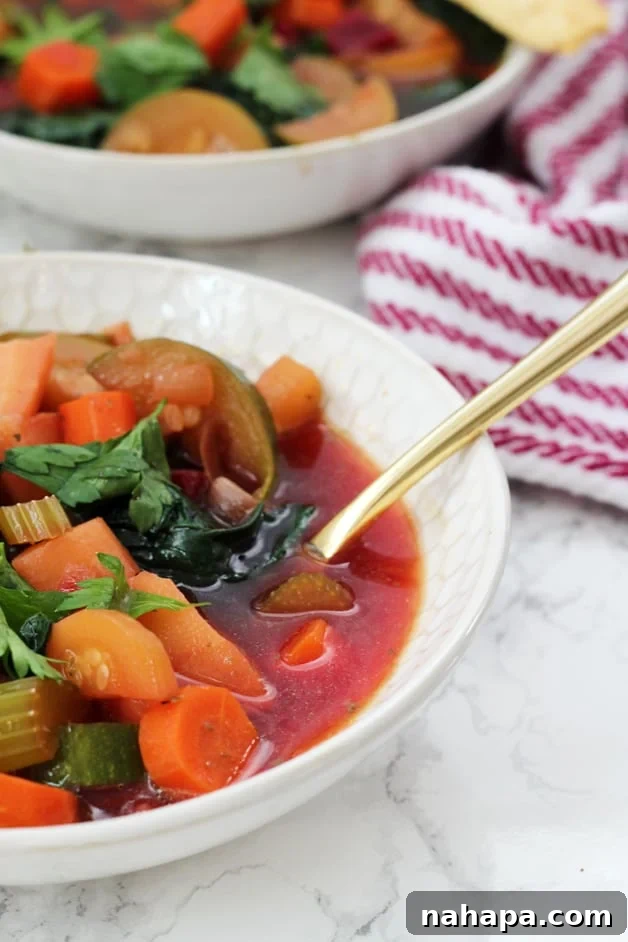
Minestrone is a thick, hearty Italian soup traditionally made with a variety of seasonal vegetables, often including tomatoes, onions, celery, and carrots. What distinguishes it further are common additions like beans (such as cannellini or kidney beans), small pasta, and a generous sprinkle of Parmesan cheese. While some variations may include meat, it’s frequently a vegetarian dish, known for its ability to transform simple garden produce into a comforting, full-bodied meal. The beauty of minestrone lies in its versatility and the warmth it brings, making it a beloved dish across Italy and beyond.
However, when adhering to specific dietary frameworks like Paleo, Whole30, or the Autoimmune Protocol (AIP), several of these traditional ingredients become off-limits. The challenge then becomes: how do you capture the authentic essence and robust flavor of minestrone without beans, pasta, or cheese? And for those on AIP, how do you navigate the exclusion of nightshades like tomatoes? This recipe masterfully overcomes these hurdles, proving that dietary restrictions don’t mean sacrificing flavor or comfort. By thoughtfully selecting compliant ingredients and focusing on a rich broth base with an abundance of diverse vegetables and aromatic herbs, we can create a minestrone that is both deeply satisfying and perfectly suited for these health-focused lifestyles.
Why Choose Paleo, Whole30, or AIP Minestrone?
Choosing a minestrone adapted for Paleo, Whole30, or AIP is about more than just avoiding certain foods; it’s about embracing a nutrient-dense approach to eating that supports overall health and well-being. For those following a Paleo diet, the focus is on whole, unprocessed foods, eliminating grains, legumes, and dairy that can often lead to digestive issues or inflammation. Whole30 takes this a step further, encouraging a 30-day reset to identify food sensitivities and reset eating habits, strictly prohibiting added sugars, alcohol, and processed ingredients.
The Autoimmune Protocol (AIP) is a more specialized elimination diet designed to help manage autoimmune conditions. It temporarily removes foods that commonly trigger inflammation and immune responses, including nightshades (like tomatoes, peppers, eggplants, and potatoes), eggs, nuts, seeds, and certain spices, in addition to the standard Paleo exclusions. This comprehensive approach aims to calm the immune system and support gut healing.
Our Paleo Minestrone Soup offers a delicious solution for all these protocols. It provides a hearty, flavorful meal packed with essential vitamins, minerals, and fiber from a wide array of vegetables. By replacing traditional pasta with nutrient-rich root vegetables like parsnips, and beans with other fibrous greens, we maintain the soup’s comforting texture and satiety. For AIP compliance, the clever substitution of beets for tomatoes ensures a beautiful color and subtle sweetness without any nightshade triggers. This makes our minestrone a fantastic choice for anyone looking to enjoy delicious Italian-inspired comfort food while prioritizing their health and adhering to specific dietary needs.
Key Ingredients for Our Wholesome Minestrone
Crafting the perfect Paleo, Whole30, and AIP minestrone relies on a selection of high-quality, compliant ingredients that work in harmony to build a rich and satisfying flavor profile. Each component plays a crucial role in delivering the authentic taste and nourishing benefits this soup is known for.
Bone Broth or Veggie Broth: The Flavorful Foundation
The base of any great soup is its broth, and our minestrone is no exception. You have the flexibility to choose either a high-quality bone broth or a nutrient-rich vegetable broth. Bone broth, often hailed for its collagen content, supports gut health, joint function, and skin elasticity, making it an excellent choice for those focused on healing and wellness. Look for bone broths made from grass-fed animals and free from added sugars or inflammatory oils. If you prefer a vegetarian or vegan option, a robust vegetable broth will provide a deep, savory foundation, enhancing the flavors of the fresh produce. Ensure your chosen broth is unsalted or low-sodium, allowing you to control the seasoning to your preference.
Tomatoes (or Beets for AIP!): Color and Depth
Traditionally, minestrone gets its signature red hue and tangy depth from diced tomatoes. However, for those strictly adhering to the Autoimmune Protocol, tomatoes are classified as nightshades and are excluded. The brilliant solution for an AIP-compliant version is to use diced beets. Beets not only impart a beautiful vibrant red color to the broth, closely mimicking the visual appeal of traditional minestrone, but they also offer a subtle earthy sweetness and a wealth of nutrients, including folate, manganese, and potassium. If you are not on AIP and tolerate nightshades, feel free to use a can of diced tomatoes for a more classic flavor profile.
A Bounty of Fresh Vegetables: The Heart of the Soup
The true essence of minestrone lies in its generous medley of vegetables. For our Paleo and AIP-friendly version, we focus on a vibrant combination that provides both texture and profound flavor.
- Zucchini: Adds a delicate texture and readily absorbs the flavors of the broth and herbs.
- Parsnips: A fantastic root vegetable that offers a starchy sweetness and a satisfying chew, effectively replacing the role of pasta in traditional minestrone while being nutrient-dense and AIP-compliant.
- Spinach: Wilted into the soup at the end, spinach provides a boost of iron and vitamins, adding freshness and a lovely green contrast.
- Carrots: Contribute natural sweetness and essential vitamins, along with a firm texture that holds up well during simmering.
- Celery: Offers a refreshing crunch and a subtly bitter note that balances the other flavors, a classic aromatic in Italian cooking.
- Onion: Forms part of the fundamental aromatic base, providing a pungent sweetness when sautéed, laying the groundwork for the soup’s overall flavor.
These vegetables are carefully selected not only for their compatibility with Paleo, Whole30, and AIP but also for their ability to deliver a complex, satisfying experience without the need for traditional legumes or grains.
Aromatic Essentials: Basil, Oregano, and Parsley
No Italian soup would be complete without its signature herbs. Basil, oregano, and parsley are the triumvirate that define the classic minestrone flavor.
- Dried Oregano: Brings a robust, slightly peppery, and earthy note that is characteristic of Mediterranean cuisine.
- Dried Basil (or Fresh): Imparts a sweet, peppery, and minty aroma, a cornerstone of Italian flavor. Using fresh basil at the end can elevate the aroma further.
- Fresh Parsley: Provides a bright, herbaceous, and slightly peppery finish. It’s best added towards the end of cooking or as a garnish to retain its fresh flavor and vibrant color.
These herbs, combined with minced garlic, create a harmonious blend that is both comforting and authentically Italian, ensuring every spoonful is bursting with familiar, delightful tastes.
Healthy Fats: Olive Oil
Extra virgin olive oil is crucial for sautéing the aromatics and vegetables at the beginning of the cooking process. It not only prevents sticking but also helps to draw out and deepen the flavors of the onion and garlic, creating a rich base for the soup. Its healthy monounsaturated fats also contribute to the soup’s overall satiety and nutritional value.
Optional: Grain-Free Bread or Crackers (like Yucan Crunch)
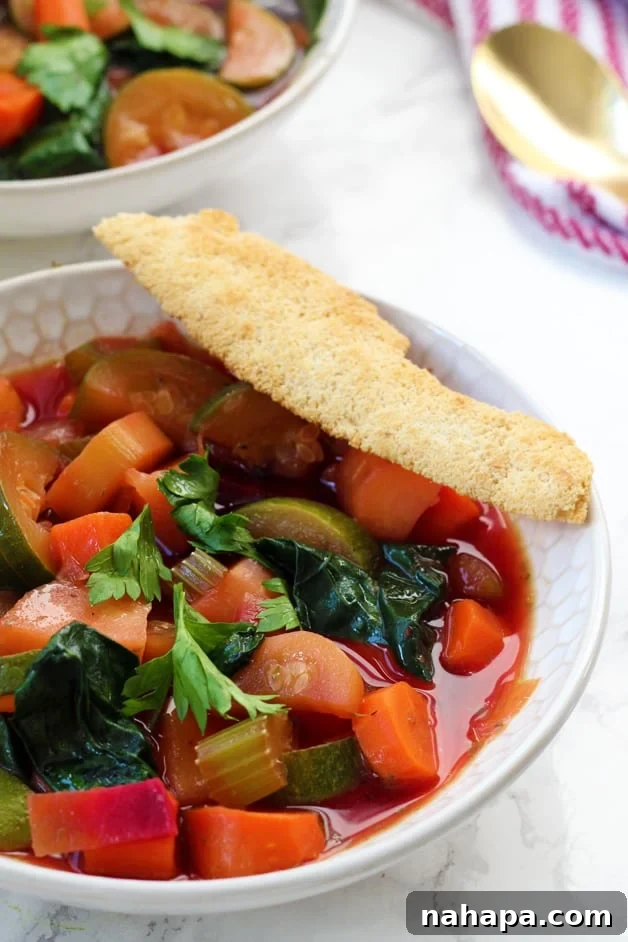
For many, Italian food is synonymous with a side of crusty bread. To maintain compliance while still enjoying that satisfying crunch, consider serving your minestrone with a grain-free bread alternative or crackers. Yucan Crunch, made entirely from yuca, is an excellent choice for both Paleo and AIP diets, offering a simple, clean ingredient list. Other grain-free bread recipes or store-bought options that fit your specific dietary needs can also be used. This addition is entirely optional but provides a wonderful textural contrast and a classic accompaniment to a bowl of warm, hearty soup.
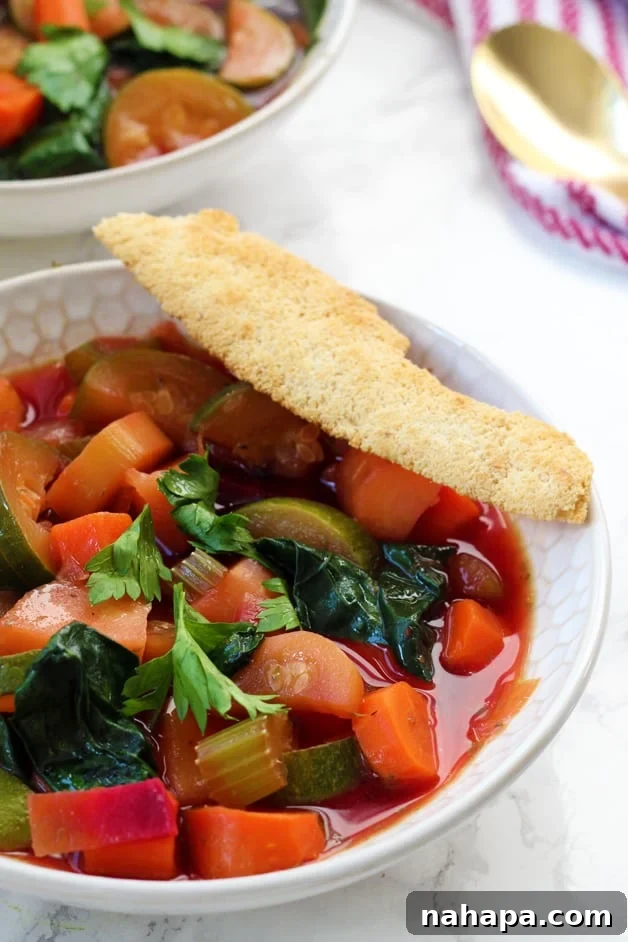
Paleo Minestrone Soup (AIP & Whole 30)
Leave a Review
Pin Recipe
Ingredients
- 5-6 cups broth, chicken bone broth or veggie broth
- 1 can diced tomatoes, sub 1/3 cup diced beet for AIP
- 2 cup carrots, chopped
- 1 cup parsnip, chopped
- 1 medium white onion, diced
- 3 ribs of celery, chopped
- 1 medium zucchini, chopped into halfmoons
- 1 cup spinach, chopped
- 2 tsp dried oregano
- 2 tsp dried basil, or 1 tbsp fresh
- ¼ cup fresh parsley
- 2 cloves garlic, minced
- 1 tsp sea salt, plus more to taste
- 2-3 tbsp olive oil
- OPTIONAL-
- Grain free cracker or bread like Yucan Crunch
- 1-2 cups pre-cooked shredded chicken
Instructions
- Place a large stock pot on the stove on medium heat and add olive oil.
- Add the onion and garlic and sauté for 4-5 minutes or until the onions become translucent.
- Add in the parsnips, celery and carrot and sauté until lightly softened for 3-4 minutes.
- Pour in the broth and the remainder of the vegetables (reserving the basil and some parsley for topping) and herbs and stir.
- Place the lid over the pot and simmer on medium heat for 15-20 minutes, stirring occasionally.
- Once the veggies are cooked through, add in the spinach and stir until the spinach is wilted.
- Allow the soup to cool and top with extra parsley before serving.
Notes
Nutrition Facts (Estimated per serving, excluding optional ingredients):
- Serving: 1 serving
- Calories: 163 kcal
- Carbohydrates: 20.6 g
- Protein: 4.5 g
- Fat: 8.2 g
- Fiber: 6.1 g
Serving Suggestions & Customizations for Your Paleo Minestrone
This Paleo Minestrone Soup is incredibly versatile and can be enjoyed in various ways, whether you’re looking for a light lunch or a more substantial dinner. Its rich flavor and abundance of vegetables make it satisfying on its own, but here are a few ideas to enhance your experience and tailor it to your preferences:
Enhance with Protein
While this minestrone is packed with vegetables, adding a source of protein can transform it into an even more filling and complete meal. The recipe includes an optional 1-2 cups of pre-cooked shredded chicken, which blends seamlessly with the Italian flavors. You could also try adding ground turkey or beef (ensure it’s grass-fed for optimal health benefits) during the initial sautéing phase with the onions and garlic, breaking it up as it cooks. For a pescatarian option, flaked wild-caught salmon or cod could be gently stirred in during the last few minutes of simmering, allowing it to cook through without becoming tough. These additions are excellent for boosting satiety and providing essential amino acids.
Accompaniments for Extra Delight
As mentioned, a side of grain-free bread or crackers, like Yucan Crunch, can add a delightful crunch and replicate the traditional Italian soup experience. You might also consider making your own homemade grain-free croutons from a compliant bread recipe, toasted lightly in olive oil until golden and crisp. For a fresh, vibrant contrast, a simple side salad with a light vinaigrette dressing would complement the warmth and heartiness of the soup beautifully. A sprinkle of fresh basil or parsley just before serving not only adds a burst of fresh flavor but also makes for an inviting presentation.
Make It Your Own: Vegetable Swaps and Additions
The beauty of minestrone is its flexibility. Feel free to experiment with other AIP-friendly or Paleo-compliant vegetables based on what’s in season or what you have on hand. Sweet potatoes or butternut squash, diced into small cubes, can add another layer of sweetness and density. Green beans (if not on AIP reintroduction phase) or finely chopped kale could be added along with the spinach. Always consider your individual tolerances and the specific dietary protocol you are following when making substitutions.
Storage and Reheating
This soup is fantastic for meal prepping! It stores wonderfully in an airtight container in the refrigerator for up to 3-4 days. The flavors tend to deepen and meld even further overnight, making leftovers a real treat. For longer storage, you can freeze individual portions for up to 2-3 months. When reheating, gently warm on the stovetop over medium-low heat, stirring occasionally, until heated through. If the soup appears too thick after refrigeration, you can add a splash more broth or water to achieve your desired consistency.
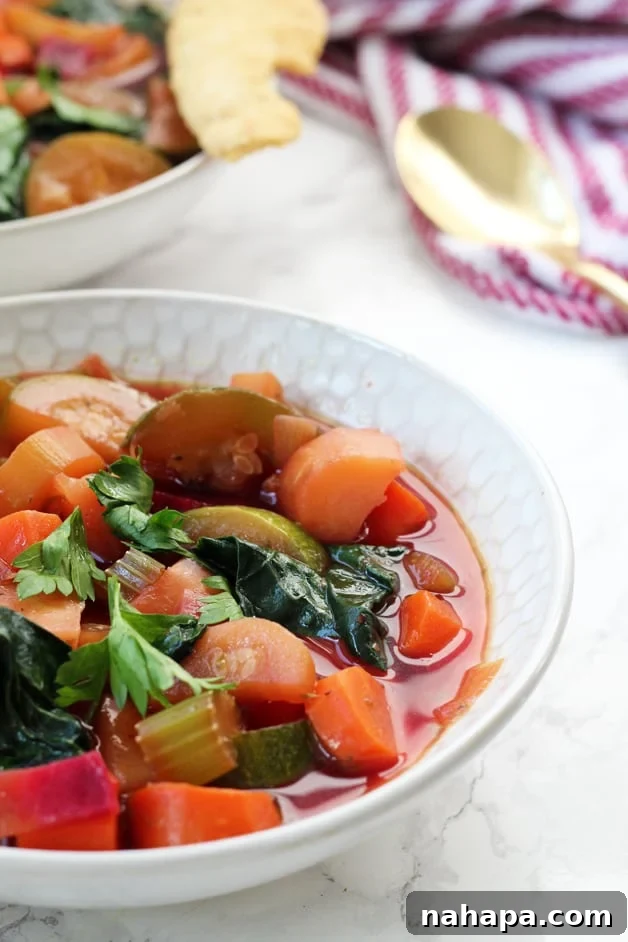
Embrace the Goodness: The Health Benefits of This Paleo Minestrone
Beyond its incredible flavor and comforting appeal, this Paleo Minestrone Soup is a powerhouse of nutrition designed to support your health. Each ingredient has been thoughtfully selected not only for taste but for its significant health benefits, making this soup a truly nourishing addition to your diet.
Rich in Vitamins and Minerals
The extensive array of vegetables—carrots, parsnips, celery, onion, zucchini, and spinach—provides a broad spectrum of essential vitamins and minerals. You’ll get a good dose of Vitamin A from carrots, Vitamin C from spinach and zucchini, and a variety of B vitamins, potassium, and magnesium from the diverse produce. These nutrients are crucial for everything from immune function and energy production to bone health and nerve function.
Abundant in Dietary Fiber
With so many vegetables, this soup is naturally high in dietary fiber. Fiber is vital for digestive health, promoting regularity and supporting a healthy gut microbiome. It also contributes to satiety, helping you feel fuller for longer and aiding in weight management. The soluble fiber in ingredients like carrots and parsnips can also help regulate blood sugar levels.
Gut-Supportive Broth Base
Opting for bone broth as your base adds significant gut-healing benefits. Bone broth is rich in gelatin, which contains amino acids like glutamine that can help repair the gut lining and reduce inflammation. For those on AIP, a healthy gut is paramount, and bone broth is a cornerstone of this protocol. Even vegetable broth offers a nourishing, hydrating base free from common irritants.
Anti-Inflammatory Properties
This minestrone is inherently anti-inflammatory. By omitting common inflammatory triggers such as grains, legumes, and dairy, it reduces the burden on your body. Furthermore, many of the vegetables and herbs themselves possess anti-inflammatory compounds. For example, spinach is rich in antioxidants, and garlic and oregano are known for their potent anti-inflammatory effects. This makes the soup particularly beneficial for individuals managing autoimmune conditions or general chronic inflammation.
Hydrating and Satisfying
Soups are an excellent way to stay hydrated, especially during colder months. The high water content from the broth and vegetables contributes to your daily fluid intake. Combined with fiber and optional protein, this minestrone is incredibly satisfying, providing warmth and comfort without feeling heavy or causing a post-meal energy crash. It’s a perfect example of how clean eating can be both delicious and deeply fulfilling.
That’s all there is to it! This Paleo Minestrone Soup offers an amazing and nourishing way to incorporate more vegetables into your diet while savoring a nostalgic Italian classic. It’s a dish that truly embodies the concept of “food as medicine,” proving that healthy eating can be a joyful and flavorful journey. I hope you enjoy every wholesome spoonful!
If you enjoy this satisfying soup, be sure to also check out my equally delicious and compliant Italian Zuppa Toscana recipe for another taste of healthy Italian comfort!