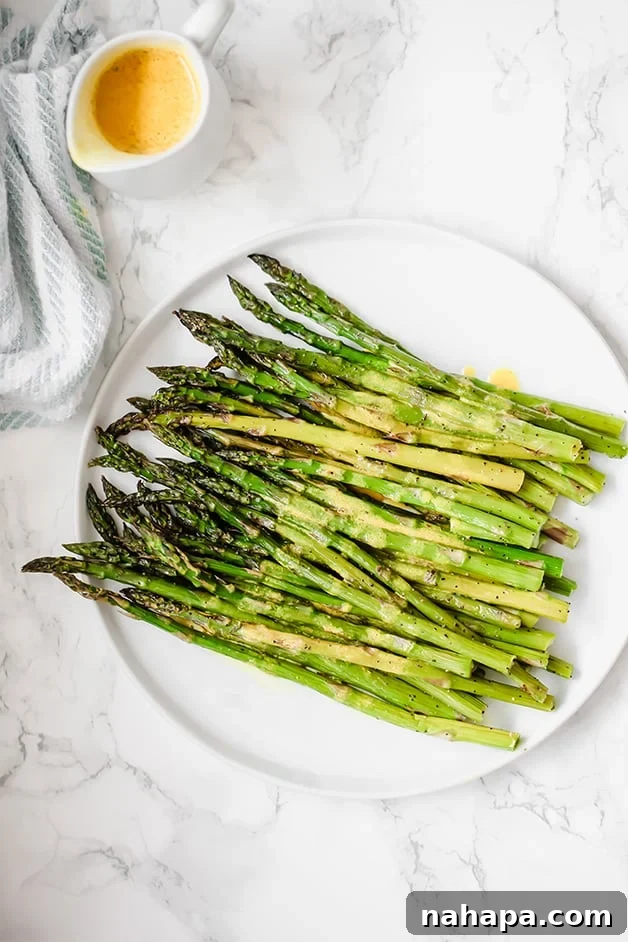
Once, the thought of asparagus didn’t particularly excite me. In fact, it was a vegetable I approached with some apprehension. But that all changed with the right preparation! When cooked correctly, asparagus transcends its humble reputation to become an absolutely amazing culinary delight. The magic lies in simple techniques: roasting it to tender-crisp perfection, grilling it for a smoky char, and seasoning it just right can dramatically enhance its natural flavor.
Asparagus truly shines in April, reaching its peak season. This makes it an ideal candidate for a festive side dish, especially for occasions like Easter dinner. And what elevates it even further? A truly delicious dressing. This Roasted Asparagus with Turmeric Dressing recipe was a game-changer for me, transforming what I once considered a ‘meh’ vegetable into an exquisite, flavorful side dish that now holds a cherished spot among my favorites!
Embracing Asparagus: From Apprehension to Appreciation
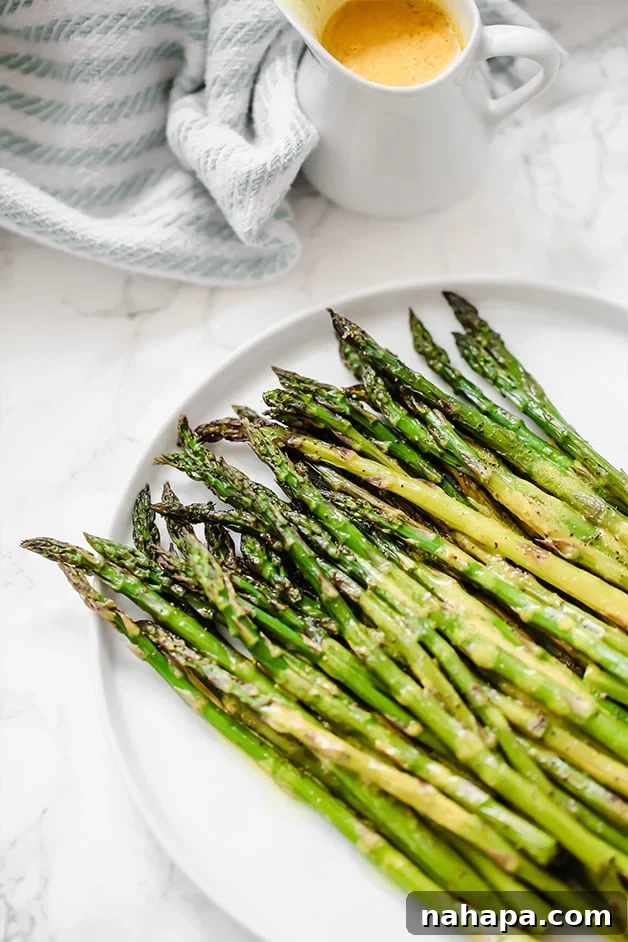
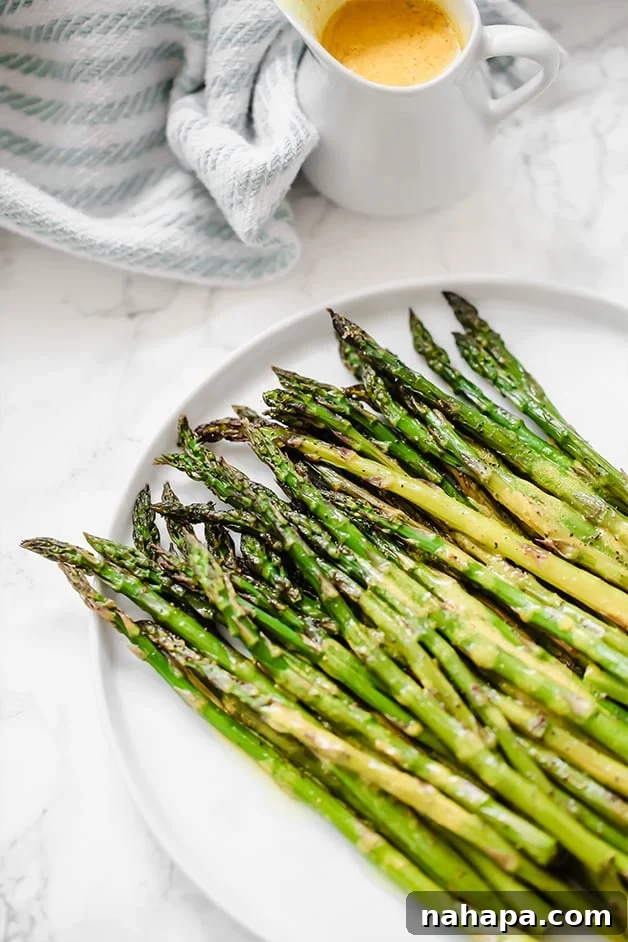
Many people have mixed feelings about asparagus, often due to past experiences with overcooked or bland preparations. However, this versatile green spear offers a world of flavor when given the proper treatment. Roasting or grilling allows its natural sugars to caramelize, bringing out a subtle sweetness and a wonderfully crisp texture that’s simply irresistible. Paired with the vibrant, earthy notes of a turmeric dressing, this dish goes beyond just ‘good’—it’s genuinely unforgettable.
What’s more, this particular side dish is remarkably inclusive. It’s crafted to be Paleo, AIP (Autoimmune Protocol), Whole30 compliant, and entirely vegan. This makes it an excellent choice for entertaining, ensuring that nearly everyone at your table, regardless of their dietary preferences or restrictions, can enjoy a delicious, healthy, and satisfying accompaniment to their meal.
Why Asparagus Deserves a Spot on Your Plate
A Nutritional Powerhouse
Beyond its delightful taste, asparagus is packed with incredible health benefits, making it a truly smart choice for any meal plan. It’s an excellent source of essential vitamins, including Vitamin K, which is vital for bone health and blood clotting, and Vitamin A, crucial for vision and immune function. You’ll also find a good dose of Vitamin C, a powerful antioxidant that supports immune health, and Vitamin E, another antioxidant that protects cells from damage.
Furthermore, asparagus is rich in folate (Vitamin B9), which is essential for cell growth and DNA formation, making it particularly beneficial during pregnancy. It provides important minerals like potassium, known for its role in blood pressure regulation, and phosphorus, key for strong bones and teeth. The fiber content in asparagus promotes digestive health and helps you feel full, aiding in weight management. It also contains unique compounds like asparagine, a natural diuretic, which can help flush excess fluid from the body.
Seasonal Freshness: The Taste of Spring
There’s nothing quite like enjoying produce in its prime, and asparagus is a prime example of a seasonal delight. While available year-round in many places, asparagus truly shines in the spring months, typically from March to June. During this peak season, the spears are at their most tender, flavorful, and nutrient-dense. Opting for in-season asparagus not only guarantees superior taste and texture but also often means supporting local farmers and enjoying produce that hasn’t traveled long distances, contributing to a more sustainable culinary experience.
The Magic of Turmeric Dressing
The secret weapon in this dish is undoubtedly the turmeric dressing. Turmeric, a spice celebrated for centuries in both culinary and medicinal traditions, brings more than just its distinctive golden hue to the table. It’s widely recognized for its potent anti-inflammatory properties, largely attributed to its active compound, curcumin. Infusing this powerful spice into a dressing not only adds a unique, warm, and slightly peppery flavor but also boosts the overall health benefits of the dish.
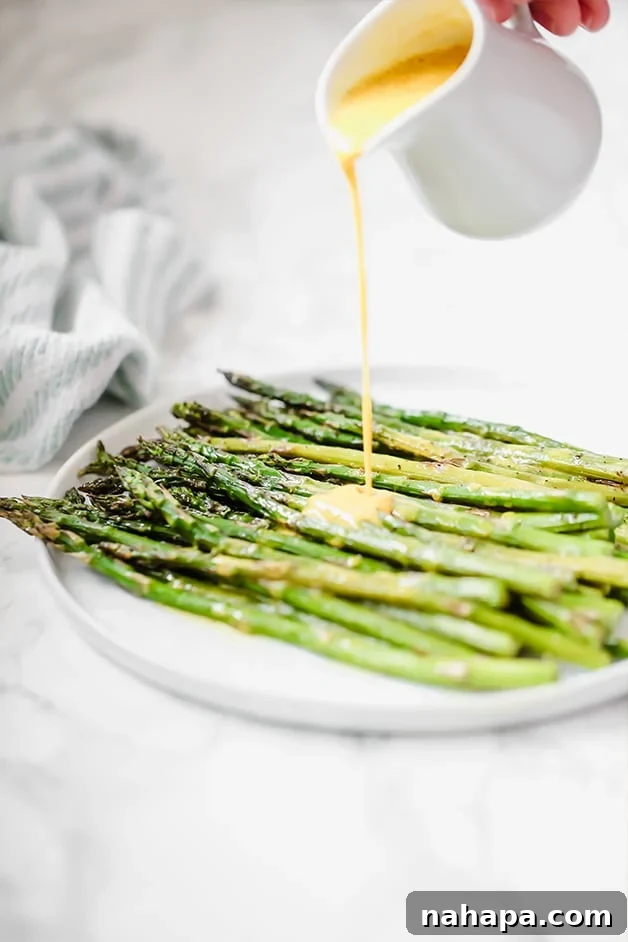
The earthy, slightly pungent notes of turmeric beautifully complement the fresh, green flavor of roasted asparagus, creating a harmonious balance that awakens the palate. It adds a layer of depth and sophistication that elevates simple roasted vegetables to something truly special. For those looking to incorporate more anti-inflammatory foods into their diet, this dressing is a delicious and effortless way to do so. You can find the full recipe for this incredible anti-inflammatory turmeric dressing here, to prepare it fresh and drizzle generously over your perfectly roasted spears.
Crafting Perfect Roasted Asparagus: Tips and Tricks
Selecting the Freshest Spears
The foundation of any great dish starts with quality ingredients. When choosing asparagus, look for bunches that are vibrantly green from tip to stalk, without any yellowing or dull spots. The spears should be firm to the touch, not limp or rubbery, and the tips should be tightly closed, indicating freshness. Both thin and thick spears can be delicious; thinner spears tend to cook faster and offer a more delicate texture, while thicker ones have a more robust flavor and stand up well to roasting. Ultimately, choose what looks freshest and appeals most to you.
Storage Secrets for Crispness
To keep your asparagus fresh and crisp until you’re ready to cook it, treat it like a bouquet of flowers! Trim about an inch off the bottom of the stalks, then stand the asparagus upright in a jar or mug with about an inch of water at the bottom. Cover the tips loosely with a plastic bag (a produce bag works perfectly) and store it in the refrigerator. This method helps the asparagus retain moisture and prevents it from drying out, keeping it crisp and vibrant for several days.
Prepping for Perfection
Before roasting, proper trimming is essential. The bottom ends of asparagus spears are woody and fibrous, making them unpleasant to eat. The easiest way to find the natural breaking point is to gently bend each spear until it snaps. The spear will naturally break where the tough, woody part meets the tender, edible part. While you can also use a knife to trim the ends, snapping ensures you’re only removing what’s necessary. After trimming, give the spears a quick rinse under cold water and pat them thoroughly dry with a clean towel; excess moisture can lead to steaming instead of roasting, preventing that desirable crisp exterior.
Roasting to Golden Perfection
Roasting is arguably one of the best ways to cook asparagus, bringing out its natural sweetness and creating a delightful texture. For even cooking, ensure your asparagus is spread in a single layer on a baking sheet; overcrowding the pan will steam the vegetables instead of roasting them. Using parchment paper prevents sticking and makes cleanup a breeze. Drizzle the spears generously with your chosen oil (coconut oil or ghee are excellent choices for flavor and dietary compliance) and season evenly. Roast at a moderate-high temperature, typically around 375-400°F (190-200°C), for 15-20 minutes, or until the asparagus is tender-crisp and slightly browned at the edges. Keep an eye on it to prevent overcooking, which can result in limp, mushy spears.
Ingredients for an Unforgettable Side Dish
- Asparagus: One bunch, vibrant green and firm.
- Coconut Oil or Ghee: 1 tablespoon, melted. Coconut oil is ideal for various diets, while ghee offers a rich, buttery flavor for those who tolerate it and aren’t strictly vegan.
- Lemon Juice: Freshly squeezed from half a lemon, adds brightness and acidity.
- Garlic Powder: 2 teaspoons, for a warm, savory depth.
- Sea Salt: 1 teaspoon, to enhance all flavors.
- Black Pepper: ½ teaspoon. Omit this for strict AIP compliance.
- Turmeric Dressing: 2-3 tablespoons, the flavorful finishing touch.
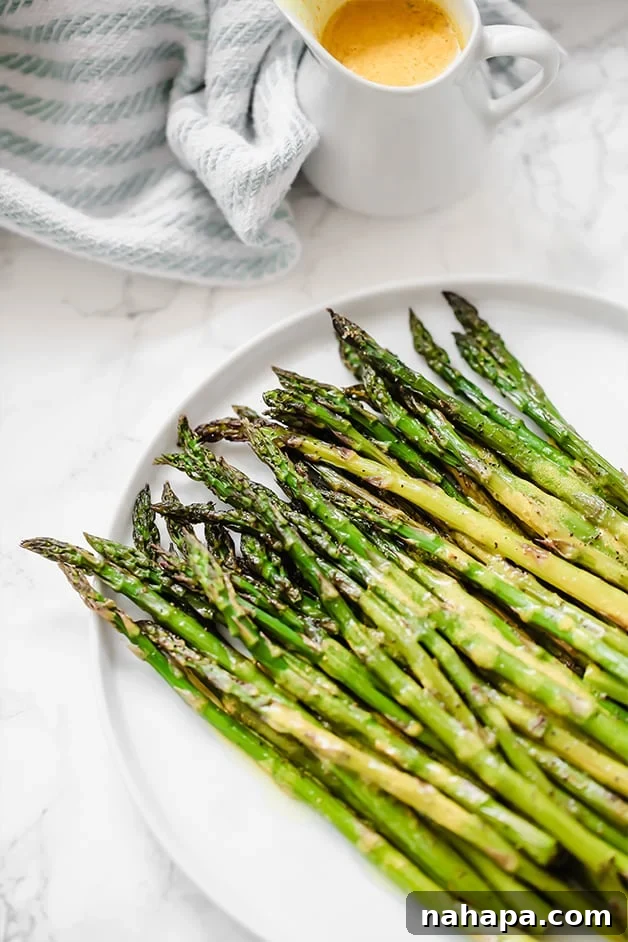
Roasted Asparagus with Turmeric Dressing
2-3 servings
5 mins
20 mins
Michelle @ Unbound Wellness
Leave a Review
Pin Recipe
Ingredients
- 1 bunch asparagus
- 1 tbsp coconut oil, melted (or ghee if not AIP or vegan)
- Juice of 1/2 lemon
- 2 tsp garlic powder
- 1 tsp sea salt
- ½ tsp black pepper, omit for AIP
- 2-3 tbsp Turmeric Dressing
Instructions
- Preheat the oven to 375 F (190°C) and line a baking sheet with parchment paper.
- Cut the thick woody ends off of the asparagus (by snapping or trimming) and place the spears on the parchment paper. Evenly coat with melted coconut oil and season with lemon juice, garlic powder, sea salt, and black pepper if using.
- Roast in the oven for 15-20 minutes, or until lightly crisped and tender to your liking.
- Remove from the oven and serve immediately, topped with a generous drizzle of turmeric dressing.
Notes
All nutritional information provided is an estimation and will vary based on ingredients and preparation methods. Estimations do not include the turmeric dressing or any optional ingredients.
Calories: 60kcal
Carbohydrates: 4.1g
Protein: 1.5g
Fat: 4.6g
Fiber: 1.3g
Did you Make this Recipe?
Tag @unboundwellness on Instagram and hashtag #unboundwellness! We’d love to see your creations!
Serving Suggestions and Dietary Harmony
The beauty of this Roasted Asparagus with Turmeric Dressing lies not only in its exceptional flavor but also in its remarkable versatility and dietary compliance. As mentioned, it fits seamlessly into Paleo, AIP, Whole30, and Vegan eating plans, making it a stress-free addition to any gathering. It’s an ideal side dish for a variety of main courses, from roasted chicken or turkey breast to grilled fish or a hearty plant-based protein. Imagine it as a vibrant accompaniment to your Easter ham or lamb, adding a burst of fresh flavor and color to the holiday table.
Beyond traditional holiday meals, this asparagus dish makes a fantastic weeknight side, quick to prepare and incredibly satisfying. For a lighter meal, you could even serve it over a bed of quinoa or alongside a fresh green salad. Feel free to experiment with variations; a sprinkle of red pepper flakes can add a subtle kick, or a garnish of fresh herbs like cilantro or mint could offer another layer of flavor. While roasting brings out its best, you can also adapt this recipe for grilling during warmer months, achieving those delightful char marks and a slightly smoky flavor.
Frequently Asked Questions About Asparagus
Can I use frozen asparagus?
While fresh asparagus is always recommended for the best texture and flavor, you can use frozen asparagus in a pinch. However, frozen asparagus tends to be softer and may not achieve the same crispness as fresh. If using frozen, thaw it first and pat it very dry before roasting to minimize excess moisture, which can lead to a soggy texture. Adjust roasting time as needed, as it might cook faster.
How do I know if my asparagus is overcooked?
Overcooked asparagus loses its vibrant green color, becoming dull and mushy. It will also be limp and lifeless when lifted. Perfectly cooked asparagus should be tender-crisp, meaning it has a slight bite and is still bright green. Keep a close eye on it during the last few minutes of roasting to achieve this ideal texture.
What does asparagus taste like?
Fresh, properly cooked asparagus has a distinct, subtly earthy, slightly grassy, and somewhat sweet flavor. It’s often described as having notes of green beans and broccoli, but with a unique, delicate bitterness. The roasting process helps to mellow any bitterness and enhance its natural sweetness, making it more appealing.
How long does roasted asparagus last?
Roasted asparagus is best enjoyed fresh. However, if you have leftovers, store them in an airtight container in the refrigerator for up to 3-4 days. When reheating, avoid microwaving if possible, as it can make the asparagus mushy. Reheat gently in a pan on the stovetop or in the oven to try and retain some of its texture.
Conclusion: Elevate Your Plate with This Vibrant Dish
From a once-apprehensive vegetable, asparagus has become a household favorite thanks to simple, effective cooking methods and incredible flavor pairings. This Roasted Asparagus with Turmeric Dressing recipe stands as a testament to how humble ingredients can be transformed into something truly spectacular. It’s not just a side dish; it’s a celebration of vibrant flavors, powerful nutrition, and effortless elegance.
Whether you’re planning a holiday feast, a healthy weeknight dinner, or simply looking to explore new ways to enjoy vegetables, this recipe offers a perfect solution. It’s easy to prepare, adaptable to numerous dietary needs, and bursting with flavor. So go ahead, grab a bunch of fresh asparagus, whip up that turmeric dressing, and prepare to impress your taste buds and your guests with this delightful culinary creation. Enjoy the simple pleasure of a perfectly roasted vegetable, made extraordinary.