
This post contains affiliate links.
Embark on a culinary journey to discover the versatile world of grain-free flours! This comprehensive guide is designed to demystify these alternative flours, offering clear insights into their unique characteristics, optimal uses, and essential tips for purchasing and successful baking. Whether you’re navigating dietary restrictions or simply seeking healthier alternatives, understanding grain-free flours is key to unlocking a new realm of delicious possibilities.
The Complete Guide to Grain-Free Flours: Unlock Healthier Baking
Why Choose Grain-Free Flours?
For many individuals, grains can be a source of digestive discomfort or simply don’t align with their dietary goals. While properly prepared grains can offer health benefits to those who tolerate them well, a significant number of people, particularly those with sensitivities, autoimmune conditions, or digestive issues, find that eliminating or reducing grains improves their well-being. This is where grain-free flours become invaluable.
These flours are essential for anyone following specific eating plans such as Paleo, ketogenic (keto), or low-carb diets. Beyond dietary restrictions, grain-free flours often boast impressive nutritional profiles, offering a different blend of fiber, healthy fats, and protein compared to traditional wheat-based flours. For instance, almond flour and coconut flour are popular choices for their low-carb content, making them staples in keto baking.
It’s important to note that grain-free flours don’t always behave identically to conventional flours like all-purpose or pastry flour. They possess distinct textures, absorption rates, and binding properties. However, when understood and used correctly, they are not just alternatives but can elevate your baking to new, often healthier, heights. As someone who has personally navigated the complexities of grain-free baking, I’ve learned that a little guidance goes a long way. This guide aims to simplify the process, helping you confidently incorporate these amazing ingredients into your kitchen.
Where to Buy Grain-Free Flours
The increasing popularity of grain-free diets has made these specialized flours much more accessible. You can often find a wide variety of grain-free options at major grocery chains, health food stores, and online retailers. Here are some of the most reliable places to source your grain-free flours:
- Whole Foods Market: Known for its extensive selection of natural and organic products, Whole Foods typically carries a broad range of grain-free flours from various brands.
- Natural Grocers: A specialty store focused on organic and natural foods, Natural Grocers is an excellent source for many dietary-specific ingredients, including a good selection of grain-free flours.
- Sprouts Farmers Market: Similar to Whole Foods, Sprouts offers a robust natural foods section where you can often find competitive prices on grain-free flours.
- Amazon: For convenience and often bulk options, Amazon is an unparalleled resource. You can find almost any grain-free flour imaginable, often with customer reviews that can help inform your purchase.
- iHerb: Specializing in health and wellness products, iHerb offers a fantastic selection of natural foods, including a diverse range of grain-free flours, often with good pricing and international shipping.
- Thrive Market: A membership-based online retailer, Thrive Market offers natural and organic products at wholesale prices, making it a cost-effective option for regularly purchasing grain-free flours. They often carry their own high-quality house brand.
When purchasing, always check the ingredient label to ensure the flour is 100% grain-free and free from unwanted additives. Opting for organic or non-GMO certified options can also be beneficial, depending on your preferences.
Understanding Grain-Free Flour Swaps: The 1:1 Myth
One of the most frequent questions in grain-free baking is, “Can I simply swap this grain-free flour for that one, or for regular wheat flour?” The answer, in nearly all cases, is a resounding “no.” Unfortunately, the idea of a universal 1:1 substitution for grain-free flours is largely a myth due to their vastly different compositions and behaviors.
Each grain-free flour possesses a unique set of characteristics that dictate its role in a recipe. These include:
- Absorption Rate: Some flours, like coconut flour, are incredibly absorbent, requiring significantly more liquid than other flours. Using it 1:1 with another flour would result in a very dry, crumbly product.
- Protein and Fat Content: Flours like almond flour are rich in protein and healthy fats, contributing to a tender texture and nutty flavor, unlike starchy flours such as cassava or tapioca.
- Starch Content: Starchy flours (cassava, tapioca, arrowroot) provide structure and binding properties, often making baked goods soft and pliable.
- Binding Properties: Some flours have natural binding capabilities, while others may require additional binders like eggs, flaxseed meal, or psyllium husk to hold a recipe together.
- Flavor Profile: From the subtly sweet notes of tigernut flour to the distinct coconut flavor, each flour imparts a unique taste that can complement or clash with a recipe’s intended flavor.
Because of these differences, successfully baking with grain-free flours often requires recipes specifically developed for them. When you do attempt a substitution, even between similar grain-free flours (like tapioca and arrowroot), be prepared to make adjustments to liquids, fats, and binders, and always start with a smaller batch to test the results. Understanding the individual properties of each flour, as detailed below, is your best tool for successful grain-free baking.
Exploring Specific Grain-Free Flours
Cassava Flour
Cassava flour is a powerhouse in grain-free baking, derived from the fibrous cassava (also known as yuca) root plant, a staple in many Latin American, African, and Asian cuisines. Unlike tapioca starch, which is a purified starch extracted from cassava, cassava flour is made from the whole peeled root, dried, and ground into a fine powder. This makes it a more “whole food” option and gives it unique characteristics.
Among grain-free flours, cassava flour is often hailed as the closest alternative to all-purpose wheat flour, especially in terms of texture. It excels in recipes where you need a pliable, bread-like consistency. However, even with cassava flour, caution is advised when making direct 1:1 swaps in recipes not specifically designed for it, as its absorption rate can still differ from wheat flour.
Characteristics:
- Starchy: Provides excellent binding and structure, making it a good thickener.
- Slightly Sweet Flavor: A mild, almost neutral sweetness that blends well into various recipes without overpowering them.
- Similar Texture to All-Purpose Flour: It has a fine, powdery texture that contributes to soft, non-gritty baked goods.
- Good Elasticity: When mixed with liquid, it can mimic the stretchiness often found in gluten-containing doughs.
What it’s Perfect For:
- Tortillas and Wraps: Its pliability makes it ideal for soft, flexible tortillas and gluten-free wraps.
- Pizza Crusts: Creates a chewy, satisfying crust for grain-free pizzas.
- Bread and Biscuits: Excellent for gluten-free breads, rolls, and flaky biscuits.
- Sauce Thickener: Can be used to thicken gravies, sauces, and soups, similar to cornstarch or arrowroot.
- Fried Foods: Provides a crisp coating for fried chicken or vegetables.
Recommended Brand: Otto’s Cassava Flour – Widely regarded for its consistent quality and fine grind.
Tapioca Starch (or Tapioca Flour)
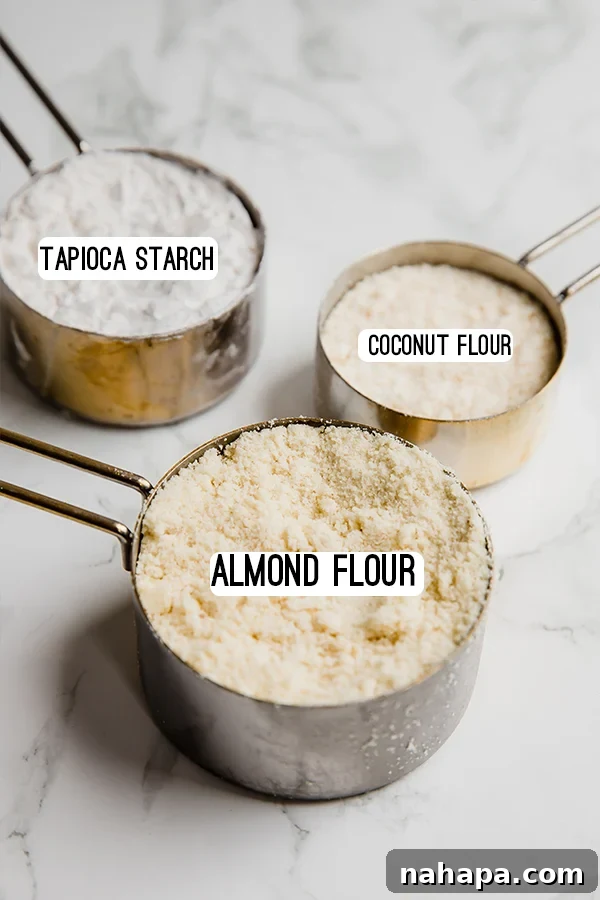
Tapioca starch, also commonly labeled as tapioca flour, is another vital grain-free ingredient derived from the cassava root. However, unlike cassava flour, tapioca starch is a purified starch extracted from the root, making it a very fine, white powder with distinct properties. It’s highly valued for its ability to create a “chewy” or “stretchy” texture in baked goods and as an effective thickener.
Often compared to cornstarch, tapioca starch is an excellent choice for achieving a smooth, glossy finish in sauces and gravies, and it works wonderfully as a binder in gluten-free baking. Its neutral-to-slightly-sweet flavor ensures it won’t alter the taste profile of your dishes.
Characteristics:
- Very Starchy: Contributes to elasticity and chewiness.
- Slightly Sweet Taste: Generally neutral, allowing other flavors to shine.
- Excellent Thickener: Creates clear, glossy sauces without cloudiness.
- Good Binder: Helps hold together gluten-free baked goods, preventing crumbling.
What it’s Perfect For:
- Achieving “Stretchy” Textures: Ideal for recipes needing a satisfying pull, like grain-free stromboli, breadsticks, or mochi.
- Thickening Sauces and Soups: An excellent alternative to cornstarch for gravies, fruit fillings, and Asian stir-fry sauces.
- Binding Agent: Used in combination with other grain-free flours to provide structure and prevent dryness in baked goods like cookies, muffins, and cakes.
- Gluten-Free Pie Crusts: Contributes to a tender and flaky crust.
Recommended Brand: Anthony’s Tapioca Starch – A reliable brand for consistent quality.
Arrowroot Starch (or Arrowroot Flour)
Arrowroot starch, often referred to as arrowroot flour, is another fantastic grain-free thickening and binding agent extracted from the roots of the tropical arrowroot plant. Similar to tapioca starch in its applications, arrowroot is known for its pure, white appearance and its ability to create a smooth, clear consistency in liquids without a starchy aftertaste. It’s a versatile ingredient that deserves a place in any grain-free pantry.
Arrowroot and tapioca starches are arguably the most interchangeable flours on this list, often performing similarly in recipes. However, some bakers find arrowroot to be less “gummy” than tapioca, making it preferable for certain savory applications. It’s particularly favored for its stability in acidic liquids and ability to withstand freezing and thawing without breaking down.
Characteristics:
- Starchy: A powerful thickening agent that creates a silky texture.
- Very Powdery When Raw: Fine texture that dissolves easily.
- “Stretchy” in Baked Goods: Contributes to pliability and binding, similar to tapioca.
- Neutral Flavor: Won’t impact the taste of your dishes.
- Stable at Low Temperatures: Excellent for thickening foods that will be frozen or refrigerated.
What it’s Perfect For:
- Creating “Stretchy” Textures: Like tapioca, it’s great for adding a desired chewiness to grain-free breads, crackers, and snacks.
- Thickening Sauces and Soups: Ideal for gravies, fruit pie fillings, stews, and glazes.
- Binding Agent: Helps hold together various grain-free baked goods, especially when combined with other flours.
- Replacing Cornstarch: An excellent natural, grain-free alternative for any recipe calling for cornstarch.
- Crispy Coatings: Can be used in breading mixtures for frying to achieve a light, crispy texture.
Recommended Brand: Anthony’s Arrowroot Starch or Thrive Market Brand – Both offer high-quality options.
Almond Flour
Almond flour is a staple in grain-free, low-carb, and ketogenic baking, celebrated for its mild flavor, fine texture, and impressive nutritional profile. It’s unique on this list as the only nut-based flour, made from blanched (skin removed) and finely ground sweet almonds. There are typically two main varieties: blanched almond flour (finer, lighter color) and unblanched/almond meal (coarser, with almond skins included). Blanched is generally preferred for baking due to its smoother result.
Rich in healthy fats, protein, and fiber, almond flour adds a tender crumb and a subtly sweet, nutty flavor to baked goods. Its low carbohydrate content makes it an excellent choice for those managing blood sugar levels or following specific dietary protocols.
Characteristics:
- Low Carb: Significantly lower in carbohydrates than grain flours, making it ideal for keto and low-carb diets.
- Buttery Flavor: Imparts a rich, slightly sweet, and nutty taste.
- Fine, Neutral Texture: Creates a tender, moist crumb in baked goods without being overly dense.
- High in Protein and Fiber: Contributes to satiety and provides nutritional benefits.
- Good Fat Content: Helps keep baked goods moist and prevents them from drying out.
What it’s Perfect For:
- Low Carb and Keto Recipes: The primary choice for cakes, cookies, muffins, and bread in these dietary frameworks.
- Breading: Excellent for creating crispy, flavorful breading for meats and vegetables, such as these Paleo Chicken Tenders.
- Grain-Free Baked Goods with Excess Moisture: Its mild absorbency works well in recipes featuring fruits or vegetables like zucchini muffins, carrot cake, or banana bread.
- Macarons: Essential for achieving the delicate texture of French macarons.
- Crusts: Creates delicious pie crusts, tart shells, and cookie crusts for cheesecakes.
Recommended Brand: Bob’s Red Mill Almond Flour – A widely available and trusted brand known for its consistent quality.
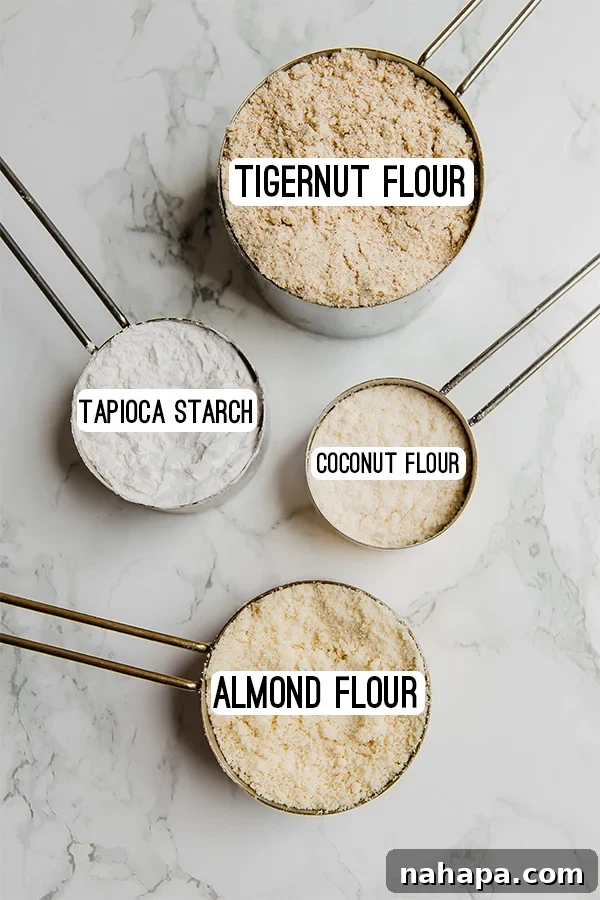
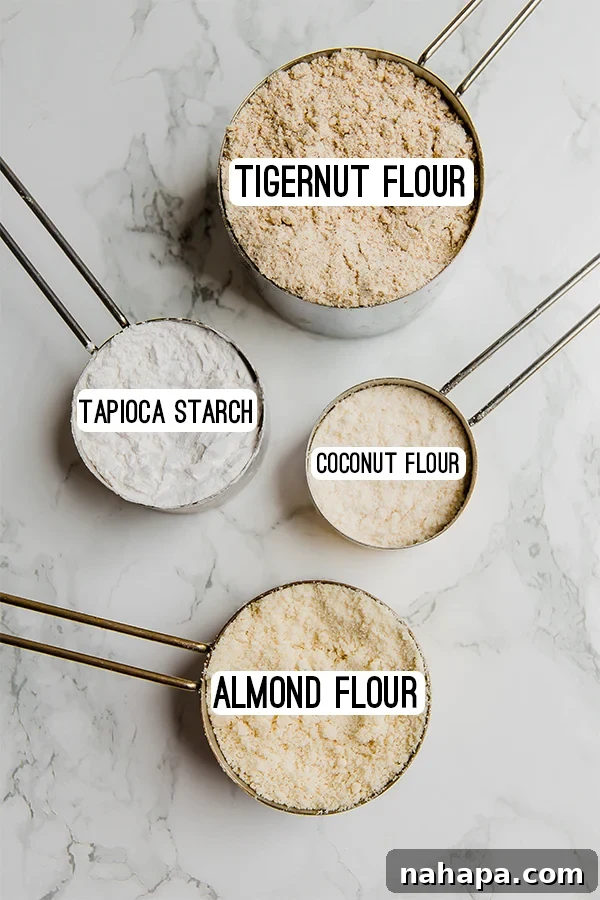
Tigernut Flour
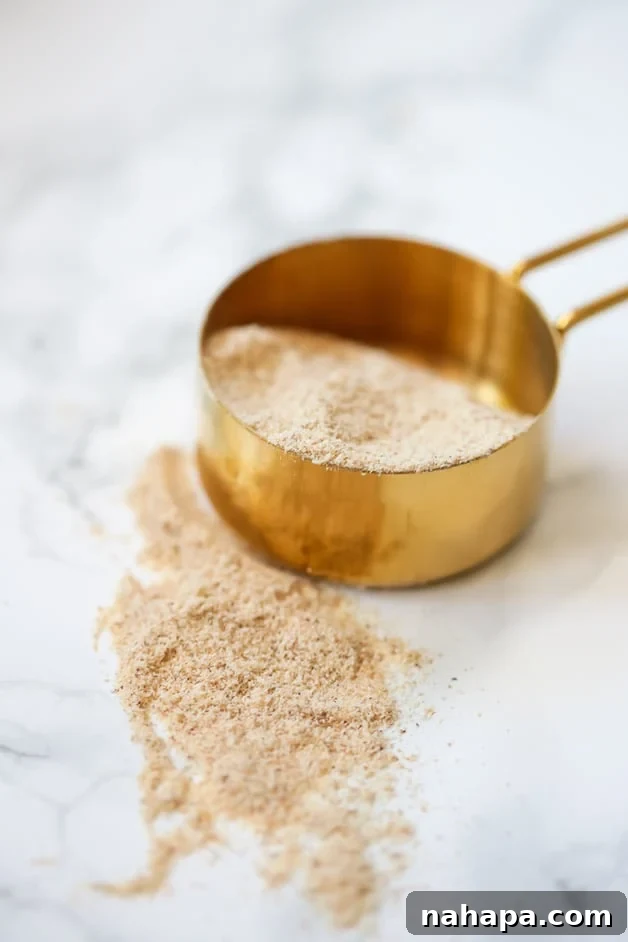
Despite its misleading name, tigernut flour is completely nut-free, making it an excellent option for those with nut allergies. Tigernuts are actually small tubers (root vegetables) native to Spain and Africa, revered for their natural sweetness and fiber content. Tigernut flour is made by grinding these dried tubers into a fine, versatile powder. It’s gaining significant popularity in the grain-free community, particularly among those following an AIP (Autoimmune Protocol) diet.
Often compared to almond flour for its texture and use in baking, tigernut flour distinguishes itself with a unique, naturally sweet flavor reminiscent of coconut and nuts, but without any actual nuts. Its slightly gritty texture adds a pleasant chewiness to baked goods.
Characteristics:
- Naturally Sweet: Imparts a distinctive, pleasant sweetness that can reduce the need for added sugars.
- Gritty/Nutty Texture: Offers a unique mouthfeel, often described as similar to a coarse almond meal or finely ground oats.
- Nut-Free: A safe and delicious option for individuals with nut allergies.
- High in Fiber: Supports digestive health and adds structure to baked goods.
- Paleo and AIP Friendly: Complies with strict dietary protocols.
What it’s Perfect For:
- Sweet Recipes: Shines in cookies, muffins, cakes, and other desserts where its natural sweetness and texture can be highlighted.
- Grain-Free Granola and Cereal: Adds texture and flavor to homemade breakfast items.
- Crusts and Crumbles: Excellent for pie crusts, fruit crumbles, and streusel toppings.
- Nut-Free Alternatives: A fantastic substitute for almond flour in recipes for those with allergies (though 1:1 substitution may require slight adjustments).
Recommended Brand: Organic Gemini Tigernut Flour – A popular choice for its quality and consistency.
Coconut Flour
Coconut flour is a truly remarkable grain-free flour made from dehydrated, defatted coconut meat that is finely ground. Despite the “nut” in its name, coconuts are botanically classified as a fruit, making coconut flour a fantastic, allergy-friendly option for many individuals, including those with tree nut sensitivities. However, always exercise caution and consult with a medical professional if you have severe allergies.
What sets coconut flour apart is its extraordinary absorbency. It acts like a sponge, soaking up a significant amount of liquid, which means a little goes a very long way. This characteristic makes it one of the trickiest flours to substitute in recipes, but also incredibly useful when understood. Its high fiber and low carbohydrate content make it a favorite for keto and low-carb diets, and its distinct, mild coconut flavor adds a tropical twist to baked goods.
Characteristics:
- Sweet: Possesses a subtle, natural coconut flavor that complements sweet dishes.
- Extremely Absorbent: Requires a large amount of liquid and/or eggs in recipes to prevent dryness.
- Dry: Can make baked goods dense if not properly hydrated.
- Low Starch: Contributes minimally to carbohydrate count.
- High Fiber: Exceptionally rich in dietary fiber, promoting digestive health.
- Low Carb: An excellent choice for ketogenic and low-carb eating plans.
What it’s Perfect For:
- Low Carb and Keto Recipes: A foundational ingredient in many keto-friendly breads, muffins, and cookies.
- Breading: Creates a light, crispy coating for meats and vegetables, like chicken nuggets, offering a grain-free and low-carb alternative.
- Grain-Free Baked Goods with Excess Moisture: Its absorbency is perfect for recipes that contain a lot of liquid or moist ingredients, such as zucchini bread, pumpkin muffins, or fruit-heavy desserts, where it can help prevent a soggy texture.
- Adding Fiber: A great way to boost the fiber content of almost any dish.
- Thickening: Can be used sparingly to thicken soups, stews, and smoothies.
Tips for Baking with Coconut Flour:
- Always use recipes specifically formulated for coconut flour.
- Expect to use more eggs or other binders (like flax eggs) to provide structure and moisture.
- Start with a small amount; you typically need only 1/4 to 1/3 the amount of coconut flour compared to wheat flour.
- Allow batters to sit for a few minutes before baking to allow the flour to fully absorb liquids.
Recommended Brand: Anthony’s Coconut Flour – Known for its fine grind and consistent quality.
General Tips for Successful Grain-Free Baking
Venturing into grain-free baking can be incredibly rewarding, but it often requires a slight shift in approach compared to traditional baking. Here are some essential tips to help you achieve consistent success:
- Follow Recipes Precisely: Especially when starting out, stick to recipes specifically designed for grain-free flours. They have been carefully balanced to account for the unique properties of these ingredients. Avoid direct 1:1 substitutions of grain-free flours for wheat flour, or even for other grain-free flours, unless explicitly stated as an interchangeable option.
- Accurate Measurement is Key: Grain-free flours, particularly coconut flour, are incredibly potent. Measuring accurately, often by weight with a kitchen scale for best results, can make a huge difference in the outcome of your baked goods.
- Understand the Role of Binders: Since grain-free flours lack gluten, they often require additional binders to hold ingredients together. Eggs are common, but for egg-free recipes, consider ingredients like ground flaxseed (mixed with water to create a “flax egg”), psyllium husk powder, or chia seeds.
- Adjust Liquid Content: Different grain-free flours have vastly different absorption rates. If you’re experimenting or adapting a recipe, be prepared to adjust the amount of liquid. Coconut flour will demand significantly more liquid, while almond flour might need less.
- Don’t Be Afraid to Experiment (Carefully): Once you understand the basic characteristics of each flour, you can start to experiment. Try combining different grain-free flours to achieve a desired texture or flavor profile. For example, a mix of almond and cassava flour can provide both tenderness and structure.
- Cool Completely: Many grain-free baked goods can be fragile when warm. Allow them to cool completely before handling or slicing to ensure they set properly and maintain their structure.
- Storage: Due to their higher fat content, especially almond flour, some grain-free flours can go rancid faster than traditional flours. Store them in airtight containers in a cool, dark pantry or even the refrigerator or freezer for extended freshness.
Embracing grain-free flours opens up a world of healthier and incredibly delicious baking. With a little knowledge and practice, you’ll be whipping up amazing grain-free treats in no time!