
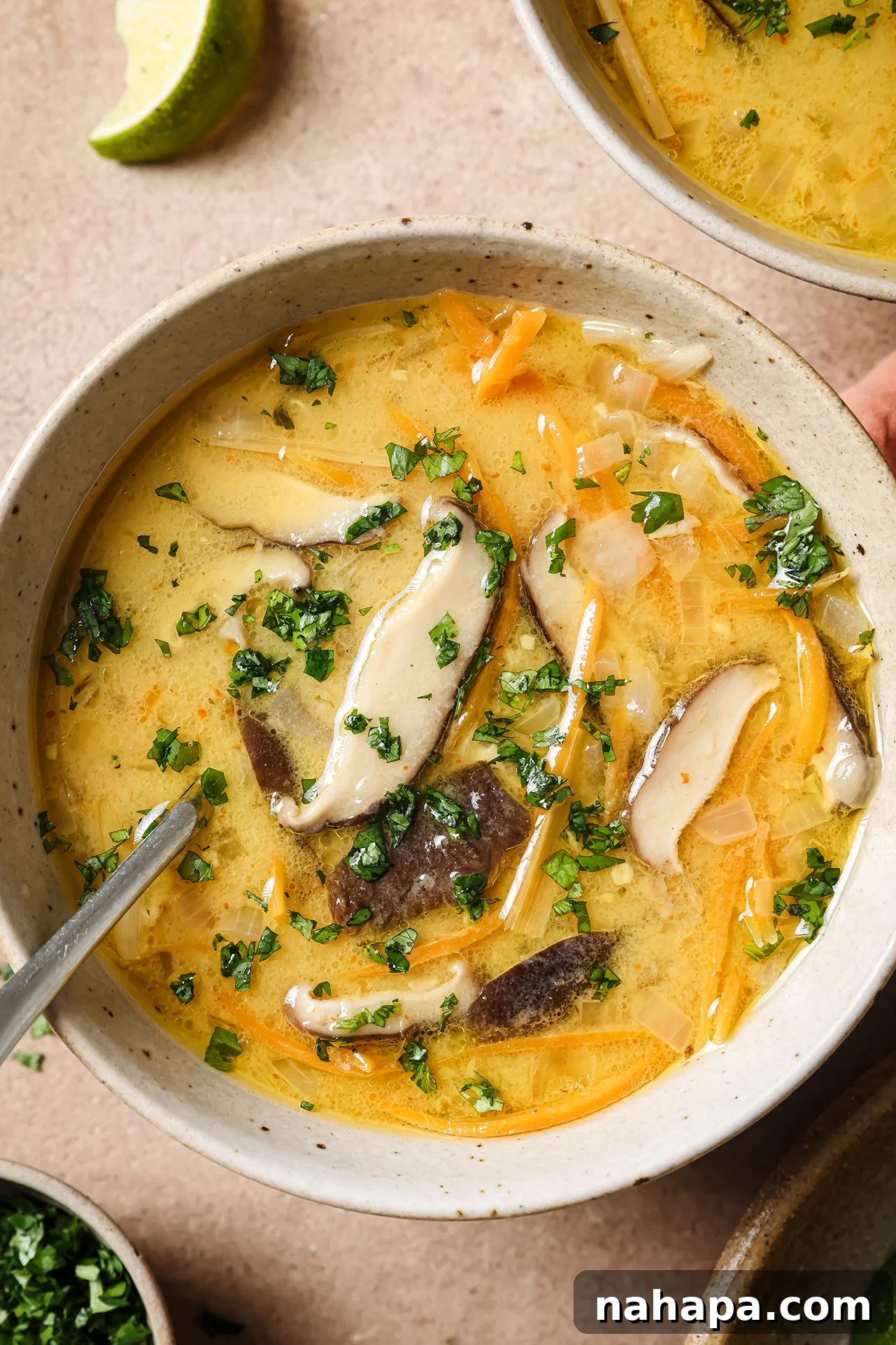
“When you taste the soup while it’s simmering to check the seasonings, it turns into eating the soup out of the pot. This is delicious! Thank you for this amazing and easy recipe!” – Emily
Welcome to the ultimate guide for crafting the most delectable Tom Kha Soup right in your own kitchen! This classic Thai coconut soup, renowned for its delicate balance of flavors and rich, creamy texture, can often seem daunting to recreate at home. But fear not, this simplified recipe makes it incredibly accessible for home cooks of all skill levels. Prepare to indulge in a bowl of pure comfort – a soup that is not only bursting with authentic Thai flavors but is also wonderfully light, subtly tangy, and delightfully creamy, all achieved without any dairy.
Tom Kha Gai, the chicken version of this beloved soup, translates to “galangal chicken soup,” highlighting one of its key aromatic ingredients. While traditionally made with chicken, this versatile recipe allows for endless customization, ensuring it fits perfectly with your dietary preferences, whether you prefer it with meat, seafood, or completely vegetarian. Get ready to embark on a culinary journey that brings the vibrant tastes of Thailand directly to your table with minimal effort and maximum satisfaction.
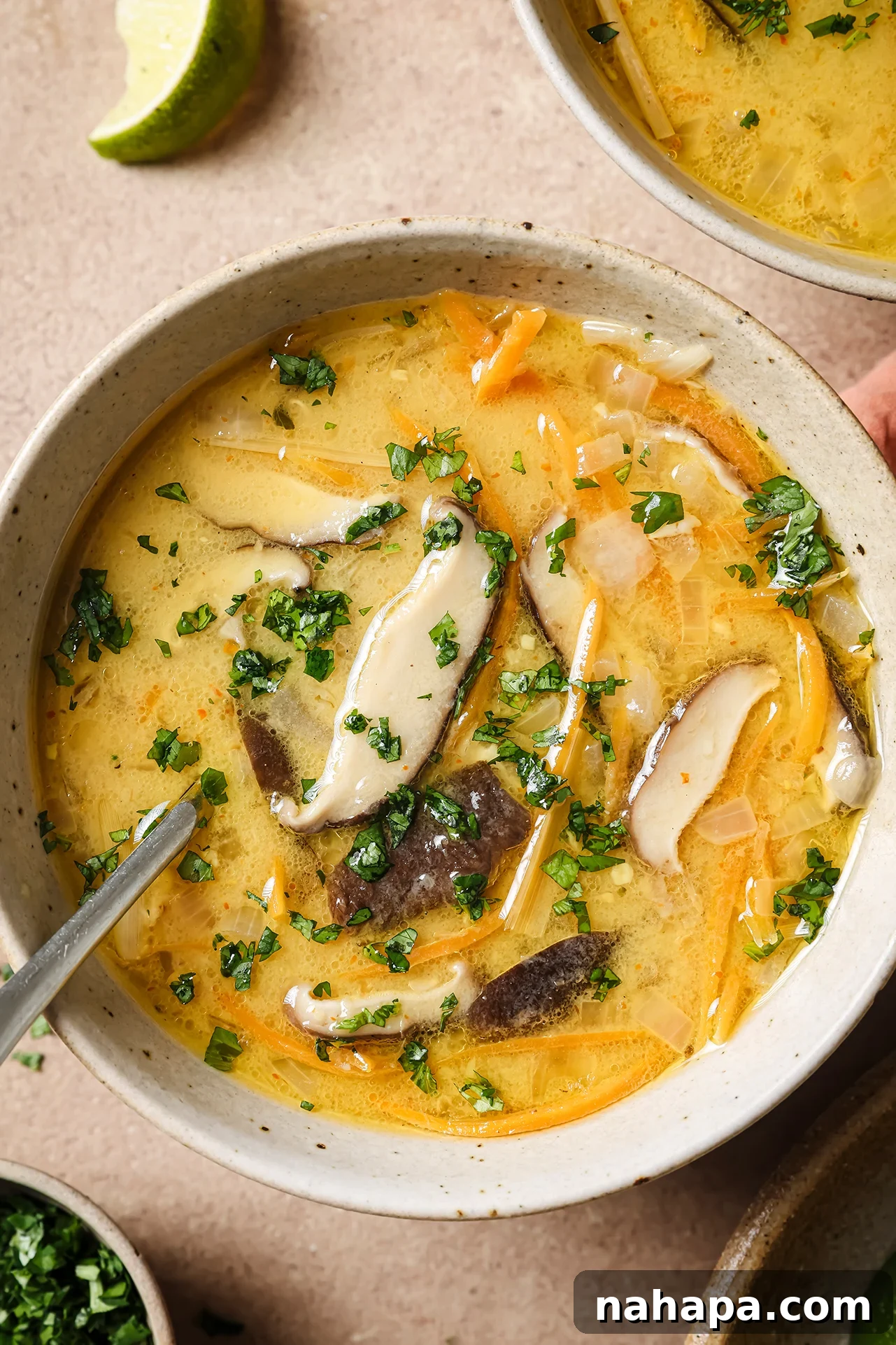
Why You’ll Fall in Love with This Easy Tom Kha Soup
There’s nothing quite like a warm bowl of soup, especially when it’s infused with the exotic and comforting spices of Asian cuisine. I’m passionate about crafting recipes that make complex flavors approachable, from classics like Hot & Sour Soup and Egg Roll Soup to heartwarming Asian-inspired Chicken Noodle Soup. Tom Kha Soup stands out as a jewel in Thai gastronomy, a vibrant coconut-based broth brimming with aromatic herbs, crisp vegetables, and your choice of protein. While Tom Kha Gai, the version with chicken, is incredibly popular, this recipe is designed to be flexible, allowing you to enjoy it with or without meat. Here are compelling reasons why this Tom Kha recipe will become a cherished favorite in your recipe collection:
- Unforgettably Rich and Flavor-Packed: This soup is a symphony of tastes, offering a complex yet harmonious profile. The luxurious creaminess of coconut milk forms the base, perfectly complemented by the earthy depth of mushrooms and the bright, zesty tang of fresh lime. Each spoonful delivers a delightful interplay of sweet, sour, salty, and umami, characteristic of authentic Thai cuisine. It’s a truly sophisticated flavor experience that will tantalize your taste buds and leave you craving more.
- Abundantly Veggie-Dense: Packed with nutrient-rich vegetables like shiitake mushrooms, carrots, onions, and the invigorating flavors of garlic and ginger, this soup is a fantastic way to boost your daily vegetable intake. It’s a wholesome meal that doesn’t compromise on flavor, making it perfect for those seeking nutritious and satisfying options. The vibrant array of vegetables not only adds essential vitamins and fiber but also contributes to the beautiful texture and visual appeal of the soup.
- Effortlessly Accommodates Various Dietary Needs: One of the greatest advantages of this Tom Kha recipe is its remarkable adaptability. It is thoughtfully crafted to be paleo-friendly, Whole30-compliant, and naturally vegetarian (with a simple modification). Furthermore, it is completely free of gluten and soy, making it an excellent choice for individuals with common food sensitivities or specific dietary lifestyles. This means more people can enjoy the incredible taste of this Thai classic without worry.
- Quick and Easy to Prepare: Despite its gourmet taste, this Tom Kha Soup comes together surprisingly fast. With straightforward steps and readily available ingredients, you can have a comforting and exotic meal on the table in under an hour. It’s perfect for busy weeknights when you desire something extraordinary without extensive cooking time.
- Incredibly Versatile: Whether you prefer a hearty chicken soup, a light vegetarian broth, or a seafood delight with shrimp, this recipe adapts beautifully. You can easily adjust the spice level to your preference, add a variety of different vegetables, or experiment with other proteins to make it truly your own. Its versatility ensures it never gets boring!

Essential Recipe Ingredients for Authentic Flavor
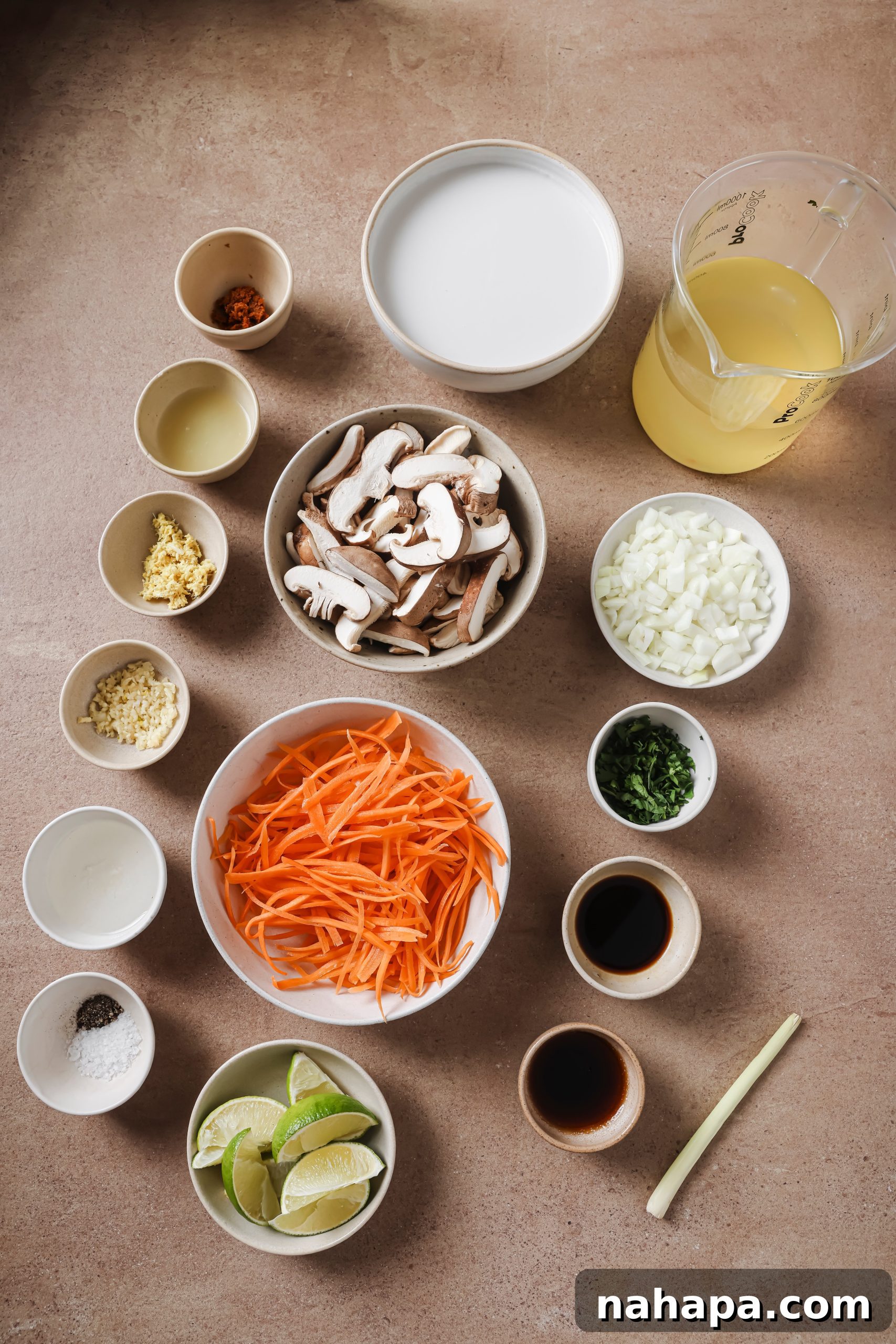
Crafting the perfect Tom Kha Soup starts with understanding the role each ingredient plays in building its signature flavor profile. Below is a detailed look at the core components and how they contribute to this delightful Thai classic. For precise measurements, please refer to the comprehensive recipe card located at the bottom of this article.
| Ingredient | What it does | Potential swap |
| Canned Coconut Milk | This is the heart of Tom Kha, providing its characteristic richness, creamy texture, and sweet coconut essence. Opt for full-fat canned coconut milk for the most authentic and luxurious flavor. It’s crucial for the velvety mouthfeel. | While you can try boxed coconut milk, it often lacks the richness and density of canned varieties, leading to a less authentic flavor and thinner consistency. Avoid “lite” coconut milk if you want that classic creamy texture. |
| Chicken Broth | Serves as the foundational liquid, adding depth and a savory base to the soup. For Tom Kha Gai, chicken broth is essential for that traditional taste. | For a vegetarian or vegan version, a high-quality vegetable broth works perfectly. Ensure it’s low-sodium to control the overall saltiness of the soup. |
| Shiitake Mushrooms | These mushrooms are prized for their meaty texture and deep umami flavor, which is a cornerstone of Asian cuisine. They absorb the broth beautifully and add a satisfying chewiness. | While shiitake mushrooms are highly recommended for their unique taste, you can use other varieties like cremini (baby bella), oyster mushrooms, or even button mushrooms if shiitakes are unavailable. However, the flavor profile might be slightly different. |
| Shredded Carrots, Onion, Garlic, Ginger, Curry Paste, and Lemongrass | This aromatic ensemble forms the soul of the soup. Onion, garlic, and ginger create a fragrant base, while curry paste brings warmth and complex spices. Lemongrass infuses a bright, citrusy, and slightly floral aroma that is unmistakably Thai. | To make the soup nightshade-free (and AIP-compliant), you can swap curry paste for turmeric powder, which will alter the color but still provide warmth. Alternatively, omit the curry paste entirely for a more pronounced coconut and lemongrass flavor. |
| Fish Sauce | A fundamental ingredient in Thai cooking, fish sauce (Nam Pla) provides a crucial savory, umami dimension that rounds out the flavors and balances the sweetness of the coconut milk. It’s often referred to as the “salt” of Thai cuisine. | For vegetarian or vegan diets, or if you prefer to avoid fish, omit the fish sauce and increase the coconut aminos to taste. You can also find vegan “fish sauce” alternatives made from fermented seaweed or mushroom extracts. |
| Coconut Aminos | This serves as an excellent soy-free alternative to soy sauce, offering a similar salty, slightly sweet, and umami flavor without the soy or gluten. It’s a staple for paleo and Whole30 diets. | If soy is not an issue for you, a low-sodium tamari (gluten-free soy sauce) can be used as a substitute, maintaining the savory depth. |
| Coconut Oil | Used for sautéing the aromatics and vegetables, coconut oil adds a subtle hint of coconut flavor that complements the overall profile of the soup. It has a high smoke point and is a healthy fat. | Avocado oil or any other neutral-flavored cooking oil with a high smoke point would also work well if coconut oil is not preferred or available. |
Mastering This Easy Tom Kha Soup: Step-by-Step Guide
Creating this flavorful Tom Kha Soup is simpler than you might imagine. Follow these detailed steps, complete with visual cues, to achieve a perfectly balanced and incredibly satisfying dish. Full, printable instructions, including precise quantities, are available in the recipe card below.
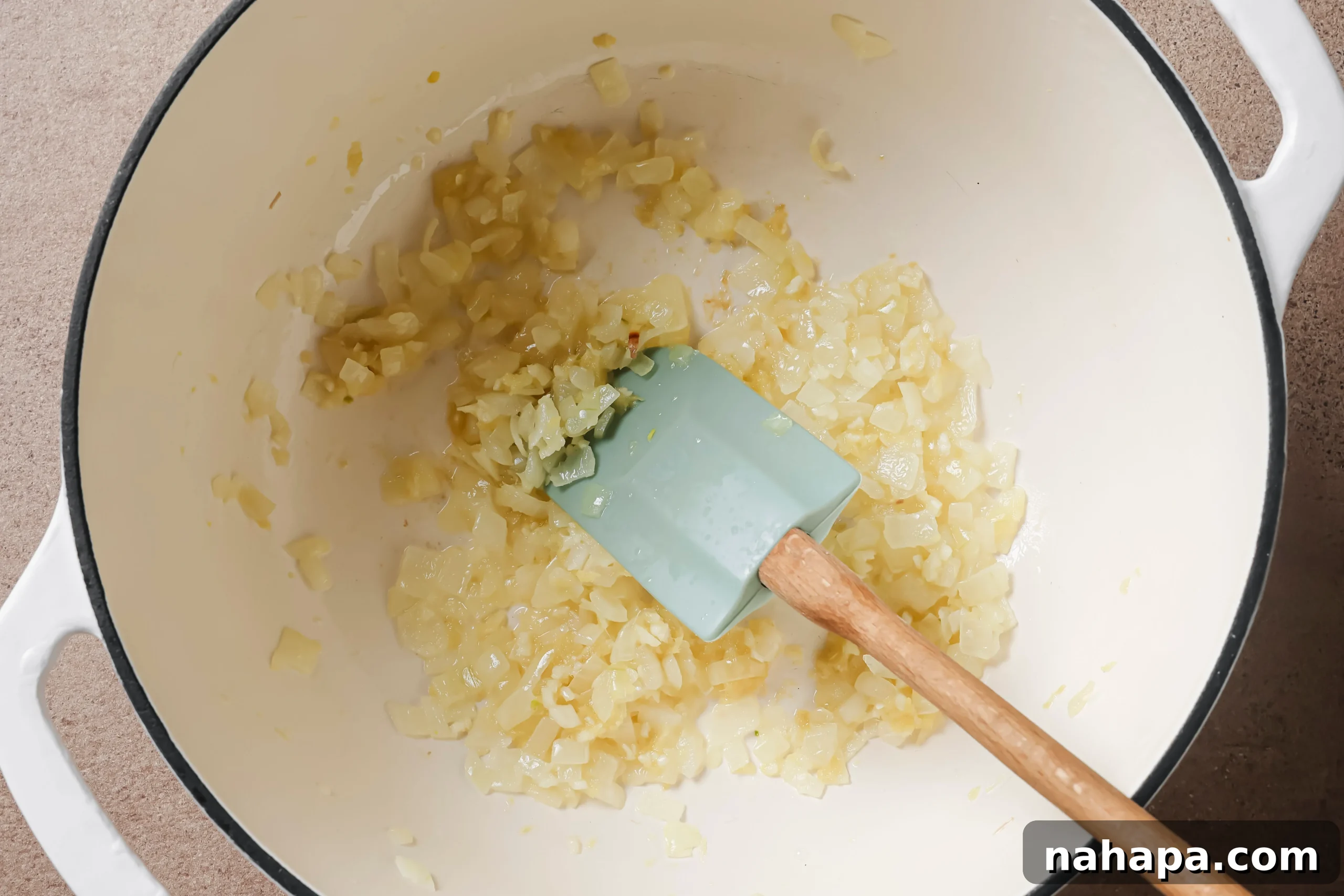
Step One: Prepare Your Aromatics. Begin by heating the coconut oil in a medium stock pot over medium heat until it shimmers. Add the diced yellow onion and sauté gently for 3 to 5 minutes, stirring occasionally, until the onions soften and become translucent. This initial sauté brings out their natural sweetness. Next, add the minced garlic and grated ginger to the pot. Continue to sauté for another 2 to 3 minutes, or until the aromatics become fragrant, filling your kitchen with a delightful aroma. Be careful not to burn the garlic.
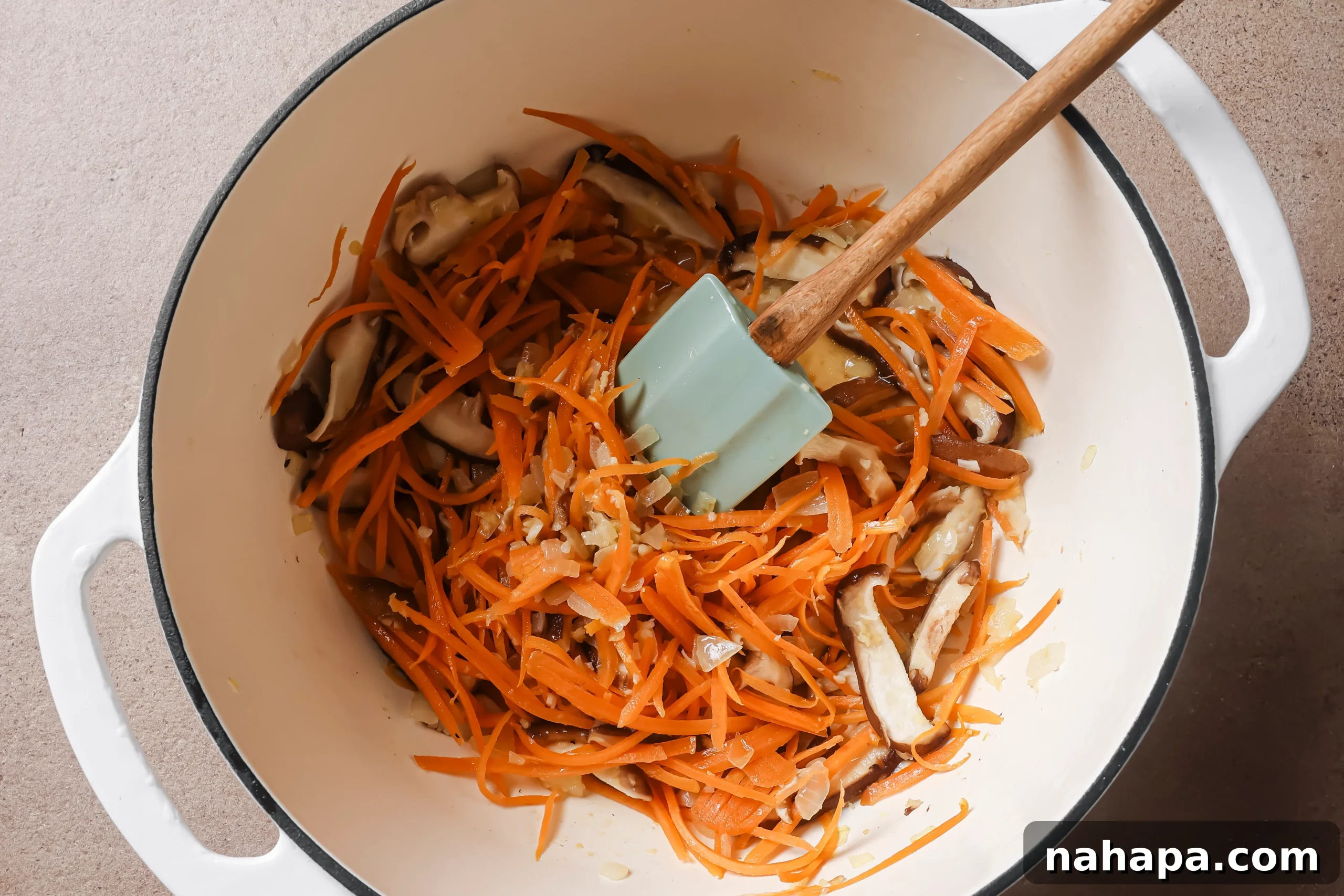
Step Two: Incorporate the Vegetables. Once the garlic and ginger are fragrant, introduce the sliced shiitake mushrooms and shredded carrots to the pot. Sauté these vegetables for an additional 3 to 4 minutes, allowing them to soften slightly and absorb the flavors of the aromatics. The mushrooms will release some of their moisture and begin to develop a richer, deeper flavor, while the carrots will soften just enough to integrate well into the soup without becoming overly mushy.
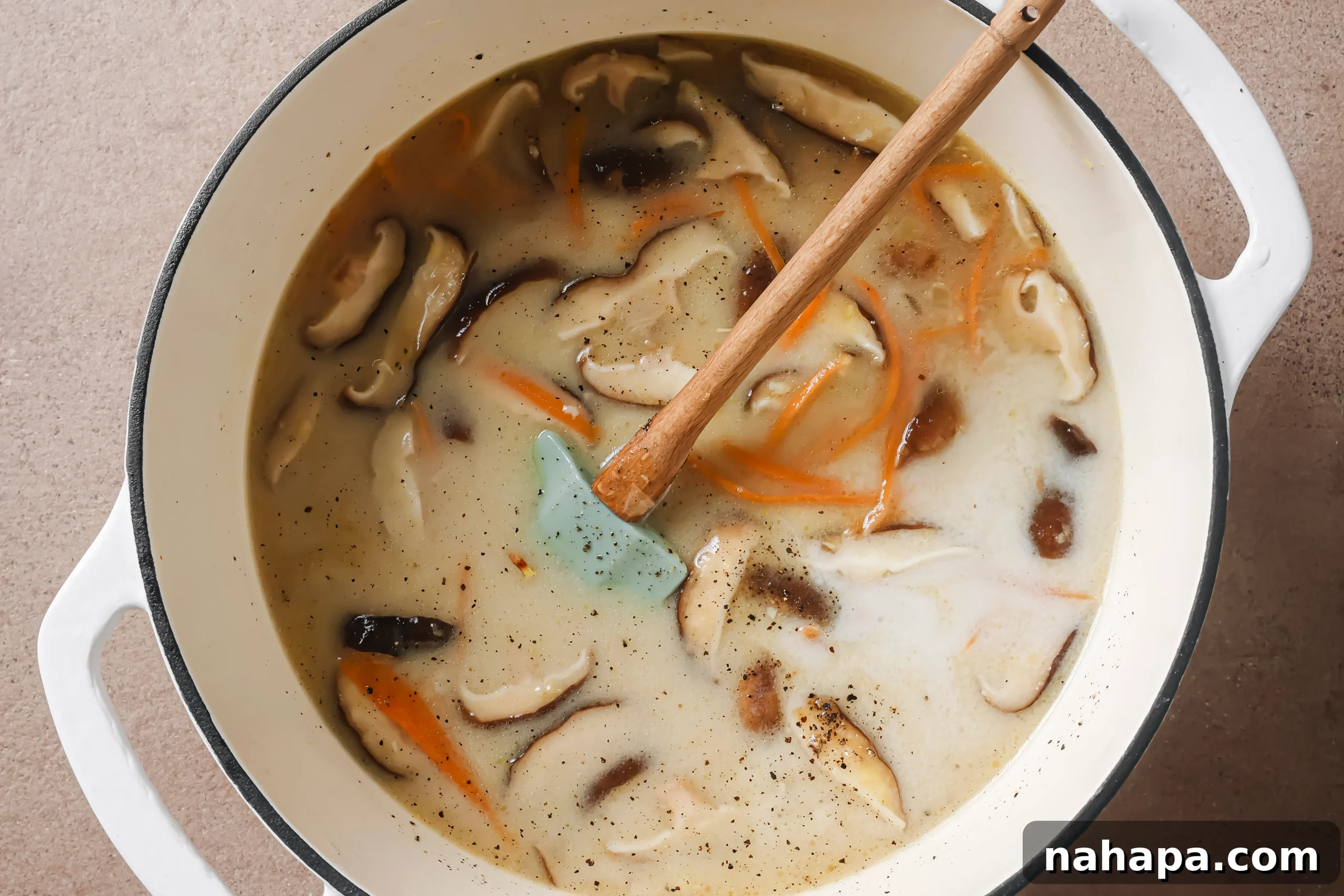
Step Three: Build the Flavor Base. Now it’s time to transform your sautéed ingredients into a rich broth. Carefully pour in the chicken broth (or vegetable broth for a vegetarian option), followed by the luscious canned coconut milk. Add the fish sauce for umami depth, coconut aminos for a soy-free savory note, and the fresh lime juice for that essential tangy brightness. Incorporate the curry paste for its complex spice blend, along with the sea salt and black pepper (if using). Don’t forget to add the small stalk of lemongrass, after removing its thick outer layers, as it will infuse the soup with its unique citrusy, herbaceous aroma. Mix all these ingredients thoroughly until they are well combined, ensuring the curry paste dissolves evenly into the liquid.
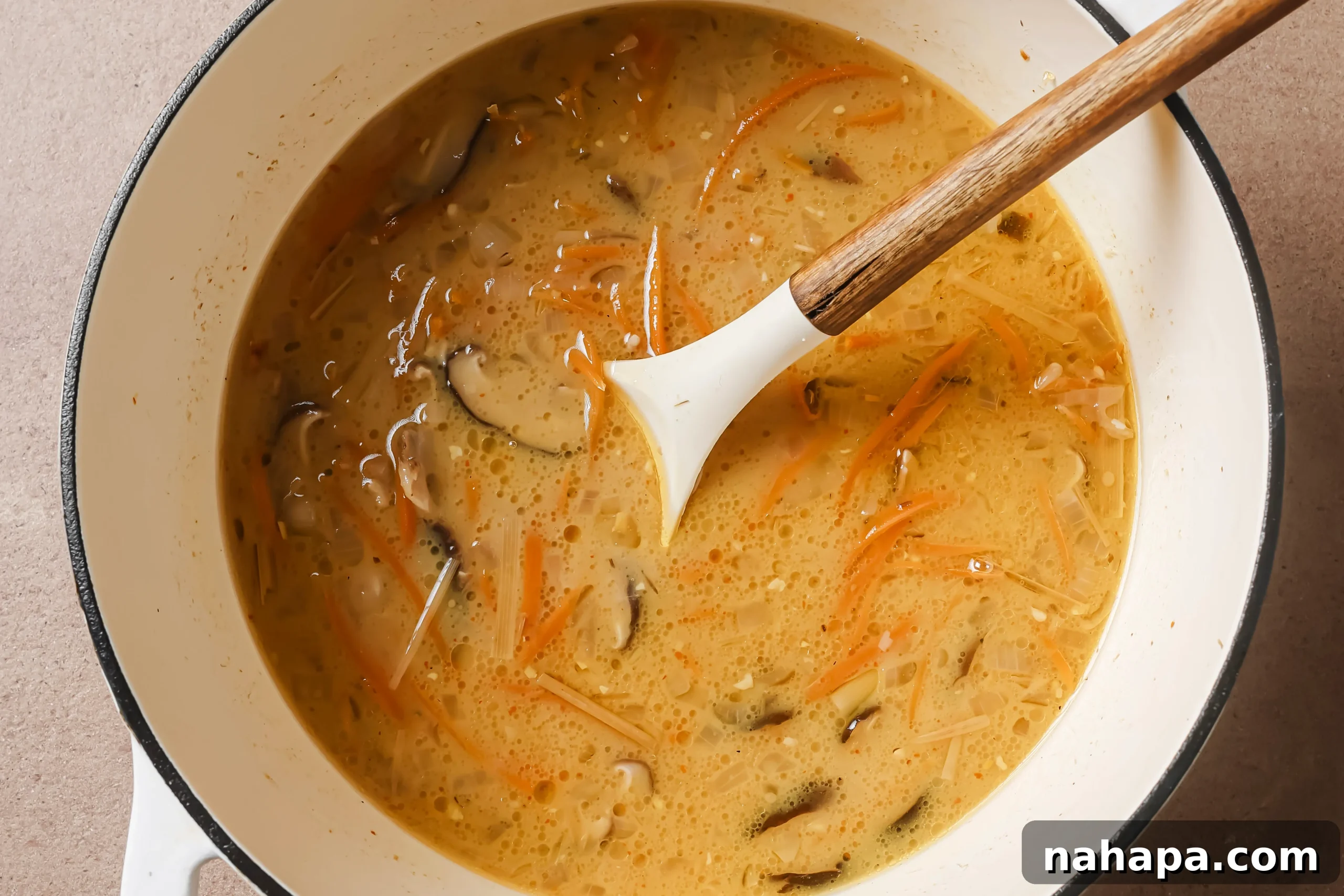
Step Four: Simmer to Perfection and Serve. Bring the soup to a low simmer over medium-low heat. Reduce the heat slightly if it starts to boil vigorously. Allow the soup to gently simmer for 15 to 20 minutes. This simmering period is crucial as it allows all the distinct flavors to meld beautifully, creating a harmonious and deeply aromatic broth. The vegetables will become tender, and the curry paste will fully infuse its warmth throughout the soup. Before serving, carefully remove the stalk of lemongrass (it has served its purpose in flavoring the broth). Ladle the hot soup into bowls and garnish generously with fresh cilantro and additional lime wedges. Enjoy immediately!
Customizing Your Tom Kha Soup: Endless Possibilities
One of the beauties of Tom Kha Soup is its incredible flexibility. This recipe serves as a fantastic foundation, but feel free to experiment and adjust it to your personal taste and dietary requirements. Here are some ideas to make this soup uniquely yours:
- Elevate with Protein: The classic Tom Kha Gai features chicken, and it’s incredibly easy to add. Simply sauté thinly sliced or cubed chicken breast or thighs until cooked through before adding the broth and coconut milk. For a quick option, stir in pre-cooked shredded chicken (like rotisserie chicken) during the last 5-10 minutes of simmering. Shrimp is another excellent choice; add raw shrimp during the last 3-5 minutes of simmering, until they turn pink and opaque. For a plant-based protein, firm tofu or tempeh, pressed and cubed, can be added and simmered along with the vegetables to absorb the rich flavors.
- Embrace a Plant-Based Diet: To ensure your soup is entirely vegan or vegetarian, make two simple swaps: opt for a high-quality vegetable broth instead of chicken broth, and completely omit the fish sauce. You can compensate for the umami by adding a bit more coconut aminos, a dash of tamari, or even a teaspoon of nutritional yeast for a cheesy, savory depth.
- Adjust the Spice Level: If you enjoy a fiery kick, add a pinch of red pepper flakes along with the curry paste, or a few slices of fresh bird’s eye chilies. For a milder soup, simply reduce the amount of curry paste or choose a mild curry paste variety.
- Boost the Veggies: Don’t limit yourself to just mushrooms and carrots! This soup welcomes a variety of vegetables. Try adding sliced bell peppers (red or yellow for a touch of sweetness), bok choy (stir in at the very end until just wilted), snow peas, or bamboo shoots for extra texture and nutrients. Fresh spinach or kale can also be stirred in during the last few minutes.
- Explore Other Aromatics: While lemongrass is key, you can enhance the authentic flavor further by adding a few kaffir lime leaves (bruised to release their aroma) or a slice or two of galangal (a relative of ginger, traditional in Tom Kha). Remember to remove these hard aromatics before serving, just like the lemongrass.
- Garnish for Extra Flair: Beyond cilantro and lime wedges, consider topping your soup with a sprinkle of chopped green onions, a drizzle of chili oil for an extra kick, or toasted coconut flakes for added texture and flavor.
Tom Kha Soup: Your Questions Answered
While “healthy” can be subjective and vary based on individual dietary needs, this Tom Kha Soup recipe is undeniably wholesome. It’s brimming with fresh vegetables, healthy fats from coconut milk, and aromatic spices known for their beneficial properties. When prepared with lean protein and plenty of veggies, it offers a nutrient-dense meal rich in vitamins, minerals, and fiber, making it a fantastic addition to a balanced diet.
Absolutely! This recipe is inherently adaptable for vegan and vegetarian diets. To ensure it’s fully plant-based, simply make two key substitutions: replace chicken broth with a good quality vegetable broth, and omit the fish sauce. The umami depth can still be achieved through sufficient coconut aminos or a vegan fish sauce alternative. The result will be a creamy, flavorful, and entirely plant-powered soup that is equally delicious.
Chicken is the most traditional protein for Tom Kha, giving us Tom Kha Gai. For chicken, you can use pre-cooked shredded chicken (stir it in during the last 5-10 minutes of simmering to warm through) or thinly sliced raw chicken breast or thigh, which can be sautéed briefly before adding the liquids, or simmered directly in the broth until cooked through. Shrimp is another fantastic option; add raw shrimp to the simmering soup during the last 3-5 minutes, removing them once they turn pink and opaque. For plant-based alternatives, consider cubed firm tofu, tempeh, or even thinly sliced mushrooms like oyster mushrooms for a meatier texture.
Achieving a nightshade-free and Autoimmune Protocol (AIP) compliant version of this soup is straightforward. The primary nightshade ingredient is typically curry paste. To make it compliant, simply omit the curry paste from the recipe. You can substitute it with an equal amount of ground turmeric for color and a different kind of warmth, or you can leave it out entirely for a soup that focuses more on the bright flavors of coconut, lime, and lemongrass. While the flavor profile will be slightly different, it will still be incredibly delicious and suitable for your dietary needs. (For a dedicated AIP version with chicken, you might find more specific guidance in my cookbook.)
Leftover Tom Kha Soup stores beautifully. Allow the soup to cool completely before transferring it to an airtight container. It can be refrigerated for up to 3-4 days. To reheat, gently warm the soup on the stovetop over low to medium heat, stirring occasionally, until it is heated through. Avoid boiling the soup vigorously, as this can cause the coconut milk to separate. If the soup appears too thick upon reheating, you can add a splash of broth or water to achieve your desired consistency.
Tom Kha Soup is hearty enough to be a meal on its own, especially with added protein and vegetables. However, it pairs wonderfully with a side of jasmine rice or cauliflower rice for a low-carb option. You could also serve it with a fresh green salad with a light vinaigrette, or a side of spring rolls. For a more elaborate Thai feast, consider pairing it with other classic dishes like Pad Thai or green curry.
More Gluten-Free Asian-Inspired Recipes to Explore
If you loved the flavors of this Tom Kha Soup, you’re in for a treat! Discover more delicious and healthy Asian-inspired dishes that are perfect for any occasion and cater to various dietary needs:
- Easy Paleo Hot & Sour Soup: A comforting classic with a healthy twist.
- Egg Roll Soup: All the flavors of an egg roll, transformed into a cozy soup.
- Easy Egg Roll in a Bowl: A deconstructed, low-carb favorite that’s quick and satisfying.
If you tried this Easy Tom Kha Soup or any other recipe on my blog, please take a moment to leave a rating and share your experience in the comments section below. Your feedback is greatly appreciated! Thanks for visiting!
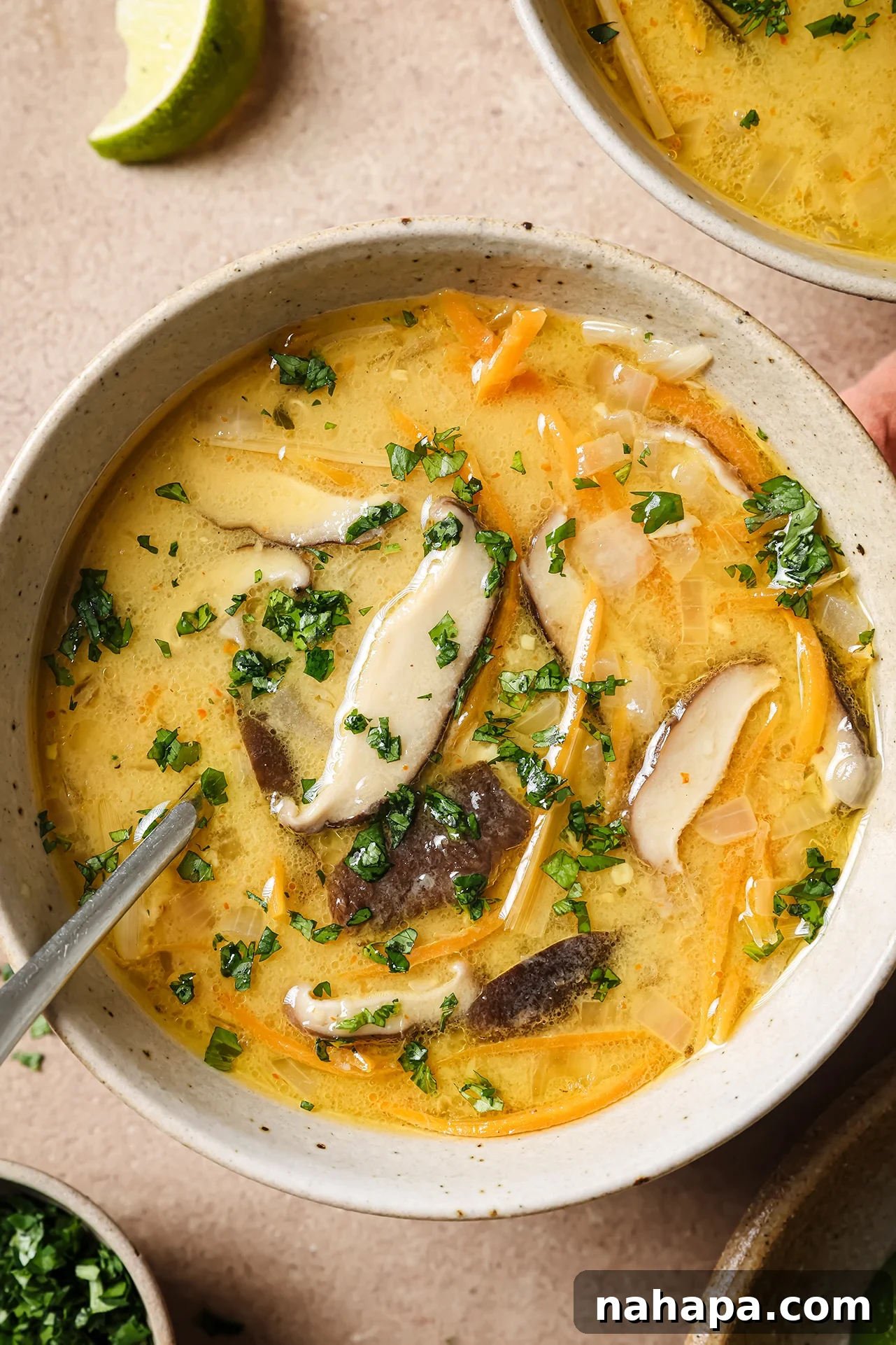
Easy Tom Kha Soup
Leave a Review
Pin Recipe
Ingredients
- 1 tbsp coconut oil
- ½ yellow onion, diced
- 2 cloves garlic, minced
- 1 thumb ginger, grated
- 2 cups shiitake mushrooms, sliced
- 1 cup shredded carrots
- 2 ½ cups chicken broth, sub veggie broth for vegetarian
- 2 cups canned coconut milk
- Juice of one lime
- 2 tsp fish sauce, omit or sub coconut aminos for vegetarian
- 1 tbsp coconut aminos
- ¾ tsp curry paste, season to taste, sub 3/4 tsp turmeric for AIP
- 1 small stalk lemongrass, thick outer layers removed
- ¾ tsp sea salt
- ¼ tsp black pepper, omit for AIP
- 1 tbsp fresh cilantro, to serve
- Lime wedges, to serve
Instructions
-
Using a medium stock pot, melt the coconut oil over medium heat. Add the diced onion and sauté for 3-5 minutes, or until translucent and soft.
-
Add the minced garlic and grated ginger to the pot. Continue to sauté for another 2-3 minutes until fragrant, ensuring they do not burn.
-
Stir in the sliced shiitake mushrooms and shredded carrots. Sauté for an additional 3-4 minutes, until the vegetables begin to soften slightly.
-
Pour in the chicken broth (or veggie broth), canned coconut milk, fish sauce (or coconut aminos), fresh lime juice, and all seasonings (curry paste, sea salt, black pepper – reserving cilantro for garnish). Add the stalk of lemongrass (thick outer layers removed). Mix all ingredients well to combine everything thoroughly.
-
Bring the soup to a gentle low simmer over medium-low heat. Allow it to simmer for 15-20 minutes, giving the flavors time to meld and deepen.
-
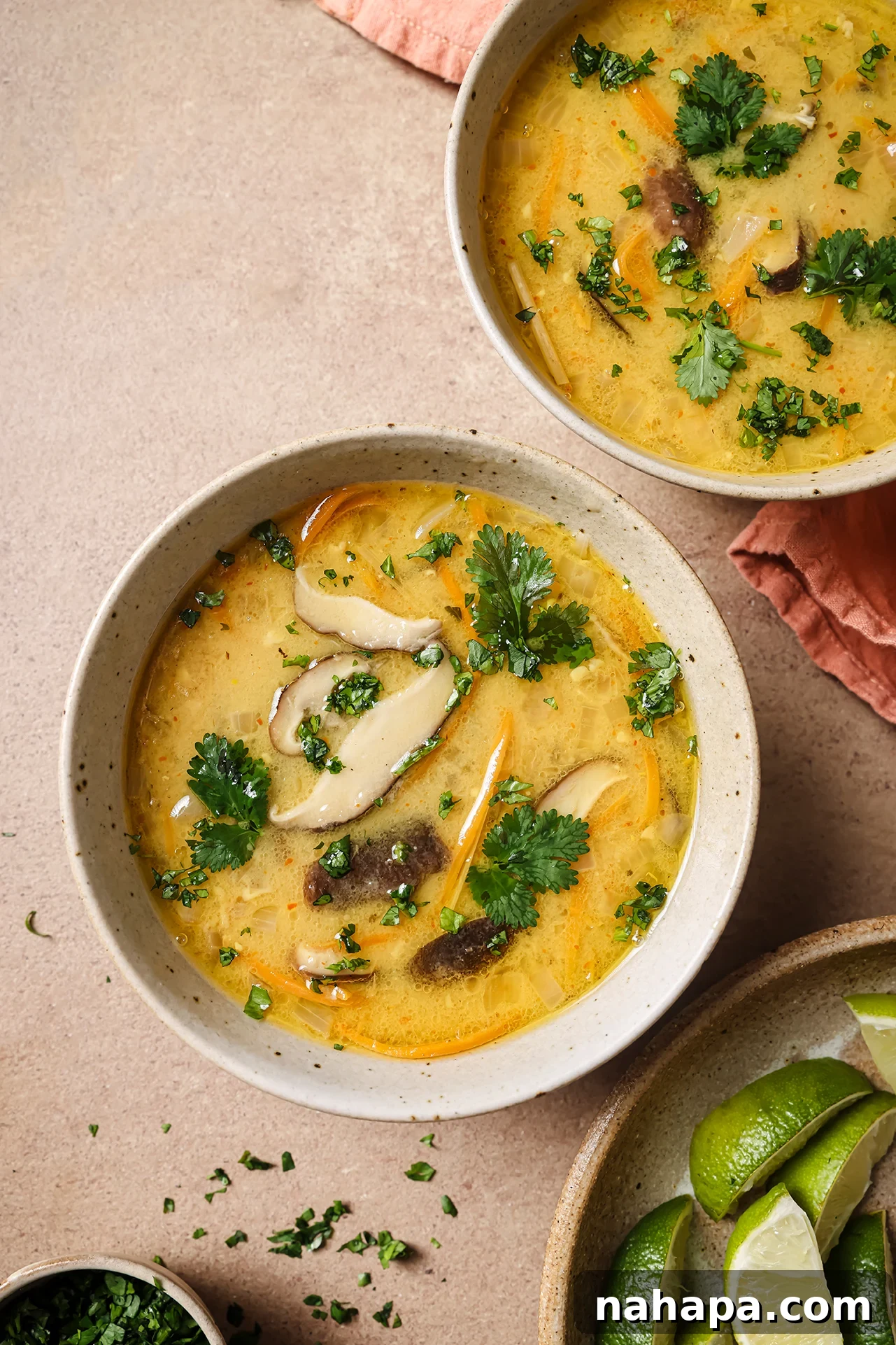
Before serving, carefully remove and discard the lemongrass stalk. Ladle the hot soup into bowls and garnish with fresh cilantro and additional lime wedges. Serve immediately and enjoy!
Notes
Nutrition Information (per serving):
- Serving Size: 1 serving
- Calories: 490kcal
- Carbohydrates: 24g
- Protein: 9g
- Fat: 44g
- Saturated Fat: 38g
- Polyunsaturated Fat: 1g
- Monounsaturated Fat: 2g
- Cholesterol: 4mg
- Sodium: 1774mg
- Potassium: 973mg
- Fiber: 8g
- Sugar: 11g
- Vitamin A: 212IU
- Vitamin C: 7mg
- Calcium: 49mg
- Iron: 4mg