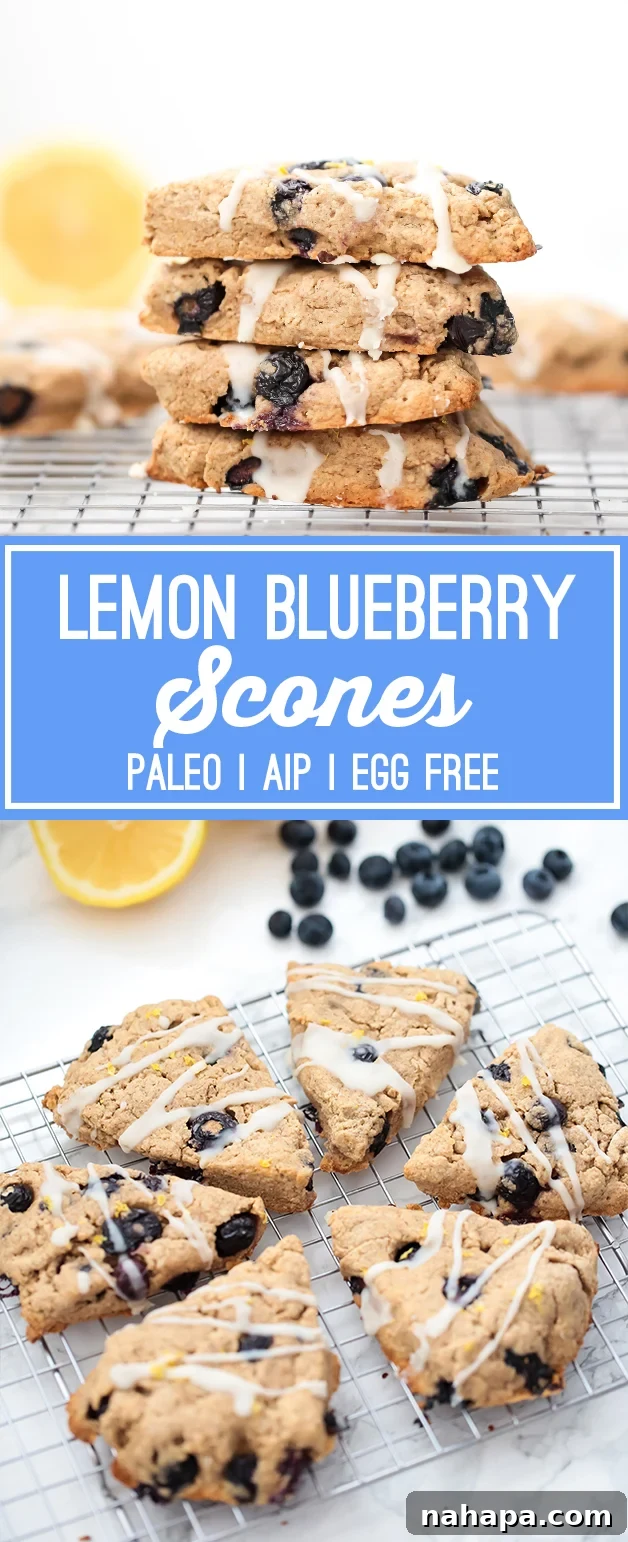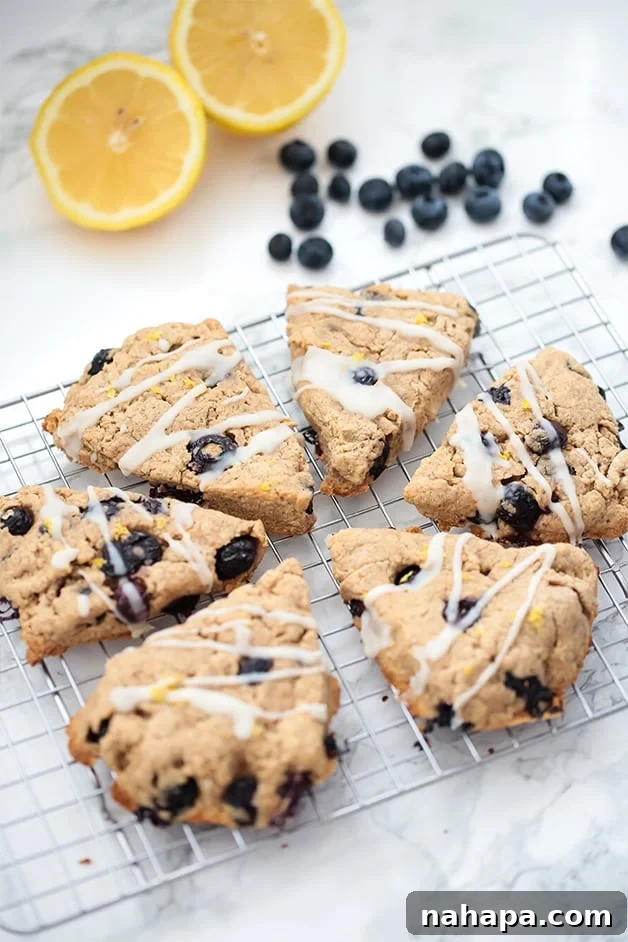
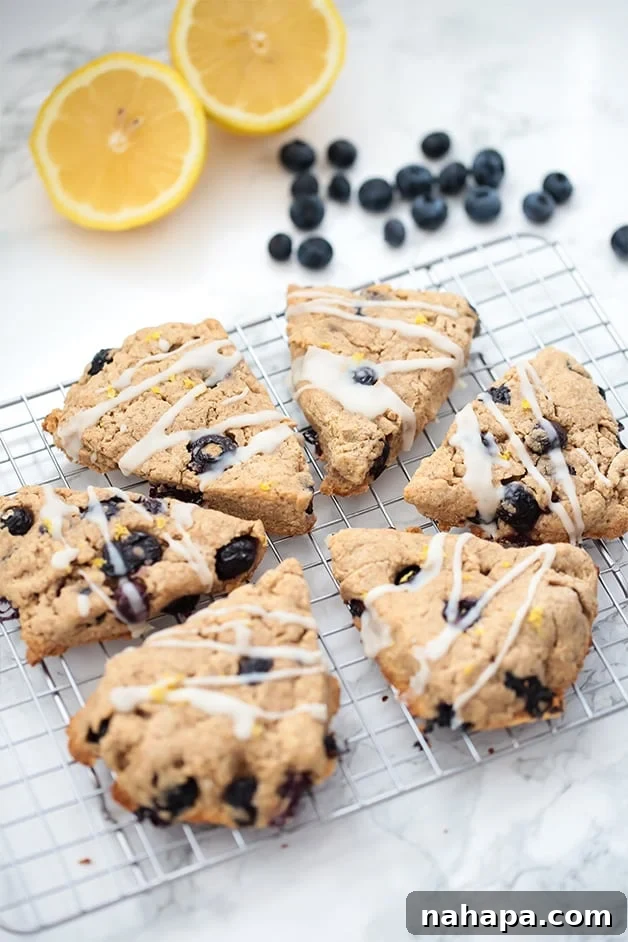
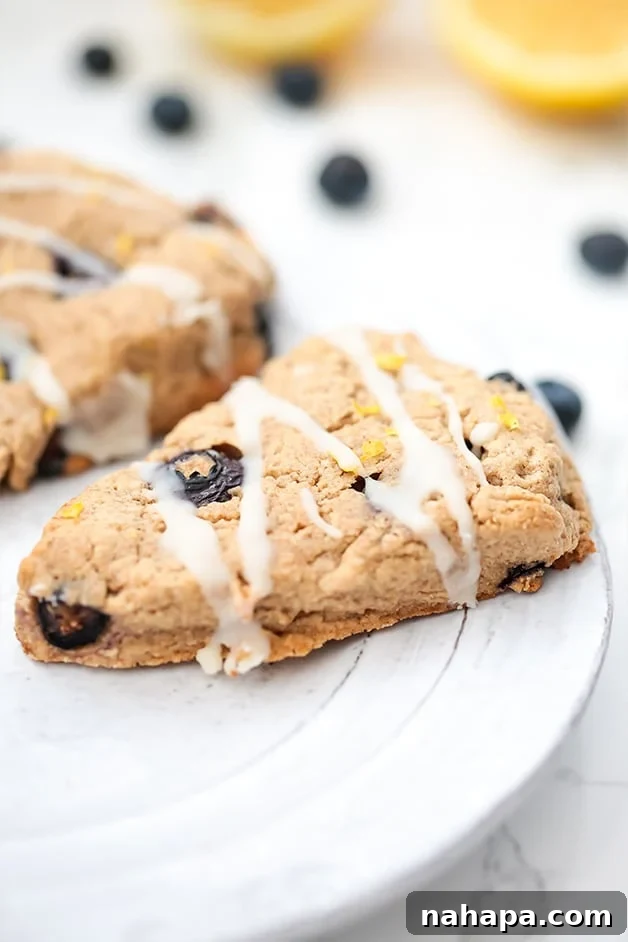
As the crisp air of winter melts into the gentle warmth of spring, our palates naturally gravitate towards brighter, fresher flavors. The season heralds the arrival of vibrant lemons, and soon, the sweet, plump blueberries will grace our markets, making it the perfect time to unite these two glorious ingredients in a truly special treat. With Easter and Mother’s Day just around the corner, I knew I had to create something extraordinary, and these Lemon Blueberry Scones have exceeded all expectations! They strike a harmonious balance between the zesty tartness of lemon and the subtle sweetness of blueberries, offering an absolutely irresistible variation on my popular Orange Cranberry Scones.
What sets these scones apart isn’t just their exquisite taste; it’s their thoughtful design to accommodate various dietary needs. This recipe is meticulously crafted to be paleo and AIP (Autoimmune Protocol) friendly, meaning they are free from grains, nuts, and refined sugars. While they are undoubtedly a treat, they offer a significantly healthier alternative to most store-bought holiday confections, which rarely cater to such specific dietary requirements. Imagine finding an Easter or Mother’s Day indulgence that is inherently grain-free, nut-free, and free of processed sugars – it’s a true rarity! These homemade scones are not only a delightful addition to any Easter brunch or Mother’s Day celebration but also a testament to how incredibly satisfying and inclusive healthy baking can be. Prepare to impress everyone at your next gathering with these wholesome, flavorful pastries.
Essential Ingredients for Flawless Lemon Blueberry Scones
The magic behind these deliciously light and tender scones lies in a carefully selected blend of ingredients, each playing a vital role in achieving their unique flavor and texture while adhering to Paleo and AIP principles. Let’s delve into the specifics of what you’ll need to create these springtime delights.
Tigernut Flour: A Revolutionary Grain-Free Base
In the realm of grain-free and allergen-friendly baking, tigernut flour has become an absolute game-changer. Despite its misleading name, tigernuts are actually small, fiber-rich tubers, not nuts, making this flour an exceptional choice for individuals with nut allergies or those following the Autoimmune Protocol. Its finely ground texture provides a wonderful crumb similar to traditional flours, while imparting a naturally sweet, slightly nutty flavor profile. Beyond its remarkable baking properties, tigernut flour is celebrated for its health benefits, particularly its high content of resistant starch, a prebiotic fiber that nourishes beneficial gut bacteria. This dual benefit of taste and nutrition solidifies its place as a cornerstone ingredient in this recipe.
While some bakers might consider substituting almond flour if nuts are tolerated, it’s important to note that tigernut flour’s unique absorption qualities and binding capabilities are quite distinct. Using almond flour could result in a different texture and consistency for your scones, potentially making them less tender or more crumbly. For optimal results and to ensure AIP compliance, I highly recommend sticking with tigernut flour.
Tapioca Starch: The Secret to Structure and Lightness
Tapioca starch serves a crucial purpose in these scones, acting as an indispensable binding agent that contributes significantly to their overall structure and delicate texture. In gluten-free and grain-free baking, starches like tapioca are essential for preventing baked goods from becoming overly dense or falling apart. It helps create a delightful chewiness and lightness that makes these scones truly satisfying. Should you not have tapioca starch on hand, arrowroot powder makes an excellent, almost interchangeable substitute, performing identically in terms of binding and creating a desirable crumb.
Coconut Oil: The Preferred Healthy Fat
For this recipe, coconut oil is my chosen fat. Its ability to solidify at cooler temperatures is key to developing the flaky layers characteristic of a perfect scone. Furthermore, when refined, coconut oil has a wonderfully neutral flavor that won’t overpower the delicate lemon and blueberry notes. I haven’t widely tested other fats here, as coconut oil consistently yields superior results. However, if you’re exploring alternatives, particularly for AIP, lard could be a viable option due to its similar solid fat properties. Please keep in mind that this substitution has not been tested by me, so results may vary. Ensure your coconut oil is softened but still solid, not melted, for proper incorporation into the dough.
Maple Syrup: A Natural Touch of Sweetness
Pure maple syrup is utilized as the primary sweetener, offering a natural, unrefined option that perfectly complements the tartness of the lemon and the subtle sweetness of the blueberries. Its distinct, rich flavor adds depth to the scones without the need for processed sugars, aligning perfectly with both Paleo and AIP dietary guidelines. If you prefer, raw honey can be used as an equally effective and delicious alternative, providing a slightly different but equally pleasant sweet note.
Fresh Blueberries: Bursts of Antioxidant-Rich Flavor
The inclusion of fresh blueberries is non-negotiable for these scones. Each berry bursts with a sweet-tart juiciness that enhances the lemon flavor beautifully, creating a symphony of taste in every bite. Beyond their delightful flavor, blueberries are a low-sugar fruit packed with powerful antioxidants and essential vitamins, contributing to the health benefits of this treat. While fresh blueberries are highly recommended for their texture and vibrant appearance, frozen blueberries can be used if fresh are unavailable. If using frozen, add them directly to the dough without thawing to prevent excessive moisture and potential discoloration of your scones.
Lemon Juice and Zest: The Ultimate Flavor Enhancers
The bright, refreshing essence of these scones comes directly from the dynamic duo of fresh lemon juice and lemon zest. The juice provides a necessary acidic counterpoint to the sweetness, while the zest, rich in aromatic oils, infuses the entire scone with an intense, fragrant citrus aroma. You’ll typically find that one medium-sized lemon is sufficient to provide both the juice and the zest required, ensuring maximum freshness and potency of flavor.
Egg or Gelatin Egg: The Essential Binder for All
To bind the dough perfectly, this recipe offers two flexible options: a standard egg or a gelatin egg. If you tolerate eggs, a single large egg will provide excellent structure and moisture. However, for those on the AIP diet or with egg sensitivities, the gelatin egg is an ingenious and highly effective substitute. As an egg-free alternative, a gelatin egg flawlessly mimics the binding properties of a conventional egg, ensuring your scones are perfectly cohesive and tender. I personally favor the gelatin egg to maintain full AIP compliance, and the simple preparation method ensures anyone can enjoy these delightful treats.
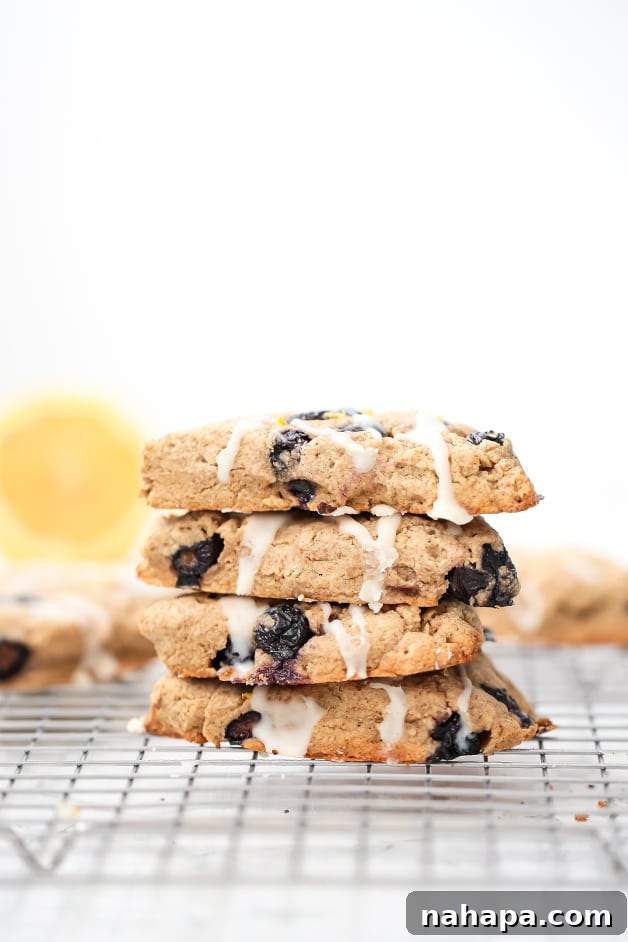
Lemon Blueberry Scones (Paleo, AIP) Recipe
Yield: 6 scones
Author: Michelle
Average Rating: 4.67 from 12 reviews
Print Recipe | Pin Recipe
Ingredients
- 1 ¼ cup tigernut flour (recommended brand)
- ¼ cup tapioca starch
- ¼ cup coconut oil, softened (recommended brand)
- ¼ cup maple syrup (recommended brand)
- ½ cup fresh blueberries
- 1 tbsp lemon juice
- ¼ tsp baking soda (recommended brand)
- For the gelatin egg (sub 1 regular egg if tolerated):
- 1 tbsp gelatin (Great Lakes or Vital Proteins, recommended brand)
- ¼ cup water
- For topping:
- 1 tbsp melted coconut butter
- 1 tsp lemon zest
Instructions
- Preheat your oven to 350°F (175°C). Line a baking sheet with parchment paper and lightly grease it to prevent sticking.
- In a large mixing bowl, sift together the tigernut flour and tapioca starch. Set this dry mixture aside.
- In a separate medium bowl, combine the softened coconut oil, fresh lemon juice, and maple syrup. Stir these ingredients thoroughly until they are well integrated.
- Add the baking soda and fresh blueberries to the wet ingredient mixture, stirring gently to combine.
- Prepare the gelatin egg (if using): Pour ¼ cup of water into a small saucepan. Slowly sprinkle the 1 tbsp of gelatin over the water, mixing lightly if needed to avoid clumps. Allow the gelatin to “bloom” by resting for 2-3 minutes until it thickens slightly. Place the saucepan on the stove over very low heat and gently melt the gelatin, stirring continuously for just a few minutes until smooth. Remove from heat and vigorously whisk the gelatin until it becomes frothy. Immediately incorporate this frothy gelatin egg into your scone dough mixture and mix well to ensure everything is fully combined. (If using a regular egg, simply add it to the wet ingredients in step 3 and mix.)
- Once the dough is fully combined and forms a soft, cohesive mass, transfer it onto a lightly floured surface (using a bit of extra tigernut flour or tapioca starch to prevent sticking). Gently pat the dough into a large circle, ensuring it is approximately one inch thick.
- Using a pizza cutter or a sharp knife, carefully slice the circular dough into 6 equal triangular scones. This classic shape helps the scones bake evenly.
- Carefully transfer the shaped scones to your prepared baking sheet, leaving some space between each.
- Bake in the preheated oven for 20-25 minutes, or until the edges are golden brown and the scones feel firm when gently pressed.
- Once baked, remove the scones from the oven and allow them to cool completely on the baking sheet or a wire rack. Cooling is important for the scones to set properly.
- To finish, drizzle the melted coconut butter over each cooled scone and sprinkle generously with the remaining fresh lemon zest. Serve immediately and savor every bite of these delightful treats!
Important Notes on Nutrition and Storage
Please be aware that all nutritional information provided here is an estimation and can vary depending on the specific brands and exact quantities of ingredients used. These estimations do not account for any optional toppings or variations not listed in the main recipe. For the best flavor and texture, these scones are ideally enjoyed fresh on the day they are baked. However, they can be stored in an airtight container at room temperature for up to 2 days, or refrigerated for up to 4 days.
Nutrition Facts (Estimated per serving)
- Serving Size: 1 scone
- Calories: 273 kcal
- Carbohydrates: 19.3g
- Protein: 3.4g
- Fat: 13.2g
- Fiber: 1.1g
These Lemon Blueberry Scones have truly become a crowd-pleaser! I’ve had the immense pleasure of sharing them with a wide range of individuals – from my family and close friends to neighbors and acquaintances – many of whom do not follow AIP or Paleo diets. The universal feedback has been overwhelmingly positive; everyone adored them and, remarkably, had no idea they were free of so many common allergens. This widespread acceptance speaks volumes about their deliciousness and proves that baking without grains, nuts, and refined sugars can be incredibly satisfying and appealing to every palate. It’s a joy to offer a treat that everyone can enjoy without worry!
Expert Tips for Baking Your Best Scones
Achieving perfectly tender and flaky scones requires a few key techniques. Follow these tips to ensure your Lemon Blueberry Scones turn out beautifully every time:
- Maintain Cold Ingredients: The secret to flaky scones lies in cold fat. Ensure your coconut oil is chilled and firm before you begin. Handle the dough as little as possible to prevent the fat from melting, which is crucial for those desirable flaky layers.
- Avoid Overmixing: Gently combine the ingredients only until they are just incorporated. Overmixing can lead to a tougher scone, even with gluten-free flours. The less you work the dough, the more tender your scones will be.
- Aim for the Right Dough Consistency: Your dough should be soft and manageable, but not overly sticky. If it feels too wet, sprinkle in a tiny bit more tigernut flour or tapioca starch. If it’s too dry and crumbly, add a splash of lemon juice or water, one teaspoon at a time, until the desired consistency is achieved.
- Precision in Slicing: Use a very sharp knife or a pizza cutter to make clean cuts when dividing the dough into triangles. This helps maintain the scone’s shape and promotes even baking.
- Patience During Cooling: As tempting as it is to dive in immediately, allow your scones to cool completely on a wire rack before applying the coconut butter drizzle and lemon zest. This step allows the scone’s structure to set and prevents the topping from melting prematurely, ensuring a beautiful finish.
Serving Suggestions & Creative Variations
While these Lemon Blueberry Scones are a phenomenal standalone treat, their versatility allows for various serving suggestions and delicious adaptations:
- Classic Brunch Companion: Serve them warm alongside a fruit salad, bacon, and your favorite herbal tea or coffee for an unforgettable brunch spread.
- Afternoon Tea Delight: Pair them with a simple cup of tea for an elegant and satisfying afternoon snack.
- Enhanced Toppings: While the coconut butter and lemon zest topping is perfect, consider adding a dollop of coconut cream (if tolerated and AIP-friendly) or a sprinkle of toasted shredded coconut for extra texture and flavor.
- AIP-Friendly Lemon Glaze: For an alternative to coconut butter, whisk together a small amount of powdered maple sugar (ensure it’s AIP compliant) with a tiny bit of fresh lemon juice until you get a thin, drizzly glaze.
- Berry Medley: Experiment with other seasonal berries like raspberries or mixed berries for a different flavor profile, keeping in mind that the tartness might vary.
Storage and Freezing for Future Enjoyment
To keep your freshly baked Lemon Blueberry Scones tasting their best, proper storage is key. Store any leftover scones in an airtight container at room temperature for up to 2 days. If you need to keep them longer, they will stay fresh in the refrigerator for up to 4 days. Before serving, a quick warm-up in a toaster oven or microwave will help restore their soft, tender texture and delightful aroma.
These scones are also excellent candidates for freezing, making them a fantastic make-ahead option! Once completely cooled, wrap each scone individually in plastic wrap, then place them in a freezer-safe bag or container. They can be stored in the freezer for up to 3 months. When you’re ready to enjoy one, simply remove it from the freezer, unwrap, and reheat in a preheated oven at 300°F (150°C) for about 10-15 minutes, or until warmed through. This convenience means you can always have a wholesome, delicious treat ready to go!
I truly hope you find immense joy in baking and savoring these delightful Lemon Blueberry Scones. They represent the delicious possibilities of dietary-friendly baking, proving that restrictive diets don’t mean sacrificing flavor or enjoyment. Each bite is a celebration of fresh, vibrant spring flavors, crafted with wellness in mind. If you whip up a batch, I’d absolutely love to see your creations! Please share your photos on social media and don’t forget to tag @unboundwellness on Instagram, using the hashtag #unboundwellness. Happy baking!