
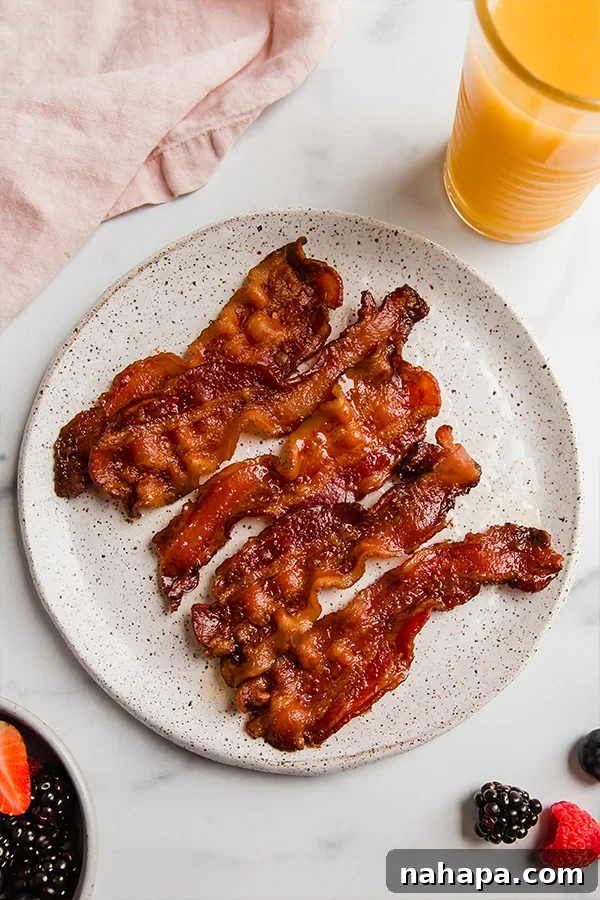
There’s nothing quite like the aroma of sizzling bacon to kickstart your day, but the traditional pan-frying method often comes with a messy splatter and constant attention. What if we told you there’s a simpler, cleaner, and superior way to achieve perfectly crispy, evenly cooked bacon every single time? Enter the world of **oven-baked bacon** – a game-changer for anyone looking to streamline their breakfast or brunch prep.
This comprehensive guide will transform the way you think about cooking bacon. Say goodbye to grease stains on your stovetop and hello to hands-free perfection. Whether you’re making a quick weekday breakfast for one or a lavish brunch spread for many, mastering the art of oven-baked bacon will elevate your culinary experience and simplify your life in the kitchen.
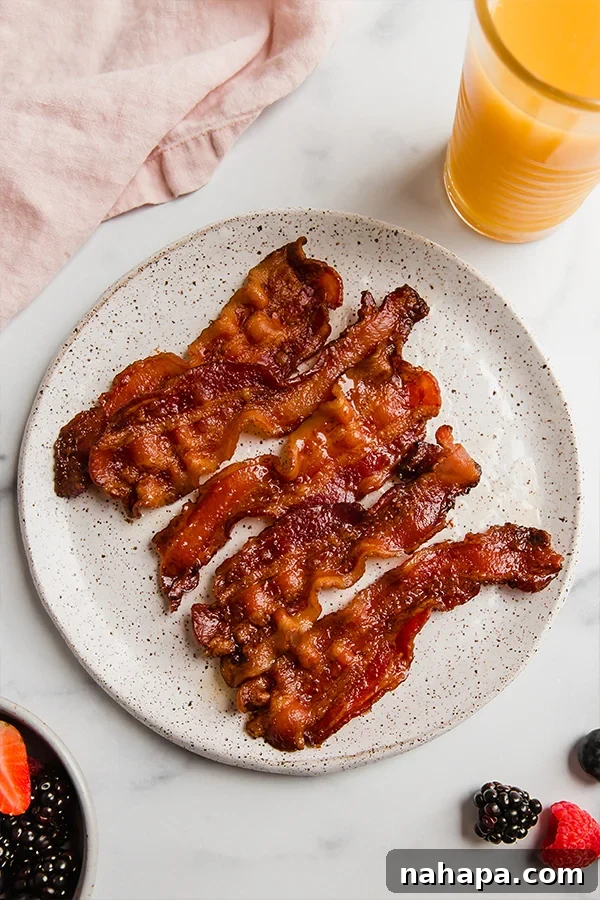
Oven-Baked Bacon: The Ultimate Guide to Perfect Crispy Strips
If you’ve ever found yourself dodging hot oil, meticulously flipping strips, and constantly wiping down your stove after cooking bacon, you’re not alone. Pan-frying bacon is notoriously messy and requires a dedicated presence at the stovetop. This is precisely why oven-baked bacon has become a beloved method for home cooks everywhere – it’s clean, efficient, and delivers consistent results that are hard to beat. My husband and I agree: once you try baking bacon, you’ll never go back!
This method isn’t just about avoiding mess; it’s about achieving a level of perfection. When bacon cooks in the oven, each strip lies flat, allowing the heat to circulate evenly around it. This results in bacon that’s beautifully golden brown, uniformly crispy, and cooked just the way you like it, without the fuss.
The Undeniable Benefits of Cooking Bacon in the Oven
Switching from skillet to oven might seem like a small change, but it brings a host of significant advantages to your kitchen routine. Here’s why baking your bacon is the superior choice:
- Effortlessly Hands-Off: The “set it and forget it” nature of oven cooking is perhaps its biggest draw. Unlike pan-frying, which demands constant vigilance and flipping, baking bacon requires minimal attention. Simply arrange your bacon on a sheet pan, slide it into the oven, and let the magic happen. This frees you up to prepare other breakfast items, make coffee, or simply enjoy a few extra minutes of calm.
- Dramatically Less Mess: This is a major win for kitchen cleanliness. When bacon cooks in a skillet, grease inevitably splatters across your stovetop, backsplash, and even the floor. Baking, however, contains the splatter within the oven and onto a parchment-lined sheet pan. This means significantly less scrubbing after your meal, making cleanup a breeze.
- Superior Evenness and Crispiness: Oven-baked bacon cooks flat and evenly across all strips. There are no curled edges or unevenly cooked spots, just perfectly crisp bacon from end to end. The consistent heat distribution ensures every piece reaches your desired level of crispness without burning.
- Convenient Bacon Fat Collection: Bacon fat is liquid gold in the kitchen, adding incredible flavor to so many dishes. Collecting it from a hot skillet can be a hazardous task. With oven-baked bacon, especially when using parchment paper, transferring the rendered fat to a jar is incredibly simple. Just lift the parchment paper, funnel the fat into your container, and store it for future use. No more scraping or dangerous pouring!
- Ideal for Batch Cooking: Whether you’re feeding a crowd or meal-prepping for the week, the oven method allows you to cook large quantities of bacon simultaneously. You can easily fill a full sheet pan (or two!) with bacon, making it perfect for brunches, holidays, or simply having cooked bacon on hand for quick meals.
Essential Tools for Perfectly Baked Bacon
You don’t need fancy gadgets to achieve culinary perfection with oven-baked bacon. A few basic kitchen staples are all it takes:
- Quality Bacon: The star of the show! This method works beautifully with any type of bacon – thin-cut, thick-cut, uncured, smoked, or artisanal. For consistent results, I often reach for brands like Applegate, but feel free to use your favorite. Consider the thickness, as it will influence your cooking time and final texture.
- A Large Rimmed Baking Sheet: This is crucial. The raised edges of the sheet pan are essential for containing the rendering bacon fat, preventing it from spilling over and creating a mess inside your oven. A standard half-sheet pan (approximately 13×18 inches) is ideal for most batches, allowing enough space for the bacon strips without overcrowding.
- Parchment Paper: Your best friend for easy cleanup. Lining your baking sheet with parchment paper ensures that the bacon doesn’t stick and makes transferring the cooked bacon (and saving the fat) incredibly simple. It also acts as an extra barrier to prevent grease from touching the pan itself. While foil can be used, parchment paper is generally preferred for its non-stick properties and ease of handling bacon.
How to Cook Bacon in the Oven: A Simple Three-Step Process
Achieving perfectly crispy, delicious bacon in your oven is incredibly straightforward. Follow these three easy steps for a stress-free cooking experience:
- Step One: Prepare and Arrange. Begin by preheating your oven to the recommended temperature (we’ll dive into specifics shortly). While the oven heats, line your large rimmed baking sheet with parchment paper. This vital step ensures easy cleanup and prevents sticking. Next, lay your bacon strips out on the parchment paper, making sure they are in a single layer and do not overlap. Adequate spacing is key for even cooking and optimal crispiness.
- Step Two: Bake to Perfection. Once your oven is preheated and your bacon is arranged, carefully transfer the sheet pan into the hot oven. The baking time will vary depending on the thickness of your bacon and your desired level of crispiness, but generally, it will take between 18-22 minutes. Keep an eye on it, especially towards the end of the cooking time, to ensure it cooks to your liking without burning.
- Step Three: Remove and Enjoy. Once the bacon has reached your preferred crispness – from slightly chewy to shatteringly crisp – carefully remove the baking sheet from the oven. For extra crispiness and to drain excess fat, you can transfer the cooked bacon onto a plate lined with paper towels or a wire rack set over a plate. Allow it to cool for a minute or two before serving, as it will continue to crisp up slightly as it cools.
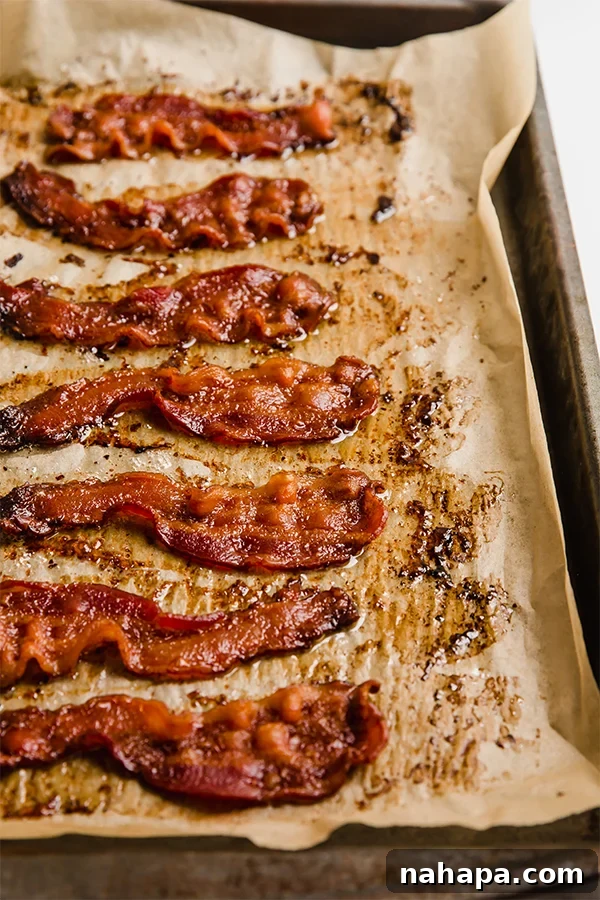
Expert Tips and Tricks for Flawless Oven Bacon
While baking bacon is simple, a few insider tips can help you achieve truly exceptional results every time:
- Monitor Cook Time Closely: Bacon thickness and personal preference for crispiness are the two main factors influencing cook time. While 18-22 minutes is a good starting point, always trust your eyes. Thinner bacon will cook faster and become crispier sooner, while thicker cuts require a few extra minutes. It’s a narrow window, so check frequently towards the end.
- Parchment Paper is Non-Negotiable: We’ve mentioned it, but it bears repeating. Parchment paper isn’t just for cleanup; it helps prevent sticking, allows for easy fat collection, and contributes to the overall even cooking of the bacon. Avoid direct contact with the metal pan for best results.
- Ensure Even Spacing: Overlapping bacon strips will steam instead of crisp, resulting in unevenly cooked and less desirable textures. Give each strip its space on the sheet pan to ensure uniform exposure to heat and maximum crispiness. If you’re cooking a large batch, use two sheet pans instead of overcrowding one.
- Preheat Your Oven Thoroughly: Don’t skip the preheating step! A hot oven ensures that the bacon starts cooking immediately and renders its fat efficiently, leading to crispier results. Placing bacon in a cold oven can cause it to cook unevenly and become tough.
- Consider a Wire Rack (Optional): For truly restaurant-quality, extra-crispy bacon, place a wire rack inside your parchment-lined sheet pan before arranging the bacon. This elevates the bacon, allowing air to circulate all around each strip and fat to drip away, leading to maximum crispness.
- Pat Bacon Dry (Optional but Recommended): For the ultimate crisp factor, lightly pat your bacon strips dry with paper towels before placing them on the parchment paper. Removing excess surface moisture can help the bacon get crispier faster.
Optimal Oven Temperature for Bacon
The ideal temperature for baking bacon is a sweet spot that allows the fat to render slowly and the meat to crisp without burning. I find that 400°F (200°C) works best for most ovens, delivering beautifully crispy bacon within a short timeframe. However, if you know your oven tends to run a bit hot, or if you prefer a slightly slower cook for more control, feel free to turn it down to 375°F (190°C) and adjust the cooking time accordingly.
How Long to Cook Thick-Cut Bacon in the Oven?
Thick-cut bacon requires a bit more time in the oven due to its robust nature. Here are general guidelines:
- At 400°F (200°C): Bake for approximately 20-22 minutes.
- At 375°F (190°C): Bake for approximately 23-25 minutes.
Always remember to check for visual cues of doneness – golden brown and bubbling fat indicates readiness.
How Long to Cook Thin-Cut Bacon in the Oven?
Thin-cut bacon cooks faster and can go from perfectly crispy to burnt quickly, so keep a closer eye on it.
- At 400°F (200°C): Bake for approximately 18-20 minutes.
- At 375°F (190°C): Bake for approximately 20-25 minutes.
Adjust times based on your oven’s calibration and how crispy you like your bacon.
Can You Make Oven-Baked Bacon Ahead of Time?
While bacon is undeniably best enjoyed fresh out of the oven, radiating warmth and crispness, you can certainly batch cook it and store it for later. This is a fantastic strategy for meal prep! Once cooked and cooled, store the bacon in an airtight container in the refrigerator for up to 3-5 days. For best reheating results, lay it on a sheet pan and warm it in a 350°F (175°C) oven for a few minutes until crispy again, or briefly microwave it for a quicker option, though it might lose some crispness.
Creative Uses for Leftover Bacon Fat
Don’t let that flavorful rendered bacon fat go to waste! It’s a versatile ingredient that can add incredible depth to numerous dishes. Here are some of our favorite ways to utilize every last drop:
- Cook Vegetables Immediately on the Baking Sheet: A brilliant hack for injecting incredible flavor into your side dishes! After you remove the cooked bacon, leaving the hot fat on the parchment-lined sheet pan, add sturdy vegetables like asparagus, broccoli florets, green beans, or chopped Brussels sprouts. Toss them directly in the hot bacon fat, season with salt and pepper, and return them to the oven (which is still hot, but can be turned down to 375°F/190°C) for 10-15 minutes, or until tender-crisp. The vegetables will absorb all that delicious smoky flavor.
- Store in a Jar for Future Cooking: For longer-term use, allow the bacon fat to cool slightly, then carefully pour it through a fine-mesh sieve (to remove any burnt bits) into a clean, airtight jar. Store the jar in the refrigerator, where the fat will solidify and keep for several weeks. Use this flavorful fat to sauté eggs, roast potatoes, brown onions, season cornbread, or enhance the flavor of just about any savory dish that could use a touch of smoky richness. It’s a fantastic substitute for butter or oil in many recipes.
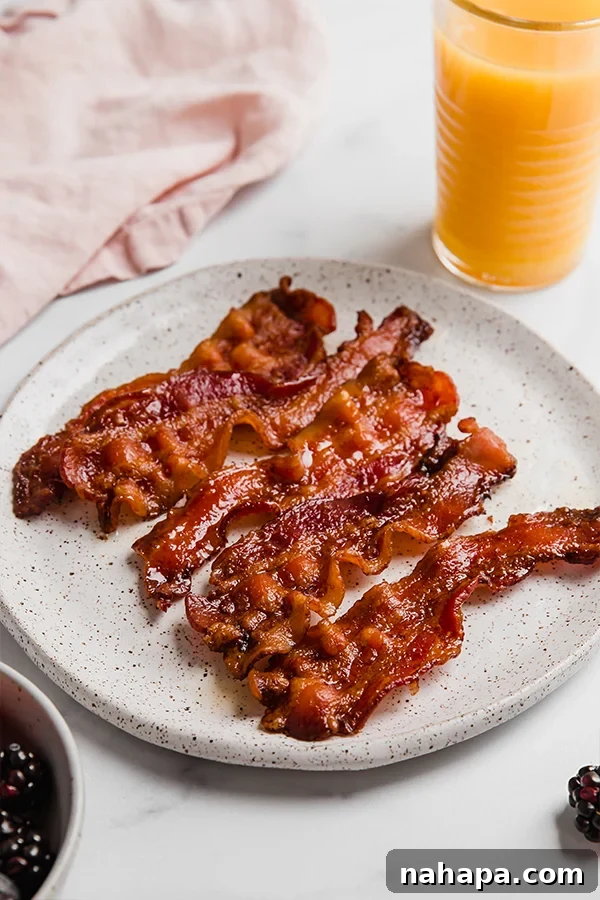
How to Cook Bacon in the Oven (Easy & Perfect Every Time!) – The Recipe
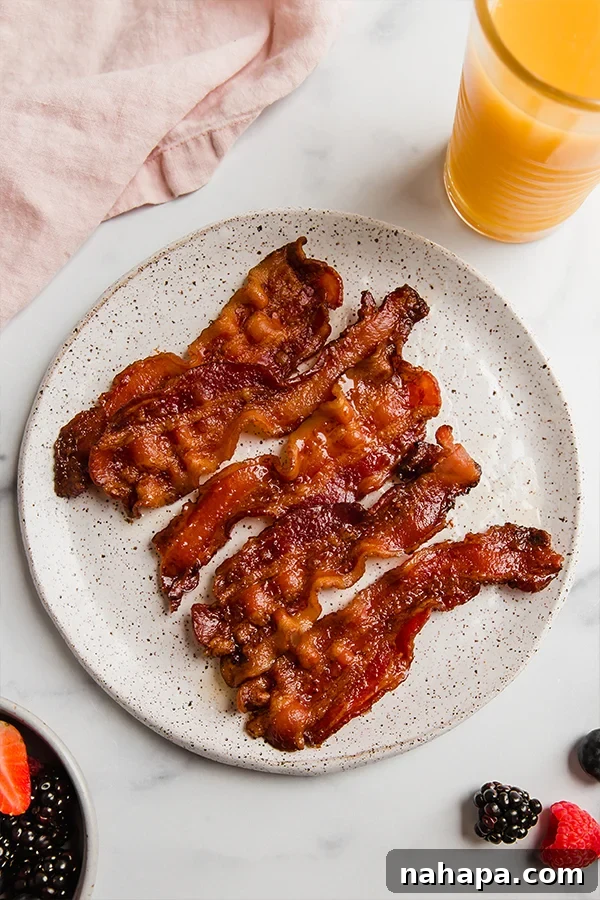
Say goodbye to greasy stovetops and unevenly cooked strips! This simple method delivers consistently crispy, perfectly cooked bacon every single time, making your breakfast and brunch prep a breeze.
Yield: 3-4 servings
Cook Time: 20 mins
Total Time: 20 mins
Author: Michelle
Ingredients
- 8 oz bacon (any preferred brand, thick or thin-cut)
Instructions
- Preheat your oven to 400°F (200°C). Line a large rimmed baking sheet with parchment paper.
- Arrange the bacon strips in a single layer on the prepared baking sheet, ensuring they do not overlap. This allows for even cooking and optimal crispiness.
- Transfer the baking sheet to the preheated oven and bake for 18-22 minutes. The exact cooking time will depend on the thickness of your bacon and how crispy you like it. Thinner bacon will cook faster, while thicker cuts will require a bit more time.
- Once the bacon is cooked to your liking (golden brown and crispy), carefully remove the baking sheet from the oven. For extra crispiness and to drain excess fat, transfer the bacon to a plate lined with paper towels or a wire rack set over a plate. Allow it to cool slightly before serving and enjoying!
Nutrition Information (Estimated)
Serving: 1 serving, Calories: 311kcal, Carbohydrates: 1g, Protein: 9.4g, Fat: 29.6g
All nutrition facts are estimated and will vary based on ingredients and preparation.
Did you make this recipe? We’d love to see it! Tag @unboundwellness on Instagram and use the hashtag #unboundwellness to share your creations!
Beyond Breakfast: Serving Suggestions for Oven-Baked Bacon
While oven-baked bacon is a breakfast and brunch staple, its versatility extends far beyond the morning meal. Once you have a batch of perfectly crispy bacon, the possibilities are endless:
- Classic Breakfast & Brunch: Serve alongside scrambled eggs, pancakes, waffles, or a hearty omelet. It’s also fantastic with toast and avocado.
- Sandwich Enhancer: Add a layer of crisp bacon to BLTs, turkey clubs, or any sandwich for an irresistible crunch and salty kick.
- Salad Topping: Crumble cooled bacon into bits and sprinkle over salads for added texture and savory flavor. Caesar salads, cobb salads, and even simple green salads are elevated with bacon.
- Baked Potato Topping: No loaded baked potato is complete without a generous helping of crispy bacon bits.
- Soups and Stews: Stir crumbled bacon into creamy potato soup, lentil soup, or a rich chili for an extra layer of smoky flavor.
- Pasta Dishes: Use rendered bacon fat as the base for a sauce, then top with crumbled bacon for dishes like carbonara or a simple bacon and pea pasta.
- Burgers and Hot Dogs: Elevate your backyard BBQ fare with slices of perfectly cooked bacon on your burgers or wrapped around hot dogs.
Troubleshooting Common Oven-Baked Bacon Issues
Even though this method is straightforward, sometimes things don’t go exactly as planned. Here are some common issues and how to fix them:
- Bacon Isn’t Crispy Enough: This is usually due to insufficient cooking time or overcrowding the pan.
- Solution: Return the bacon to the oven for a few more minutes, checking frequently. Ensure strips are not overlapping. For future batches, consider using a wire rack or cooking at a slightly higher temperature if your oven runs cool.
- Bacon is Too Crispy/Burnt: Overcooking, especially with thinner cuts, can lead to burnt bacon.
- Solution: Next time, reduce the cooking time by a few minutes. If using thinner bacon, start checking it around the 15-minute mark. Lowering the oven temperature slightly can also give you more control.
- Bacon is Unevenly Cooked: This often happens with inconsistent bacon thickness or improper spacing on the pan.
- Solution: Try to select bacon packages with uniformly thick slices. Always ensure there’s ample space between each strip on the baking sheet. If necessary, rotate the pan halfway through cooking, especially if your oven has hot spots.
- Excessive Smoke in the Oven: While a little smoke is normal, excessive smoke might mean the oven temperature is too high or there’s old grease on the bottom of the oven.
- Solution: Double-check your oven temperature. Ensure your sheet pan is clean before adding parchment paper. If you regularly cook greasy foods, periodically clean your oven.
Conclusion: Embrace the Ease of Oven-Baked Bacon
Cooking bacon in the oven is more than just a convenience; it’s a revelation. It transforms a potentially messy and time-consuming task into an effortless culinary success, guaranteeing perfectly crispy, flat, and flavorful bacon with minimal fuss. From reducing cleanup to ensuring consistent results and providing an easy way to save valuable bacon fat, the benefits are clear.
Whether you’re a seasoned home chef or just starting your cooking journey, this method will quickly become your go-to for preparing bacon. It’s perfect for busy mornings, feeding hungry families, or simply enjoying a leisurely weekend brunch. So, next time that bacon craving hits, skip the skillet, preheat your oven, and prepare to be amazed by the simplicity and deliciousness of oven-baked bacon!
You’ll Also Love These Bacon-Inspired Recipes:
- Breakfast Sausage Chicken Poppers
- Bacon & Beef Chili
- Apple Bacon Jam