
This post contains affiliate links. Learn what that means, here.
Welcome to a season of vibrant renewal and joyful celebration! As Spring graces us with longer days, blooming flowers, and the delightful return of farmers’ markets, the anticipation of Easter fills the air. This time of year often brings cherished family gatherings, egg hunts, and, for many, an abundance of sweet treats. While the spirit of indulgence is tempting, especially with baskets overflowing with conventional candies, it’s also an opportune moment to explore healthier, equally delicious alternatives that nourish our bodies without compromising on festive cheer.
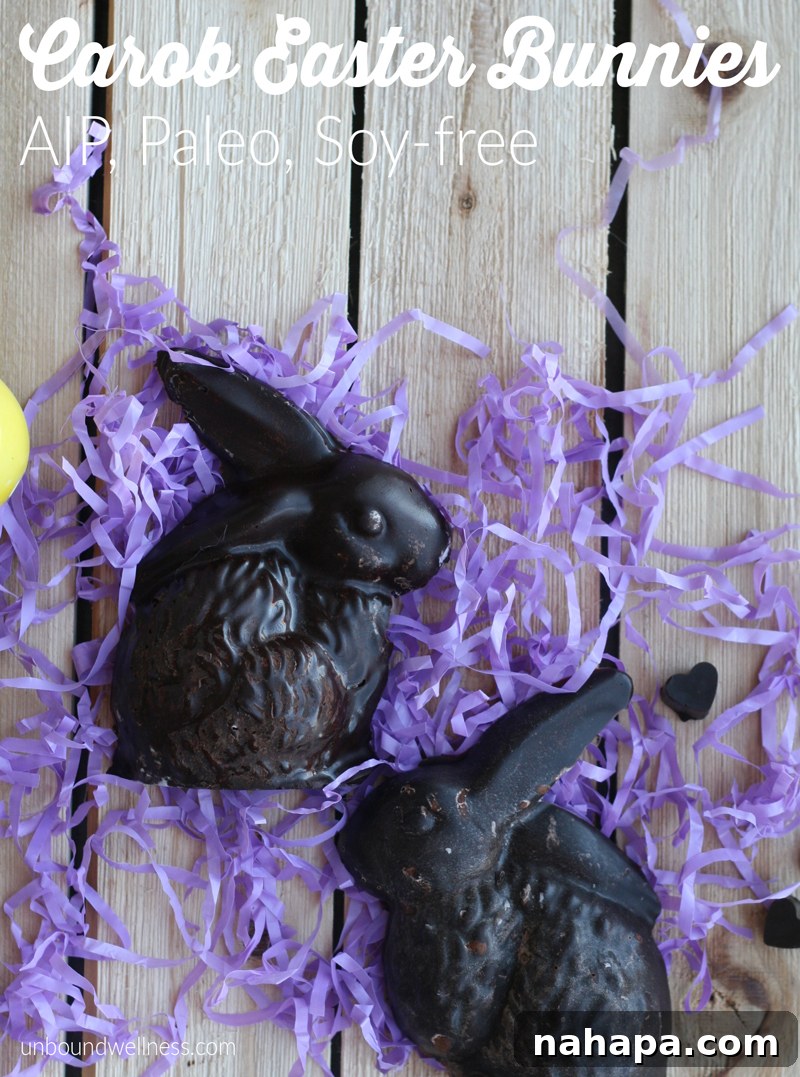
I recall a time when Easter meant an unavoidable sugar rush, fueled by handfuls of jelly beans – a candy I didn’t even truly enjoy – and an even greater quantity of traditional chocolate. The sheer volume of refined sugar and questionable ingredients often led to an energy crash rather than sustained joy. Those days are happily behind me. Instead of feeling a sense of loss for past traditions, I embarked on a journey to create treats that capture the essence of holiday fun while aligning with a wellness-focused lifestyle. This quest led to the creation of something truly special: these delightful AIP “Chocolate” Carob Easter Bunnies. They are not just an alternative; they are a celebration of health, flavor, and festive spirit, proving that mindful eating can be incredibly delicious and utterly charming.
Understanding AIP and the Case Against Conventional Chocolate
For those navigating the Autoimmune Protocol (AIP) diet, the journey towards healing and reduced inflammation involves a careful selection of foods. Traditional chocolate, while beloved by many, is unfortunately not compliant with AIP guidelines. The primary reason lies in its main ingredient: cacao. Cacao beans are botanically classified as seeds or legumes, and both categories are typically excluded during the elimination phase of the AIP diet due to their potential to trigger inflammation or irritation in sensitive digestive systems. They contain compounds like lectins and phytic acid, which can be problematic for individuals with compromised gut health or autoimmune conditions. The goal of AIP is to remove common dietary irritants, allowing the gut to heal and inflammation to subside, and sadly, chocolate, in its traditional form, falls into this category for many.
Furthermore, even if you are not strictly following AIP, the quality of conventional chocolate is a significant concern. Beyond the cacao itself, commercial chocolates are often laden with an array of problematic ingredients. High sugar content is almost a given, contributing to blood sugar spikes and systemic inflammation. Artificial flavors, emulsifiers, and preservatives are frequently added, further detracting from any potential health benefits and introducing unnecessary chemicals into our diets. Making informed choices about our food, especially during celebratory times, empowers us to maintain our well-being and enjoy every moment without adverse reactions.
Embracing Carob: The Nutrient-Rich “Chocolate” Alternative
This is where the humble yet mighty carob powder steps in as a true hero, particularly for those on AIP or anyone seeking a healthier chocolate substitute. Carob is derived from the dried and roasted pods of the carob tree (Ceratonia siliqua), a flowering evergreen native to the Mediterranean region. Unlike cacao, carob is naturally sweet and caffeine-free, making it an excellent choice for individuals sensitive to stimulants or those looking to reduce their caffeine intake. Its inherent sweetness means recipes often require less added sugar, contributing to an overall healthier treat.
Beyond its compatibility with AIP and its mild, naturally sweet flavor profile, carob boasts an impressive nutritional resume. It’s a fantastic source of dietary fiber, which aids in digestion, promotes gut health, and helps regulate blood sugar levels. Carob also contains important antioxidants and a good array of essential minerals, including calcium, magnesium, potassium, and iron. It’s naturally gluten-free and dairy-free, further broadening its appeal for various dietary needs. You can find carob powder in both plain (raw) and toasted varieties. While I used plain for this specific recipe, toasted carob powder offers a slightly richer, nuttier flavor that many find reminiscent of milk chocolate. Both are excellent choices and are quickly becoming staple ingredients in many wellness-oriented kitchens for their versatility in desserts, smoothies, and baked goods. Its gentle flavor and beneficial properties make carob a far superior choice for creating guilt-free, delicious treats.
The Hidden Dangers: Unmasking Soy in Conventional Chocolate
Even if you’re not on the AIP diet and still enjoy chocolate occasionally, you might be surprised to learn about one of the most common and concerning additives found in conventional chocolate: soy. Why is soy so prevalent in a product that seemingly has no need for it? The answer is simple: cost and convenience. Soy lecithin is widely used as a cheap emulsifier. It helps to bind ingredients together, creating a smooth texture and preventing cocoa butter from separating, thus extending shelf life and reducing production costs. While seemingly innocuous, the widespread use of soy in conventional chocolate presents several health concerns that are important to address.
Firstly, soy is a highly phytoestrogenic food, meaning it contains plant compounds that can mimic estrogen in the body. For many individuals, particularly women, this can disrupt the delicate balance of hormones, potentially exacerbating conditions related to estrogen dominance or contributing to new imbalances. Furthermore, soy has been extensively linked to thyroid problems. For those with autoimmune thyroid conditions like Hashimoto’s disease, soy can be a significant trigger, interfering with thyroid hormone production and potentially worsening symptoms. I can personally attest to the adverse effects of soy; I have learned to recognize when I’ve been “soy’ed” due to the noticeable impact on my body. Beyond hormonal disruption, soy is also a common allergen and can contribute to digestive issues and inflammatory responses in sensitive individuals. With the vast majority of soy crops being genetically modified, there’s also the added concern of pesticide residue and potential long-term health implications associated with GMO consumption. Steering clear of soy in all its forms, especially for those with autoimmune conditions or hormonal sensitivities, is a strong recommendation for optimal health. Rest assured, with these delicious carob bunnies, you won’t even miss the conventional, soy-laden versions.
Why Homemade Carob Bunnies Are a Game-Changer for Healthy Celebrations
Creating your own Easter treats, like these delightful AIP Carob Bunnies, offers a multitude of benefits that packaged alternatives simply cannot match. The most significant advantage is having complete control over your ingredients. You eliminate hidden sugars, artificial flavors, unhealthy fats, and all the problematic additives like soy lecithin that are so prevalent in commercial candies. When you make treats at home, you select high-quality, whole-food ingredients that nourish your body instead of burdening it.
Moreover, the act of making homemade treats adds a special touch to any holiday. It’s an enjoyable activity that can be shared with family, fostering a sense of connection and tradition. For parents, it’s an excellent opportunity to teach children about healthy eating and the joy of creating delicious food from scratch. These bunnies aren’t just a healthy option; they are an experience. They embody the spirit of mindful celebration, allowing everyone to partake in the holiday fun without compromising on their health goals. You can ensure that every bite is not only delicious but also genuinely good for you, turning a simple treat into an act of self-care and love.
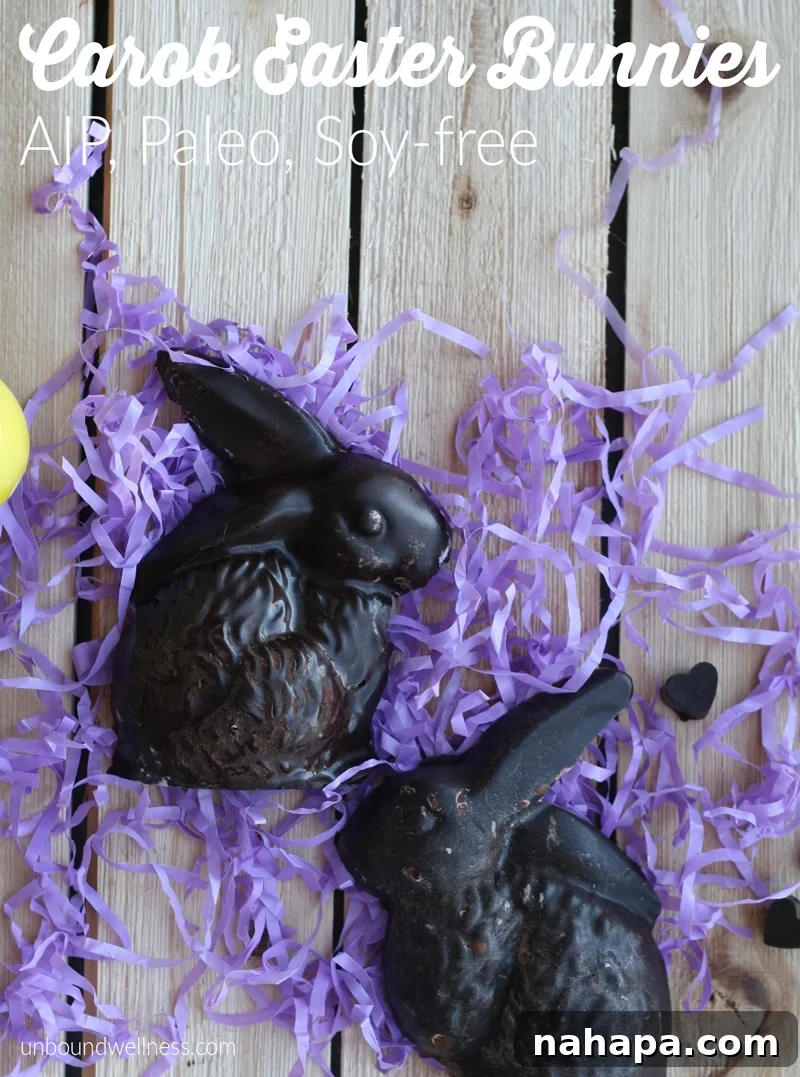
AIP “Chocolate” Carob Easter Bunnies ????
These adorable and delectable carob bunnies are incredibly simple to make, requiring just a few staple ingredients and minimal effort. They are perfect for Easter baskets, party favors, or simply enjoying as a guilt-free dessert. This recipe yields approximately two charming bunnies, depending on the size of your mold, and can easily be scaled up for larger batches.
Ingredients (makes about two bunnies):
- 1 cup carob powder (plain or toasted, whichever you prefer for flavor depth)
- 1/2 cup coconut oil (ensure it’s virgin, unrefined coconut oil for the best quality)
- 1 tbsp raw honey (or pure maple syrup for a vegan option or different flavor profile)
- 1 tsp vanilla extract (ensure it’s non-alcoholic and AIP-compliant)
- optional: a pinch of sea salt (to enhance and balance the sweetness)
Instructions:
- Gently melt the coconut oil: Place the coconut oil in a small saucepan over very low heat on your stovetop. The key is to melt it slowly and gently, avoiding high temperatures to preserve its beneficial properties. Remove from heat as soon as it turns completely liquid.
- Combine with sweetener: Add the raw honey (or maple syrup) to the melted coconut oil in the saucepan. Stir continuously until the honey is fully dissolved and well combined with the oil, creating a smooth base.
- Introduce carob powder: In a separate medium-sized bowl, measure out the carob powder. This helps prevent clumps when combining the wet and dry ingredients.
- Slowly incorporate liquid into carob: Gradually pour the warm liquid mixture (coconut oil and honey) into the bowl with the carob powder. Stir constantly and slowly, ensuring all the carob powder is thoroughly moistened and integrated, forming a thick, smooth paste without any dry spots.
- Flavor enhancement: Add the non-alcoholic vanilla extract and the optional pinch of sea salt to the carob mixture. Stir well to distribute the flavors evenly. The sea salt subtly enhances the “chocolatey” taste of the carob.
- Fill the molds: Carefully pour or spoon the carob mixture into your chosen Easter Bunny mold. Make sure to fill the cavities evenly, gently tapping the mold on the counter a few times to release any air bubbles and ensure a smooth surface.
- Chill to set: Place the filled mold in the refrigerator for at least one hour. This chilling time allows the coconut oil to solidify, setting the bunnies firmly. For faster setting, you can place them in the freezer for about 20-30 minutes.
- Demold and enjoy: Once completely firm, carefully remove the carob bunnies from their molds. They should pop out easily if adequately chilled. Serve immediately or store for later enjoyment!
Tips for Success and Storage:
- Mold Variety: While bunny molds are perfect for Easter, feel free to use any silicone candy molds you have on hand for different occasions or shapes.
- Flavor Variations: For a hint of warmth, add a tiny pinch of cinnamon or ginger powder to the mixture. A zest of orange peel could also provide a lovely citrus note.
- Storage: Due to the coconut oil, these carob bunnies will soften at room temperature, especially in warmer climates. Store them in an airtight container in the refrigerator for up to 1-2 weeks. They can also be frozen for longer storage, up to a month.
- Serving Suggestion: These are wonderful on their own, but also make a great garnish for AIP-friendly desserts or a fun addition to a packed lunch.
These delightful carob bunnies are not only incredibly cute but also wonderfully delicious. They offer a rich, subtly sweet flavor profile that satisfies any craving for a treat without any of the guilt or negative health repercussions of conventional chocolate. While I don’t have kids myself, I can confidently say that children adore these just as much as adults do – they are a fantastic way to offer a healthier, allergy-friendly treat that doesn’t compromise on fun or flavor during holiday celebrations. They’re proof that embracing a healthier lifestyle, even during festivities, can be utterly joyful and creatively rewarding.
Wishing you a truly Happy Easter filled with health, happiness, and delicious, wholesome treats, friends!