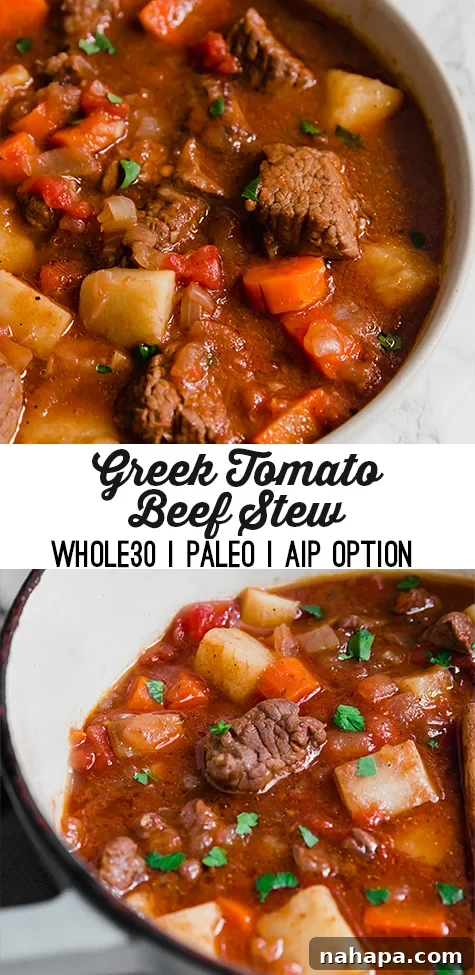
As the weather cools and evenings draw in, there’s nothing quite as comforting and satisfying as a rich, hearty stew. This Greek-Inspired Tomato Beef Stew, known traditionally as Mosharaki Kokkinisto, is an exquisite dish that brings warmth to any table. It’s not only incredibly flavorful but also thoughtfully crafted to be paleo and can easily be adapted to be Whole30 and AIP compliant, making it a versatile choice for various dietary needs.
Imagine tender, succulent beef slow-simmered in a vibrant tomato sauce, infused with aromatic Greek spices like cinnamon, bay leaf, and cloves. This stew is a celebration of rustic cooking, promising a truly authentic and deeply satisfying culinary experience. It’s the perfect cool-weather meal, designed to nourish both body and soul, inviting you to gather loved ones around the table for a memorable feast.

Unveiling Mosharaki Kokkinisto: The Essence of Greek Beef Stew
My journey into the world of Greek cuisine has always been a delightful adventure, leading me to discover many cherished recipes, such as the classic Avgolemono. Driven by a desire to share more of these incredible flavors, I embarked on a mission to explore hearty Greek stews. That’s when I stumbled upon Mosharaki Kokkinisto, a dish renowned for its deep, comforting flavors and tender beef.
In Greek, Mosharaki Kokkinisto beautifully translates to “reddened stew,” a name that perfectly encapsulates its rich, tomato-infused character. This isn’t just any stew; it’s a culinary masterpiece where tender chunks of beef are slowly braised in a flavorful concoction of tomatoes, red wine, robust beef broth, onions, and a distinctive blend of spices. The presence of cinnamon, bay leaf, and cloves might surprise some, but these spices are hallmark ingredients in traditional Greek savory dishes, lending a unique warmth and depth that truly sets this stew apart.
Traditionally, Mosharaki Kokkinisto is served alongside starches like pasta, rice, or creamy mashed potatoes, allowing each component to shine. However, for this rendition, I’ve embraced the concept of convenience without sacrificing flavor or authenticity. My goal was to create a truly one-pot wonder, integrating the starch directly into the stew itself. By adding sweet potatoes and carrots, the stew becomes a complete meal, with the vegetables absorbing all the incredible flavors while contributing their own sweetness and texture. This adaptation not only enhances the overall taste experience but also simplifies meal preparation, making it an ideal choice for busy weeknights or relaxed weekend cooking.
Why You’ll Love This Greek Beef Stew Recipe
- Unforgettable Flavor Profile: The unique blend of traditional Greek spices like cinnamon and cloves with the savory beef and rich tomato base creates a complex, deeply satisfying taste that is both comforting and exotic.
- Dietary Friendly: Naturally paleo, this recipe is incredibly adaptable for Whole30 and AIP compliance. This means you can enjoy a hearty, flavorful meal without compromising your dietary goals.
- Effortless One-Pot Meal: Designed for convenience, this stew integrates vegetables and starch into a single pot. This drastically cuts down on cooking and cleanup time, making it perfect for busy individuals and families.
- Rich in Nutrients: Packed with protein from the beef and essential vitamins and fiber from the sweet potatoes and carrots, this stew is a wholesome and nourishing meal that keeps you feeling full and energized.
- Perfect for Meal Prep: Like many stews, this Greek Beef Stew tastes even better the next day! It’s an excellent candidate for meal prepping, offering delicious leftovers that can be easily reheated for quick and healthy meals throughout the week.
- Customizable to Your Taste: Whether you prefer a more traditional serving experience with a side of mashed potatoes or love the convenience of the one-pot version, this recipe offers flexibility to suit your preferences.
Crafting Your Authentic Greek-Inspired Tomato Beef Stew
Making this Greek-Inspired Tomato Beef Stew is a rewarding experience, transforming simple ingredients into a dish bursting with flavor. The beauty of this recipe lies in its straightforward steps and the depth of flavor developed through slow simmering. Follow these key steps to create a memorable meal:
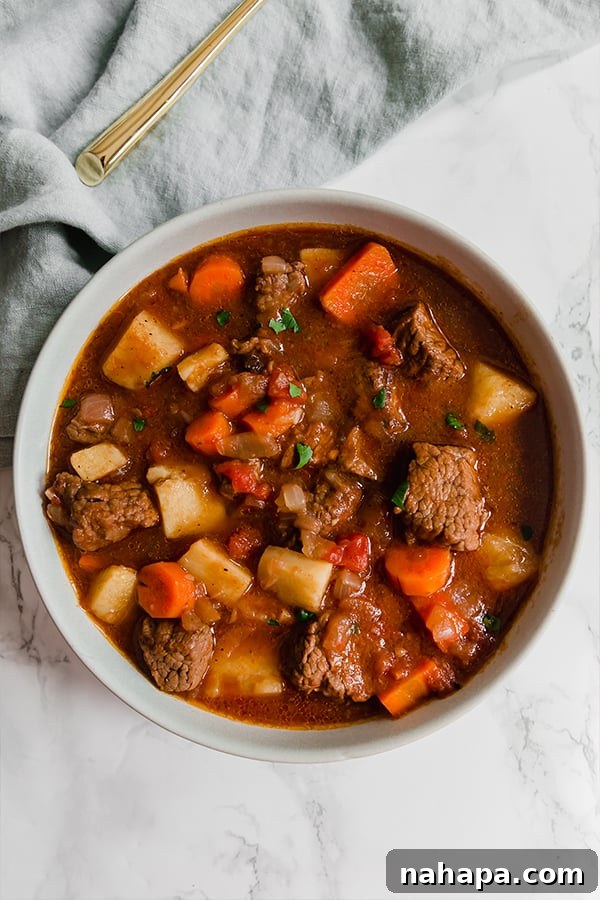
- Sear the Beef to Perfection: Begin by adding a touch of avocado oil to a large stockpot and heating it over medium heat. Season your stew meat lightly with salt and then brown it on all sides. This crucial step creates a beautiful crust and locks in the rich, savory juices of the beef, forming the foundational flavor of your stew. Once browned, set the meat aside.
- Sauté the Aromatics: In the same pot, add your diced onion and minced garlic. Cook them for about 3-4 minutes, stirring occasionally, until the onion becomes translucent and the fragrant aroma of garlic fills your kitchen. These aromatics provide a sweet and pungent base for the stew.
- Build the Vegetable Layer: Introduce the chopped carrots and sweet potatoes to the pot. Sauté them for another 3-4 minutes. This brief cooking time allows the vegetables to slightly soften and begin to absorb the flavors from the pot, contributing to the stew’s overall texture and sweetness.
- Combine and Season: Return the browned beef to the pot. Pour in the beef broth, your chosen tomato base (diced tomatoes or nomato sauce), and red wine (if using). Stir everything well to ensure all ingredients are combined. Now is the time to add the remaining salt, pepper (if not AIP), whole cloves, a cinnamon stick, and bay leaves. These spices are central to the stew’s Greek character.
- Slow Simmer for Maximum Flavor: Bring the stew to a gentle simmer. Reduce the heat to low, cover the pot, and let it slow-cook for 60-90 minutes. This extended simmering period is where the magic happens: the beef becomes incredibly tender, the vegetables soften perfectly, and all the flavors meld together to create a harmonious and rich sauce. Stir occasionally to prevent sticking and ensure even cooking.
- Serve and Garnish: Once the beef is fork-tender and the vegetables are cooked through, remove the bay leaves, cinnamon stick, and whole cloves from the pot. Ladle the hot stew into bowls, topping each serving generously with fresh chopped parsley for a burst of color and herbaceous freshness. Enjoy it as a complete stew, or, for those who prefer, serve it over a starch of your choice like fluffy rice (or cauliflower rice for a low-carb option) or a creamy mashed root vegetable.
Essential Ingredients & Thoughtful Substitutions
The success of this Greek Tomato Beef Stew lies in the quality of its ingredients and the thoughtful selection of spices. Here’s a deeper look into each component and how you can adapt it to your preferences and dietary needs:
- Stew Meat: The star of the show! I often opt for pre-cut stew meat for convenience, but for optimal flavor and texture, a chuck roast cut into 1-inch pieces works wonders. Chuck roast, with its good marbling and connective tissue, breaks down beautifully during slow cooking, yielding incredibly tender and juicy results. Look for grass-fed options for higher nutritional value.
- Red Wine: This ingredient adds a profound depth and complexity to the stew, contributing to its rich “reddened” character. A dry red wine like Merlot or Cabernet Sauvignon is ideal. However, if you’re following a Whole30 protocol, or prefer to avoid alcohol, simply substitute with an equal amount of additional beef broth. For those on AIP, while the alcohol generally cooks off, you may still choose to forgo it entirely and use broth instead. The stew will still be delicious!
- Broth: High-quality beef broth is crucial here. It forms the liquid base and contributes significantly to the savory flavor. I tend to use a bit more broth than some traditional recipes to ensure enough liquid for the added vegetables, transforming it into a more substantial stew. Homemade beef bone broth is highly recommended for its collagen content and richer flavor, but a good quality store-bought broth with no added sugars or unnecessary ingredients works well for paleo, Whole30, and AIP.
- Tomato (or Nomato Sauce for AIP): Canned diced tomatoes with their sauce provide the characteristic “reddened” color and tangy flavor. For an AIP-compliant version, which avoids nightshades, nomato sauce is an excellent alternative. This cleverly mimics the flavor and consistency of tomato sauce using ingredients like carrots, beets, and broth, ensuring a delicious and compliant meal.
- Carrots & White Sweet Potato: These vibrant vegetables are my secret to making this a convenient one-pot meal. They absorb the stew’s flavors beautifully and add a natural sweetness and hearty texture. While traditional Mosharaki Kokkinisto is often served with a separate starch, integrating these vegetables makes the dish more self-contained and nutritious. You can, of course, omit them and serve with a side of your choice, but I find they make the stew wonderfully balanced. If white sweet potato is hard to find, orange sweet potato is a perfectly acceptable and delicious substitute.
- Cinnamon, Bay Leaves & Cloves: This trio of spices is the heart and soul of Greek tomato beef stews. While it might seem unconventional to some, these warm, aromatic spices elevate the dish from a simple beef stew to an authentic Greek culinary experience. The cinnamon stick adds a subtle sweetness and warmth, bay leaves contribute a hint of herbal notes, and whole cloves provide a pungent, slightly sweet, and peppery undertone. Don’t be tempted to skip these – they are essential for that distinct Greek flavor.
- Fresh Parsley: A final sprinkle of fresh chopped parsley not only adds a bright, herbaceous note but also a beautiful pop of color, making the dish visually appealing and enhancing its fresh taste.
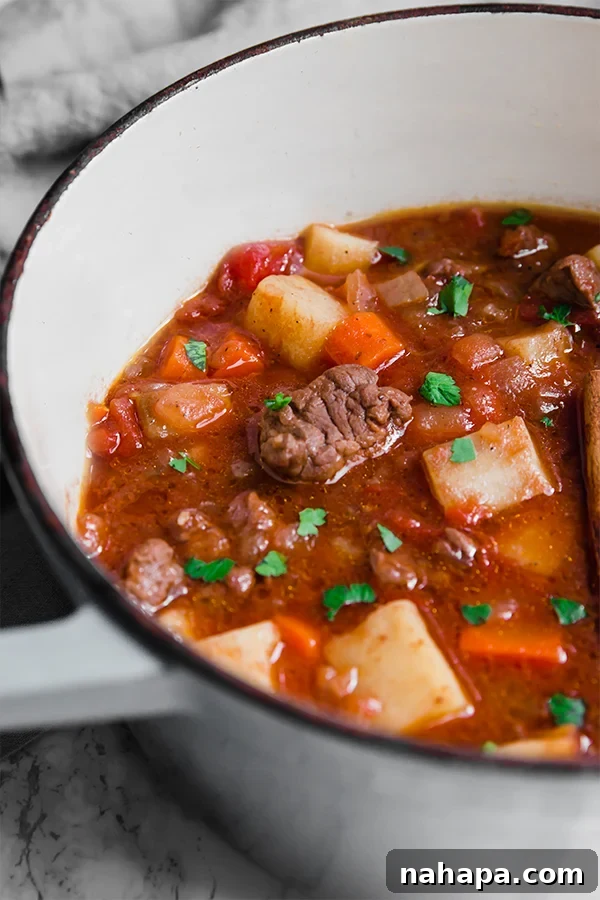
Expert Tips for the Best Greek Beef Stew
- Don’t Rush the Browning: Browning the beef thoroughly is paramount. It creates the Maillard reaction, developing deep, complex flavors that form the foundation of your stew. Do it in batches if necessary to avoid overcrowding the pot, which can steam the meat instead of searing it.
- Deglaze for Flavor: After browning the beef and sautéing the aromatics, there will be delicious browned bits stuck to the bottom of the pot. When you add the broth and wine, scrape these bits up with a wooden spoon. This deglazing step incorporates all that concentrated flavor back into the stew.
- Quality Matters: Use good quality ingredients. Grass-fed beef, organic vegetables, and a high-quality broth will significantly impact the final taste.
- Adjust Spice Levels: While the specified amounts of cinnamon and cloves are traditional, feel free to adjust to your personal preference. If you’re new to these spices in savory dishes, you might start with slightly less and add more to taste.
- Taste and Adjust Seasoning: Always taste your stew towards the end of the simmering process and adjust salt and pepper as needed. Flavors can mellow or intensify over time.
- Consider a Slow Cooker or Instant Pot: This recipe is incredibly versatile. For a slow cooker, cook on low for 8 hours or until beef is tender. For an Instant Pot, reduce broth by 1/2-1 cup and use the “stew” function, typically 35-45 minutes at high pressure with a natural release, or until beef is tender.
- Rest Before Serving: While not strictly necessary, letting the stew rest for 10-15 minutes off the heat allows the flavors to deepen and settle, making for an even more enjoyable meal.
Serving Suggestions for Your Greek Stew
This versatile Greek Tomato Beef Stew can be enjoyed in many ways. Here are some popular serving suggestions:
- Traditional Starch Base: Serve hot over a bed of fluffy white rice, creamy mashed potatoes, or even gluten-free pasta (if not paleo/Whole30/AIP).
- Low-Carb Options: For a lighter meal, opt for cauliflower rice, mashed cauliflower, or a generous portion of sautéed greens like spinach or kale.
- Crusty Bread: A thick slice of gluten-free crusty bread is perfect for soaking up every last drop of the rich, flavorful sauce.
- Fresh Salad: A simple side salad with a light vinaigrette offers a refreshing contrast to the hearty stew.
- Yogurt/Dairy-Free Alternative: A dollop of plain Greek yogurt or a dairy-free yogurt alternative can add a creamy, tangy element (omit for AIP).
Storage and Reheating
This Greek Tomato Beef Stew is fantastic for meal prep as it tastes even better the next day when the flavors have had more time to meld. Here’s how to store and reheat it:
- Refrigeration: Allow the stew to cool completely before transferring it to an airtight container. It can be stored in the refrigerator for up to 3-4 days.
- Freezing: For longer storage, this stew freezes beautifully. Place cooled stew in freezer-safe containers or heavy-duty freezer bags, leaving some headspace. It can be frozen for up to 3 months. Thaw overnight in the refrigerator before reheating.
- Reheating: Gently reheat the stew on the stovetop over medium-low heat, stirring occasionally, until heated through. You may need to add a splash of extra broth or water to achieve the desired consistency, as stews can thicken upon cooling. You can also reheat individual portions in the microwave.
Frequently Asked Questions (FAQs)
Here are some common questions about this Greek-inspired stew:
Q: Can I make this stew in a slow cooker?
A: Absolutely! Follow the browning steps on the stovetop first for best flavor. Then, transfer all ingredients to your slow cooker and cook on low for 6-8 hours or on high for 3-4 hours, until the beef is very tender. Always ensure the beef is cooked through.
Q: Is red wine essential, or can I omit it?
A: While red wine adds a beautiful depth of flavor, it is not essential. You can substitute it with an equal amount of beef broth for a Whole30 compliant and alcohol-free version. The stew will still be delicious and flavorful.
Q: What if I can’t find white sweet potatoes?
A: Orange sweet potatoes are a fantastic and readily available alternative. They will add a slightly different color and a touch more sweetness, but the stew will still be incredibly tasty. You can also use regular potatoes if you are not following a strict paleo or Whole30 diet.
Q: Can I add other vegetables?
A: Yes, feel free to get creative! Bell peppers (omit for AIP/Whole30), zucchini, or green beans could be added during the last 30 minutes of simmering for extra nutrients and texture. Adjust cook times as needed for different vegetables.
Q: How do I make this completely nightshade-free for AIP?
A: To make this stew fully AIP, you must substitute the diced tomatoes with a nightshade-free alternative like nomato sauce. Also, ensure you omit black pepper, as it is a nightshade. Use additional sea salt or other AIP-friendly spices for flavor.
If you try this recipe out, be sure to leave a comment with a star rating to let me know how it turns out! Your feedback is so helpful to me and other Unbound Wellness readers!

Greek Inspired Tomato Beef Stew
4 servings
15 mins
1 hr 45 mins
Michelle
This Greek Tomato Beef Stew is a hearty and comforting cool-weather dish. It’s paleo and can be made to be Whole30 and AIP compliant.
Leave a Review
Pin Recipe
Ingredients
- 2 tbsp avocado oil
- 1 lb beef stew meat
- 1 tsp sea salt, divided
- 1 onion, diced
- 2 cloves garlic, minced
- 1 cup white sweet potato, chopped (sub orange sweet potato)
- 1 cup carrots, chopped
- 4 ½ cups beef broth
- 14 oz can of diced tomatoes with sauce (sub 1 3/4 cup nomato sauce for AIP)
- ½ cup red wine (sub broth for Whole30, see notes for AIP)
- ¼ tsp pepper (omit for AIP)
- 2 whole cloves
- 1 cinnamon stick
- 2 bay leaves
- 2 tbsp fresh parsley
Instructions
- Using a large stock pot, heat the oil over medium heat. Add the stew meat and lightly season with salt. Sauté until browned and set aside.
- Add the onion and garlic to the pan and cook for 3-4 minutes or until the onion is translucent and fragrant.
- Add the carrots and sweet potato and cook for another 3-4 minutes to allow to slightly soften.
- Pour in the broth, tomato (or alternative) and red wine and stir well to combine. Season with additional salt, pepper, cloves, and place in the bay leaves and cinnamon stick.
- Bring the soup to a low simmer and allow to simmer for 60-90 minutes, stirring often, until the beef is fully cooked through and tender and the vegetables are fork tender.
- Remove the bay leaves, cinnamon and cloves and serve topped with fresh parsley. Enjoy as a stew, or serve over a starch of your choice like rice (or cauliflower rice) or a mashed root vegetable.
Notes
Wine is not AIP, but the alcohol will cook off. Regardless, sub broth if you’d choose to forgo it.
To modify for the slow cooker, cook for 8 hours or until the beef is fully cooked through and tender and the vegetables are fork tender.
To modify for the instant pot, use about 1/2-1 cup less of broth and use the “stew” function to cook.
All nutritional information are estimations and will vary. Estimations do not include optional ingredients.
Calories: 299 kcal
Carbohydrates: 17.6 g
Protein: 27 g
Fat: 13.3 g
Fiber: 4.3 g
Did you Make this Recipe?
Tag @unboundwellness on Instagram and hashtag #unboundwellness!
You’ll Also Love These Comforting Recipes
- Greek Lemon Chicken Soup
- Slow Cooker Beef Bourguignon
- Paleo Chicken Pot Pie Soup
- Dairy-Free Creamy Chicken Stew
Want to save this for later?
Pin this delicious Greek Tomato Beef Stew to your favorite Pinterest board for easy access!