
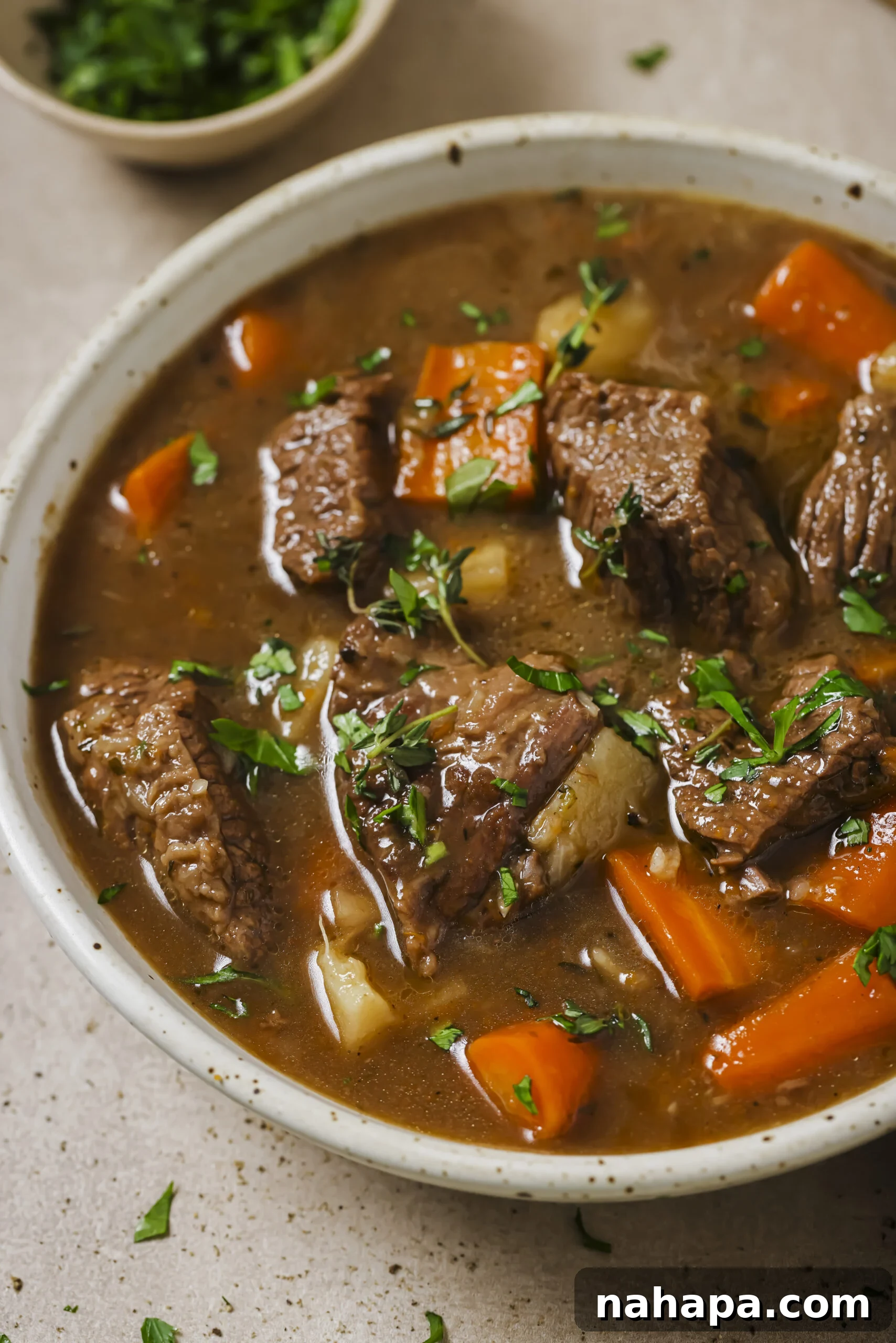
There’s nothing quite like a steaming bowl of rich, savory **Dutch oven beef stew** to warm you from the inside out. This classic comfort food is a beloved staple, especially when the temperatures drop and you crave something truly satisfying. Forget complicated recipes; this guide will show you how to create the most incredibly tender, flavor-packed beef stew, braised to perfection right in your oven. It’s a dish that embodies rustic elegance, featuring succulent beef chuck roast and an abundance of hearty vegetables, all simmered in a robust, deeply flavored liquid. Perfect for family dinners, cozy gatherings, or simply a comforting meal on a cool evening, this Dutch oven beef stew is an absolute must-try.
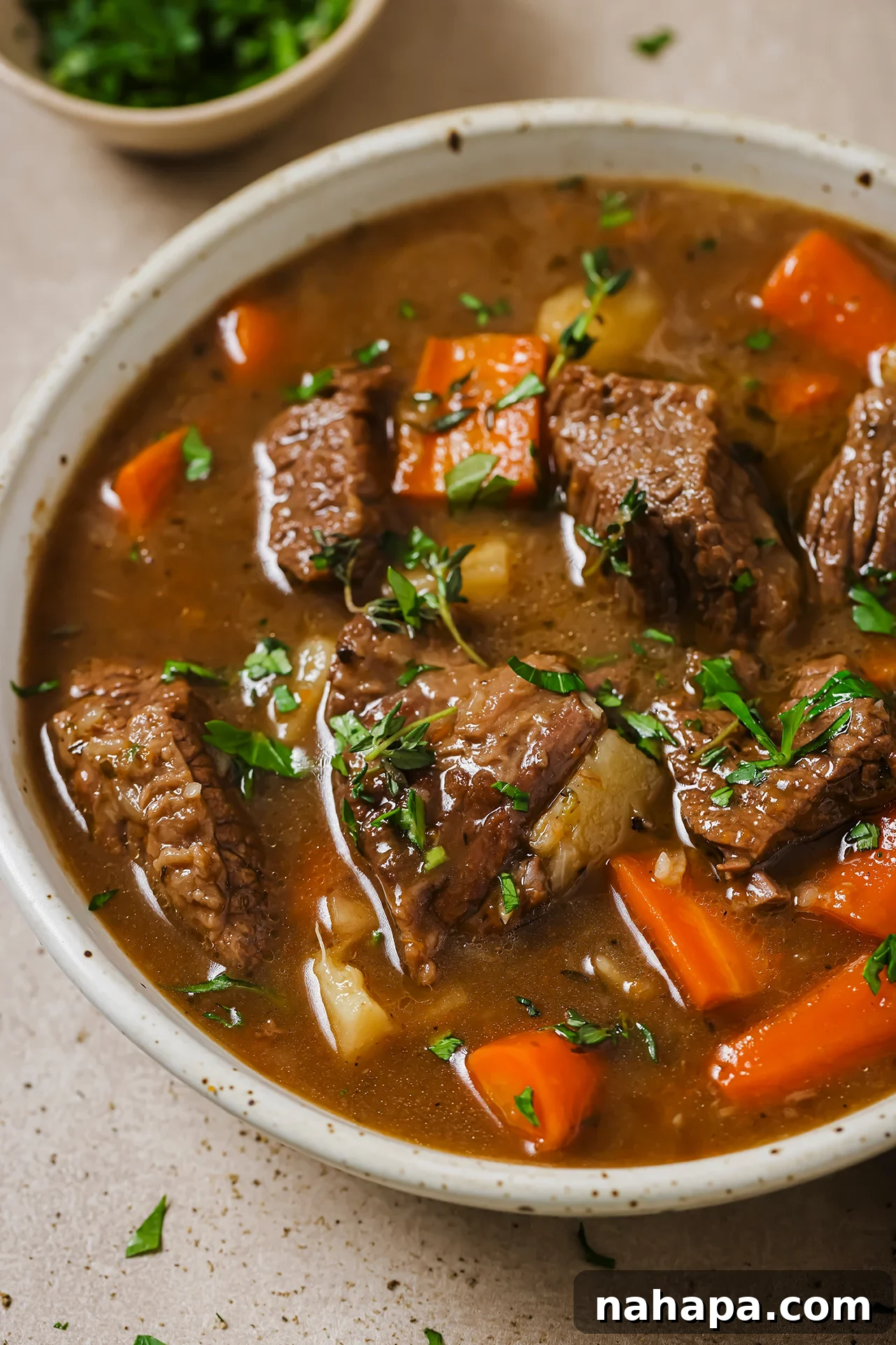
Beef stew holds a special place in many households, including my own. It’s a meal we find ourselves returning to time and again throughout the autumn and winter months, often making an appearance on our weekly menu. While slow cooker versions offer undeniable convenience, there’s a distinct richness, depth, and hearty satisfaction that only a Dutch oven can deliver. The slow, even heat of oven braising transforms simple ingredients into an extraordinary culinary experience that a slow cooker simply can’t match. The good news? Despite its gourmet taste, this method is surprisingly straightforward and incredibly easy to master, promising a truly memorable meal with minimal fuss.
This exquisite Dutch oven beef stew is slowly braised in the oven, allowing the flavors to meld beautifully in a hearty blend of red wine and savory beef broth. The result is a profoundly rich flavor profile, with beef that practically melts in your mouth and a vibrant assortment of tender, veggie-packed goodness. Each spoonful offers a harmonious balance of savory, earthy notes, making it an irresistible choice for any occasion.
Why This Dutch Oven Beef Stew Will Be Your New Favorite
Discover the compelling reasons why this Dutch oven beef stew recipe deserves a permanent spot in your culinary repertoire:
- Unmatched Comfort for Cooler Nights: As the weather turns crisp and cool, there’s nothing quite as comforting as a warm, hearty bowl of beef stew for dinner. It’s the quintessential fall and winter meal, offering warmth and satisfaction in every bite.
- Superior Tenderness and Flavor: The controlled, even heat distribution of a Dutch oven is ideal for slow braising. This method consistently yields beef that is incredibly tender, moist, and infused with deep, complex flavors, far surpassing other cooking techniques.
- Effortless Elegance: Despite its impressive taste and texture, this stew is remarkably easy to prepare. A bit of initial searing and chopping, then the oven does most of the work, allowing you to enjoy your evening while a delicious meal simmers to perfection.
- Nutrient-Rich and Wholesome: Packed with lean beef and an array of root vegetables, this stew is not only delicious but also incredibly nutritious. It’s a balanced meal that nourishes the body and soul.
- Versatile and Adaptable: While this recipe provides a perfect foundation, it’s also highly adaptable. Easily adjust seasonings or add your favorite vegetables to make it uniquely yours.
The Dutch Oven Advantage: Why It Outshines the Slow Cooker for Beef Stew
While slow cookers certainly have their place for convenience, a Dutch oven truly shines when it comes to crafting an exceptional beef stew. Here’s why it’s the superior choice:
- Unparalleled Heat Retention and Even Cooking: Dutch ovens, typically made of heavy cast iron, excel at retaining and distributing heat evenly. This consistent temperature throughout the cooking process is crucial for breaking down tough cuts of meat and achieving that signature fall-apart tenderness without drying it out. Other pots simply don’t hold heat as effectively, leading to less consistent results.
- Stovetop to Oven Versatility: A key advantage of the Dutch oven is its seamless transition from stovetop to oven. You can beautifully sear the beef and sauté aromatics directly in the pot on the stove, building foundational flavors through caramelization and deglazing. Then, without transferring, the entire pot moves to the oven for a long, slow braise. This one-pot method minimizes cleanup and maximizes flavor development.
- Superior Browning and Flavor Development: Searing the beef in a hot Dutch oven before braising creates a rich, flavorful crust through the Maillard reaction. This caramelization adds an incredible depth of flavor that is difficult to achieve in a slow cooker, which typically operates at lower, non-searing temperatures. The fond (browned bits) left in the bottom of the pot after searing can then be deglazed with liquids, incorporating even more savory complexity into your stew.
- Richer, Thicker Broth: The slow, gentle simmer in a Dutch oven allows the stew’s liquids to gradually reduce and concentrate, resulting in a naturally thicker, more intensely flavored broth. This controlled reduction is harder to achieve in a slow cooker, where liquids often remain thin.
Don’t misunderstand; I’m still a big fan of slow cooker recipes for their ease and hands-off approach. Recipes like my Slow Cooker Greek Chicken or Slow Cooker Apple Sauce are fantastic for busy days. However, for that extra hearty, deeply flavored, and sublimely tender beef stew experience on a chilly evening, the oven-roasted method in a Dutch oven simply cannot be beaten.
Essential Ingredients for Your Perfect Dutch Oven Beef Stew
Crafting an unforgettable beef stew begins with selecting the right ingredients. Here’s a detailed look at what you’ll need and why each component is vital for achieving optimal flavor and texture:
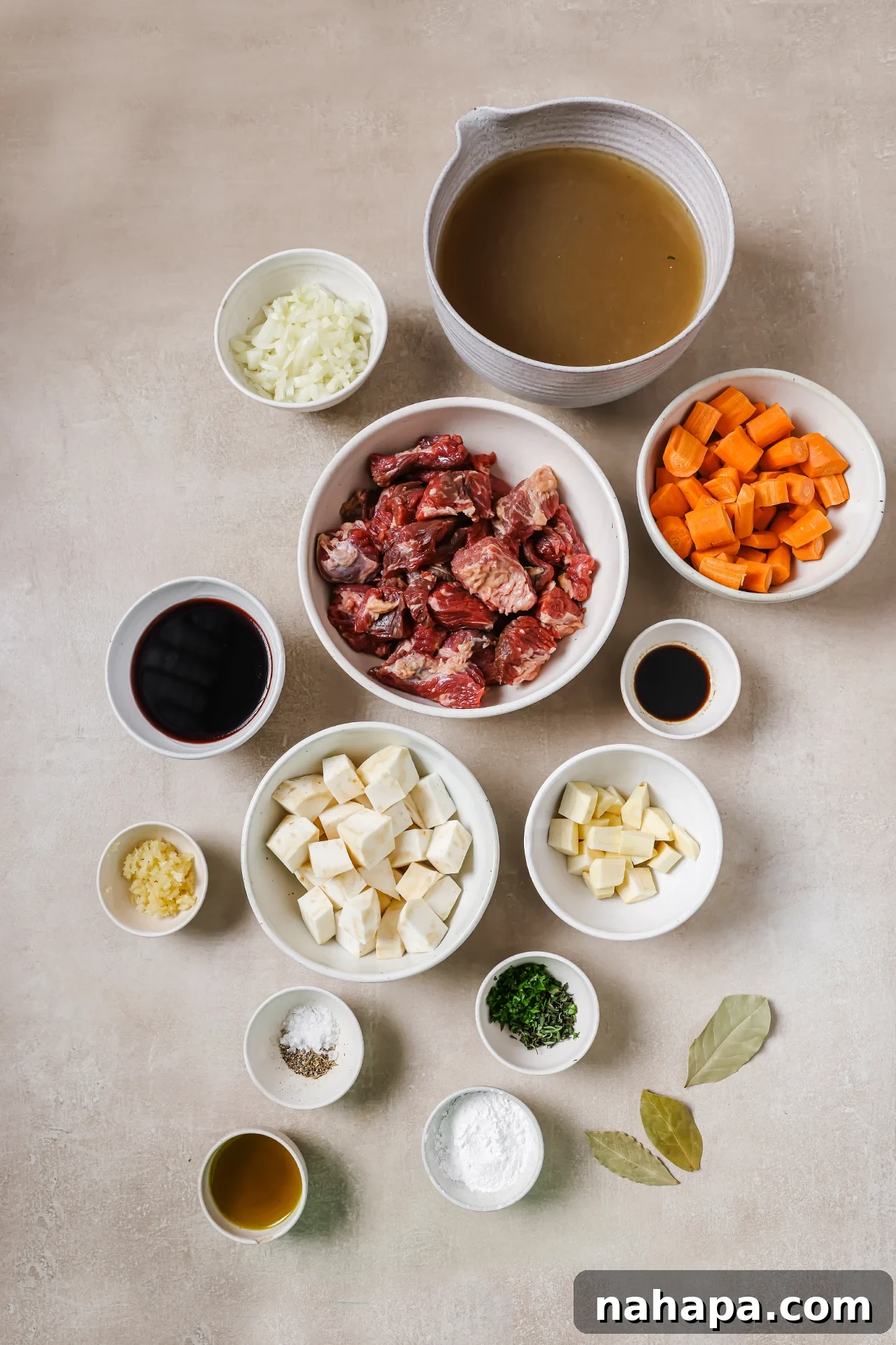
- Beef Chuck Roast: This is the star of our stew. Beef chuck is a tougher cut, but it’s loaded with connective tissue that, when slowly braised, breaks down into gelatin, resulting in incredibly tender, moist, and flavorful meat. While you can use pre-cut “beef stew meat,” I highly recommend starting with a whole chuck roast. This allows you to control the size of your cubes (1.5-2 inches is ideal for stew) and trim any excess fat yourself, ensuring a better texture and consistency in your final dish.
- Coconut Aminos: This versatile ingredient serves a dual purpose. It’s used to deglaze the pot after searing the beef, lifting all those delicious browned bits (fond) from the bottom, which adds immense depth to the stew. It also provides a savory, slightly sweet, umami flavor reminiscent of Worcestershire sauce, but it’s a gluten-free and soy-free alternative.
- Arrowroot Starch: Essential for achieving a perfectly thickened stew. Coating the beef lightly with arrowroot starch before browning helps create a beautiful crust and also contributes to the stew’s luscious texture as it cooks down.
- Avocado Oil: A high smoke point oil perfect for searing the beef to a beautiful golden brown without burning. You can also use olive oil or another neutral cooking oil if preferred.
- Garlic and Onion: These aromatic vegetables form the foundational flavor base of almost any great stew. Sautéing them until fragrant builds a rich, savory backdrop for the other ingredients. Use fresh garlic cloves for the best flavor.
- Beef Broth: The primary liquid component that tenderizes the beef and infuses the stew with a savory essence. You can adjust the amount based on your preference for a thicker or brothier stew. Opt for a high-quality, low-sodium beef broth to control the overall saltiness of your dish.
- Red Wine (Cabernet or similar): A half-cup of red wine adds a remarkable depth of flavor, complexity, and richness to the stew. The alcohol mostly cooks out during the long braising process, leaving behind its nuanced notes. If you prefer to omit alcohol, simply replace it with an equal amount of additional beef broth, though the flavor profile will be slightly different.
- Classic Seasonings: Salt, Pepper, Bay Leaves, Thyme, and Parsley:
- Salt and Pepper: Fundamental for enhancing all the other flavors. Season generously at multiple stages.
- Bay Leaves: Provide a subtle, herbaceous aroma that deepens as the stew simmers. Remember to remove them before serving!
- Thyme: Earthy and aromatic, thyme is a perfect complement to beef and root vegetables. Fresh or dried can be used.
- Parsley: Often added as a garnish, but a small amount during cooking can brighten the flavors.
- Hearty Root Vegetables: White Sweet Potato, Parsnip, and Carrots: These vegetables not only add vibrant color and texture but also absorb the rich flavors of the stew while contributing their natural sweetness and earthiness.
- White Sweet Potato: Offers a creamy texture and mild sweetness.
- Parsnip: Adds a unique, slightly spicy, and sweet flavor profile.
- Carrots: A classic stew ingredient, providing sweetness and a lovely orange hue.
Ensure all vegetables are peeled and chopped into similarly sized pieces for even cooking.
Mastering the Art of Dutch Oven Beef Stew: Step-by-Step Guide
Follow these detailed steps to create a truly spectacular Dutch oven beef stew that will impress even the most discerning palates. Precision in each stage ensures maximum flavor development and melt-in-your-mouth tenderness.
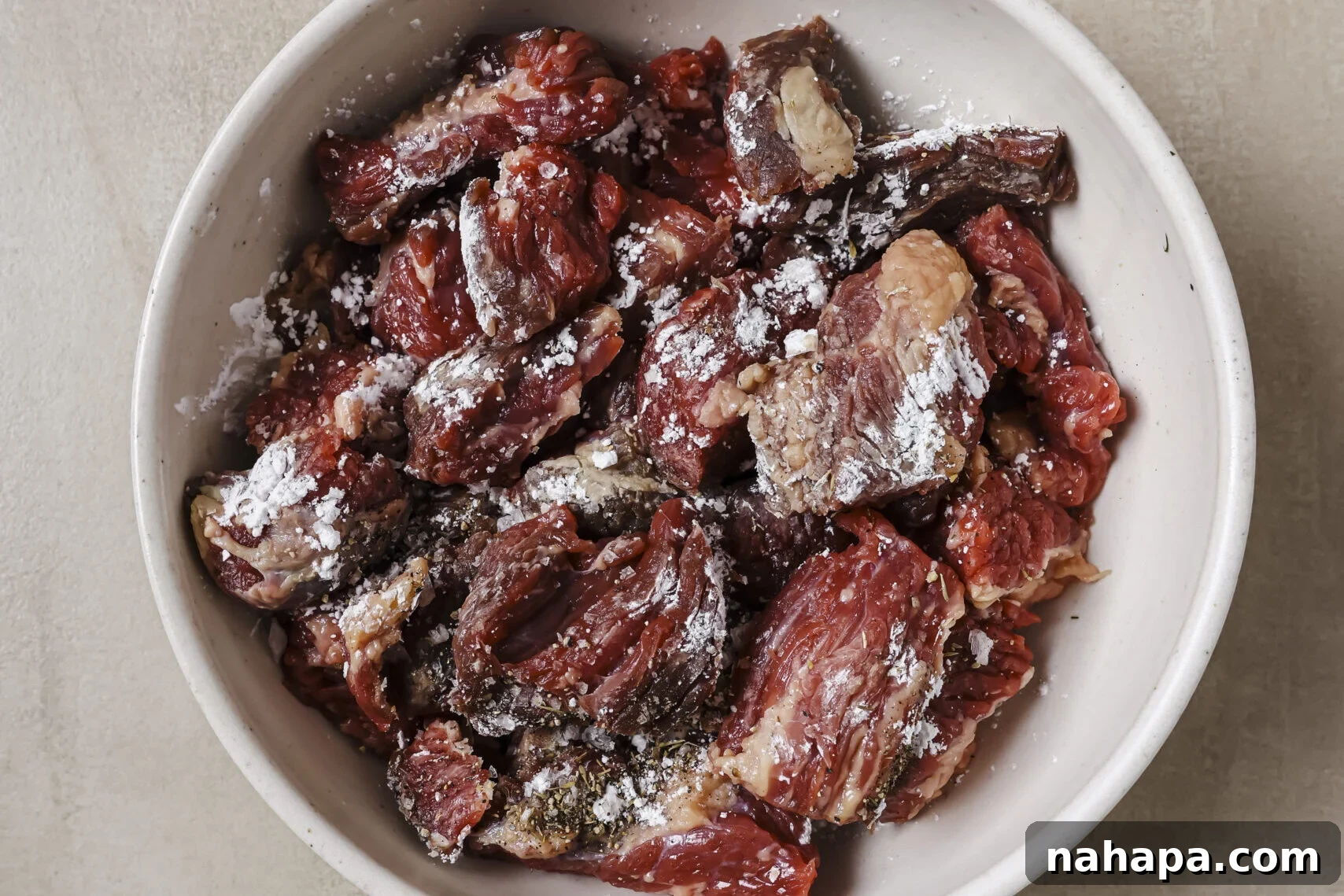
- Step One: Prepare and Season the Beef. Begin by preheating your oven to 325°F (160°C). Cut your beef chuck roast into uniform 1.5-2 inch cubes, trimming any excess large pieces of fat. Place the beef pieces into a large bowl. Generously season them with salt and freshly ground black pepper. Then, sprinkle the arrowroot starch over the seasoned beef and toss well to ensure each piece is lightly coated. This coating will help create a beautiful sear and thicken the stew.
- Step Two: Sear the Beef to Perfection. Heat the avocado oil in your large Dutch oven over medium-high heat on the stovetop. The oil should be shimmering but not smoking. Carefully add about half of the seasoned beef chuck to the hot Dutch oven, ensuring not to overcrowd the pan. Overcrowding will steam the meat instead of searing it. Cook for 3-4 minutes on each side, or until each piece develops a deep, golden-brown crust. This searing step is crucial for building a rich, foundational flavor. Remove the seared beef and set it aside in a clean bowl, repeating the process with the remaining beef until all pieces are beautifully browned.
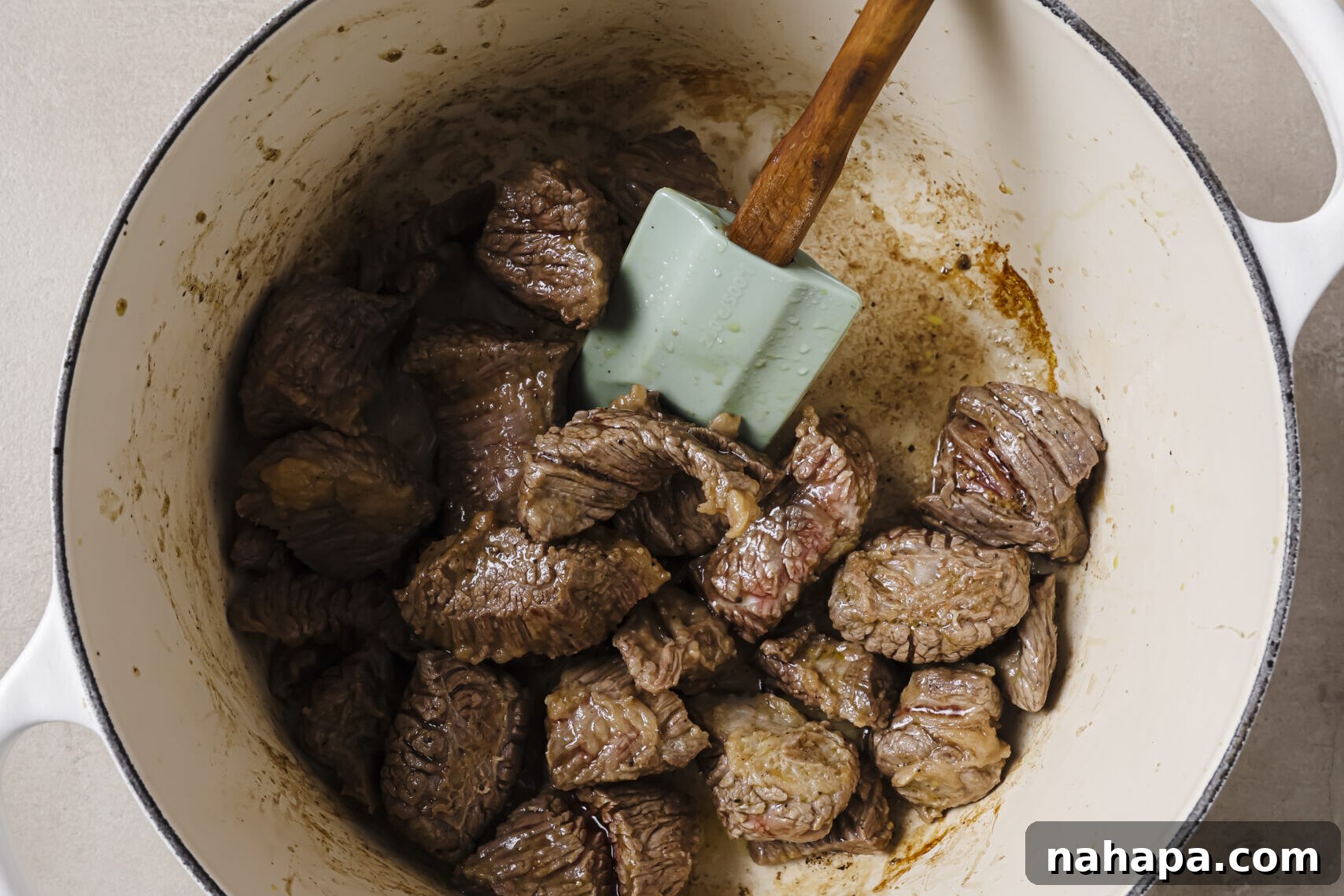
- Step Three: Deglaze for Deeper Flavor. Reduce the heat to medium. Pour the coconut aminos into the Dutch oven. Using a wooden spoon, carefully scrape up all the flavorful browned bits (fond) stuck to the bottom of the pot. These bits are packed with concentrated flavor and will dissolve into the liquid, enriching the stew.
- Step Four: Sauté Aromatics. Add the diced yellow onion to the deglazed pot and sauté for 3-4 minutes, stirring occasionally, until it becomes translucent and softened. Then, add the minced garlic and continue to sauté for another 2-3 minutes, until fragrant. Be careful not to burn the garlic.
- Step Five: Combine and Simmer. Return the seared beef back into the pot with the sautéed aromatics. Pour in the beef broth and red wine. Bring the mixture to a gentle boil, then add the bay leaves, thyme, and a bit more salt and pepper to season the broth. Once boiling, reduce the heat to a low simmer, place the lid securely on the Dutch oven, and transfer it to your preheated 325°F (160°C) oven. Allow it to cook for 2 hours, stirring occasionally to ensure even cooking and prevent sticking.
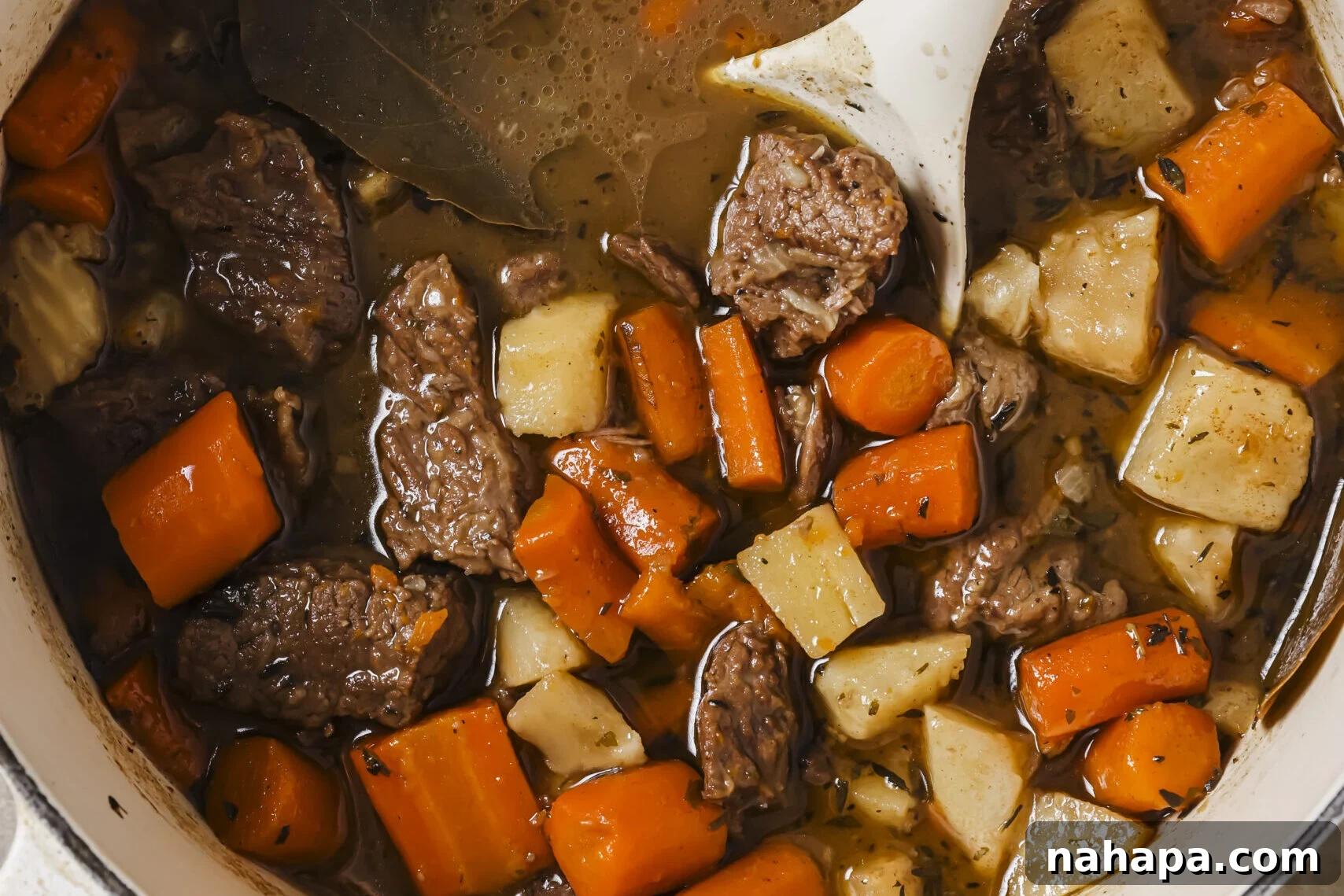
- Step Six: Add Vegetables and Continue Braising. After 2 hours, carefully remove the Dutch oven from the oven. Increase the oven temperature to 350°F (175°C). Carefully lift the lid, and add the peeled and chopped white sweet potato, carrots, and parsnips to the stew. Stir gently to combine the vegetables with the beef and liquid. Replace the lid and return the Dutch oven to the oven. Braise for an additional 1 hour and 15 minutes, or until the vegetables are fork-tender and the beef is incredibly soft.
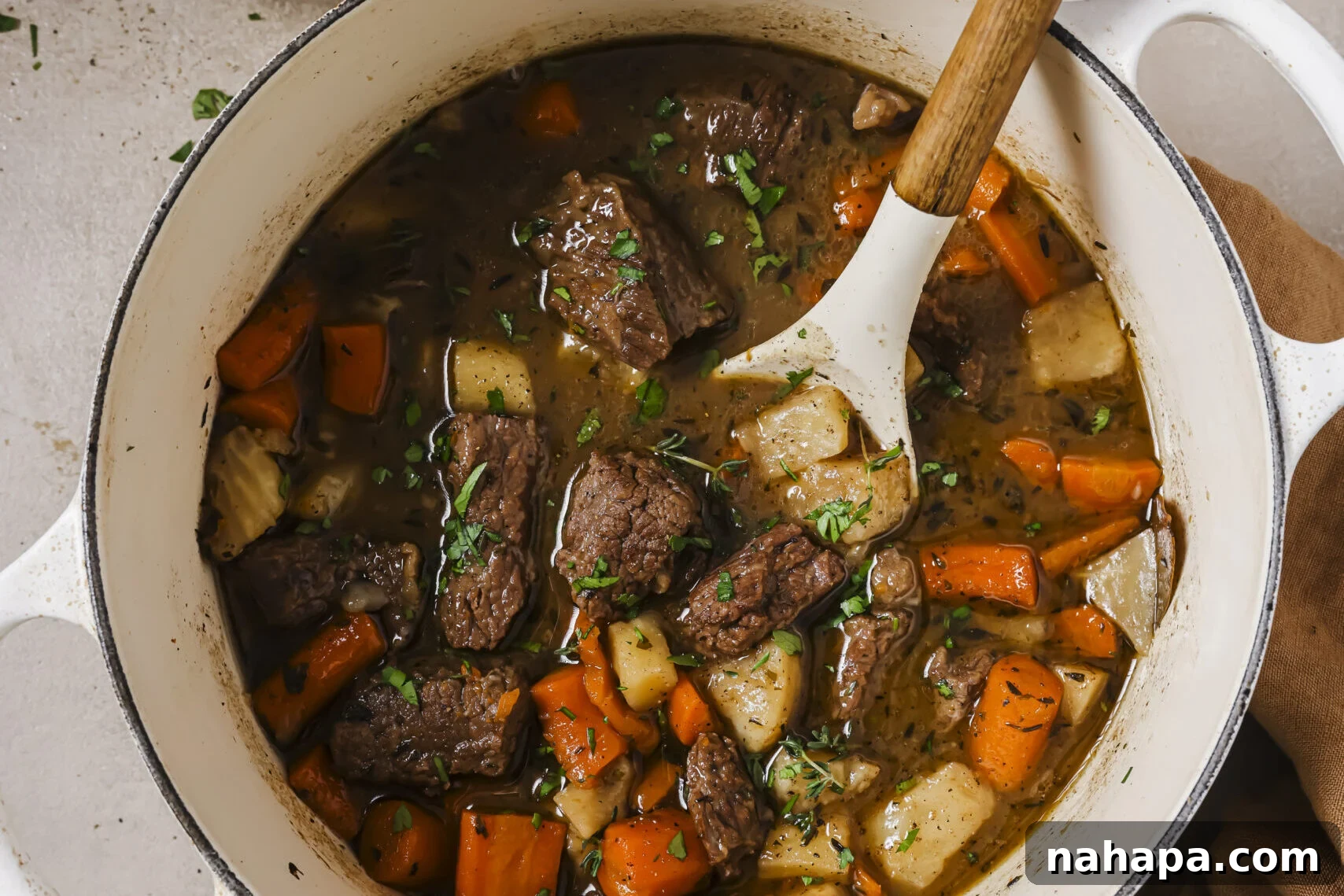
- Step Seven: Final Check and Serve. Remove the Dutch oven from the oven. Carefully use a fork to test the tenderness of the vegetables and beef. If needed, return the pot to the oven for another 15-30 minutes, checking periodically, until everything reaches your desired tenderness. Once cooked, remove and discard the bay leaves.
- Step Eight: Enjoy! Ladle the rich, aromatic Dutch oven beef stew into bowls. Serve fresh, perhaps with a sprinkle of fresh parsley for garnish, and adjust seasonings to taste. This stew is even better the next day as the flavors continue to meld.
Expert Tips & Tricks for the Best Dutch Oven Beef Stew
Elevate your Dutch oven beef stew with these insightful tips and tricks:
- Adjust Broth to Your Liking: I prefer my stew to be on the thicker side, with a rich, gravy-like consistency, ensuring it’s deeply concentrated with flavor. If you prefer a brothier stew, feel free to add more beef broth at any point during the cooking process, or even a splash more before serving. Start with the recommended amount and adjust incrementally.
- Red Wine is Optional, but Recommended for Depth: The red wine truly adds a wonderful depth and complexity to the stew. While the alcohol will mostly cook out during the long braising, if you prefer to avoid alcohol entirely, you can absolutely substitute the red wine with an equal amount of additional beef broth. The stew will still be delicious, but the wine provides a subtle, sophisticated layer of flavor that is hard to replicate.
- Don’t Skip the Searing Step: Searing the beef is non-negotiable for incredible flavor. This step creates a caramelized crust on the meat, locking in juices and developing a rich “fond” (browned bits) at the bottom of the pot, which contributes immensely to the stew’s final taste once deglazed. Work in batches to avoid overcrowding and ensure proper browning.
- Seasoning in Layers: Don’t just season at the beginning. Taste and adjust your seasoning (salt, pepper, herbs) throughout the cooking process, especially after adding liquids and again before serving. Different broths and wines can affect salt levels.
- Uniform Vegetable Chops: Cut your vegetables into roughly uniform sizes (about 1-inch pieces). This ensures they cook evenly and become tender at the same rate, preventing some pieces from becoming mushy while others are still firm.
- Let It Rest: If time allows, let the stew rest for 10-15 minutes after it comes out of the oven, with the lid on. This allows the flavors to meld further and the stew to settle, resulting in an even more delicious experience.
Freezing Your Dutch Oven Beef Stew
Yes, beef stew freezes beautifully, making it an excellent meal prep option! To freeze, allow the stew to cool completely. You can then portion it into freezer-safe bags (laying them flat for easier storage) or use freezer-safe containers or molds like Souper Cubes. Label with the date, and it will keep well in the freezer for approximately 2-3 months. Thaw overnight in the refrigerator before reheating.
Reheating Your Delicious Stew
For the best results, reheat your Dutch oven beef stew in a pot on the stovetop. Simply transfer the desired portion to a saucepan and simmer gently over low heat for about 5-10 minutes, stirring frequently, until it is thoroughly heated through. If the stew seems too thick, you can add a splash of beef broth or water to reach your desired consistency.
Perfect Pairings for Your Beef Stew
This hearty Dutch oven beef stew is a meal in itself, but it pairs wonderfully with a variety of sides that complement its rich flavors. Consider serving it with:
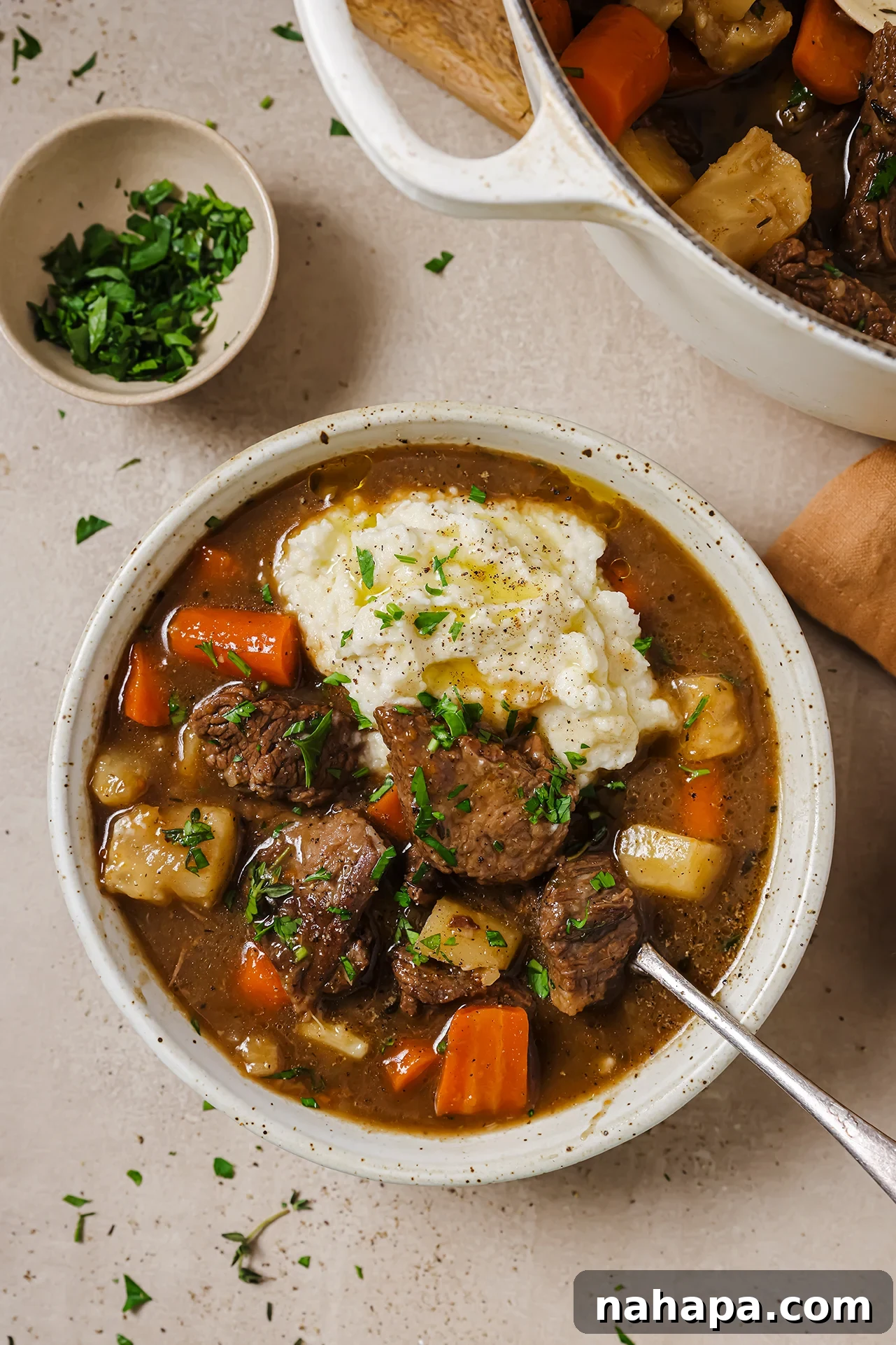
- Creamy mashed potatoes (as pictured)
- Crusty bread or rolls for soaking up the delicious broth
- Fluffy white rice or wild rice
- Egg noodles
- A simple green salad with a light vinaigrette to balance the richness
- Steamed green beans or broccoli
Frequently Asked Questions About Dutch Oven Beef Stew
- Can I use a different cut of beef? While beef chuck roast is highly recommended for its tenderness and flavor when slow-cooked, you can also use beef short ribs (boneless or bone-in) or even brisket. These cuts also benefit from long, slow braising. Avoid very lean cuts as they can become dry.
- What if I don’t have a Dutch oven? If you don’t have a Dutch oven, a heavy-bottomed, oven-safe pot with a tight-fitting lid will work. Cast iron pots or enameled cast iron casseroles are ideal substitutes. Ensure it can go from stovetop to oven.
- How can I make the stew thicker? The arrowroot starch used to coat the beef should help thicken the stew naturally. If you prefer it even thicker at the end, you can create a slurry by mixing 1-2 tablespoons of arrowroot starch (or cornstarch) with an equal amount of cold water. Stir this mixture into the simmering stew a few minutes before serving and cook until it reaches your desired consistency.
- Can I add other vegetables? Absolutely! Feel free to experiment with your favorite root vegetables. Turnips, rutabagas, celery, mushrooms, or even peas (added towards the very end of cooking) would make wonderful additions. Just consider their cooking times and add them accordingly.
- Is this recipe gluten-free? Yes, by using coconut aminos instead of Worcestershire sauce and arrowroot starch as a thickener, this recipe is naturally gluten-free. Always double-check your beef broth label to ensure it’s also gluten-free.
More Hearty Beef Stew Recipes to Explore:
If you loved this Dutch oven beef stew, you might enjoy these other comforting variations:
- Greek Inspired Tomato Beef Stew
- Slow Cooker Beef Bourguignon
- Classic Slow Cooker Beef Stew
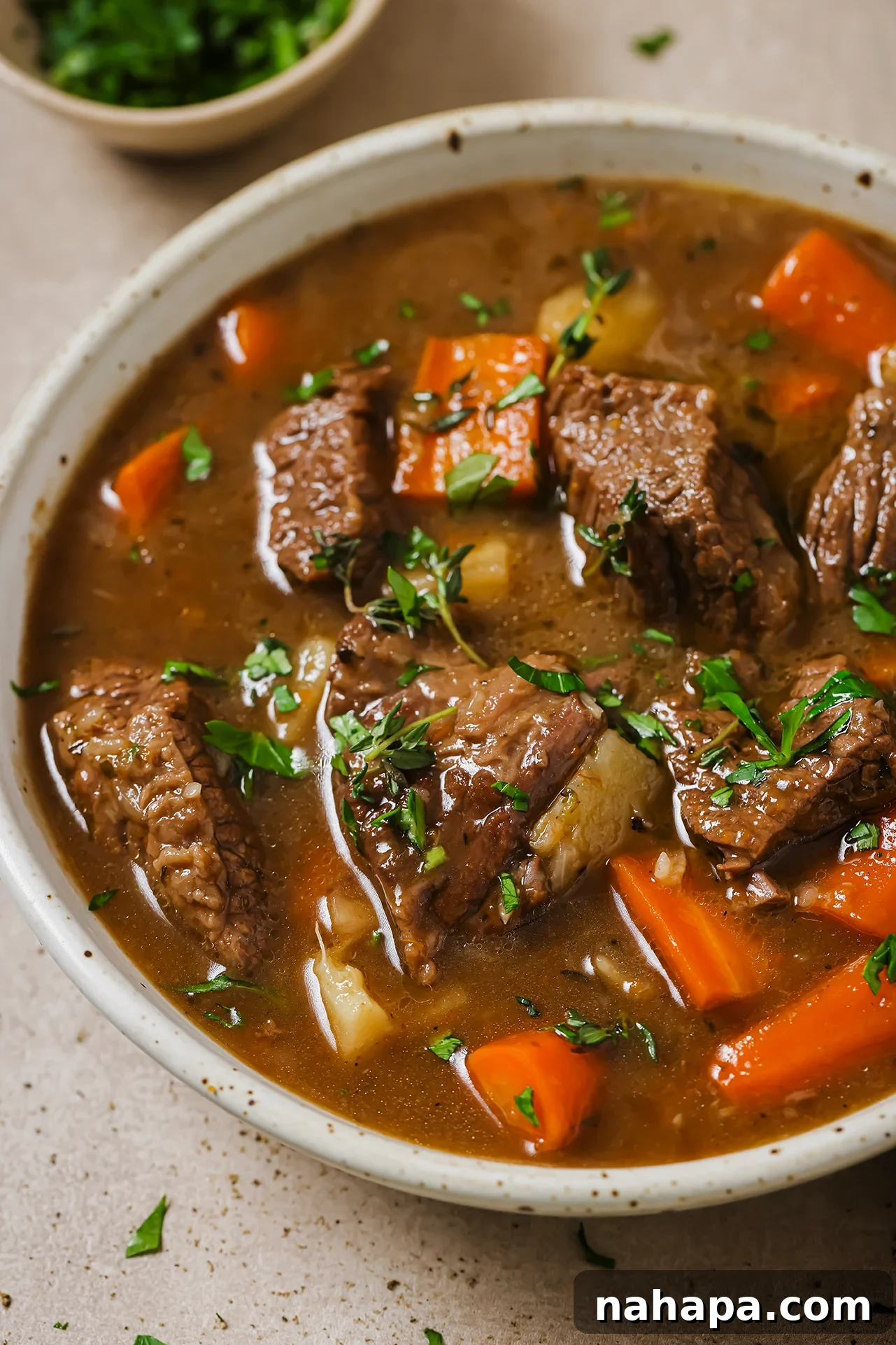
Dutch Oven Beef Stew (Gluten Free)
This Dutch oven beef stew is braised to perfection in the oven! It’s made with beef chuck roast & hearty vegetables for the perfect easy dinner on cooler nights.
Pin Recipe
Ingredients
- 2 ½ lbs beef chuck, cut into 1.5-2″ cubes (fat trimmed)
- 2 tbsp arrowroot starch
- Salt and pepper to taste
- 2 tbsp avocado oil
- 1 tbsp coconut aminos
- 1 yellow onion, diced
- 3 cloves garlic, minced
- ½ cup red wine, cabernet or similar (see notes for substitution)
- 5 cups beef broth
- 3 bay leaves
- 2 tsp thyme
- 1 tsp parsley
- 1 white sweet potato, peeled and chopped
- 1 parsnip, peeled and chopped
- 2 large carrots, peeled and chopped
Instructions
- Preheat the oven to 325°F (160°C).
- Add the beef chuck pieces to a bowl and generously season with salt and pepper. Toss with arrowroot starch until evenly coated.
- Using a large Dutch oven, heat the avocado oil over medium-high heat on the stove. Once the oil is shimmering, add about half of the beef chuck, being careful to not overcrowd the pan. Cook for 3-4 minutes on each side or until lightly crisp and browned. Set aside, repeating with all of the beef.
- Reduce the heat to medium and pour in the coconut aminos to deglaze the pot. Use a wooden spoon to scrape off any burnt bits (fond) from the bottom of the pot, incorporating them into the liquid.
- Add the diced onion and sauté for 3-4 minutes or until lightly translucent. Add the minced garlic and sauté for another 2-3 minutes until fragrant.
- Add the beef back to the pot along with the beef broth and red wine. Bring the mixture to a boil and add the bay leaves, thyme, and more salt and pepper to season the broth. Turn the heat down to a low simmer, place the lid on the pot, and transfer to the preheated oven. Allow to cook for 2 hours, stirring occasionally.
- Remove from the oven and turn the oven heat up to 350°F (175°C). Carefully remove the lid from the pot and add the sweet potato, carrots, and parsnip. Stir to combine the vegetables with the stew. Return the lid to the pot and transfer back to the oven. Braise for another 1 hour and 15 minutes.
- Remove from the oven. Carefully use a fork to test the vegetables for tenderness. If needed, return to the oven for an additional 15-30 minutes. Remove the bay leaves before serving.
- Serve fresh with extra seasonings to taste, or store in the fridge for 3-4 days or freeze for up to 2-3 months.
Notes
A note on alcohol: Keep in mind the alcohol will mostly cook out of the wine during the long braising process. If you prefer to avoid alcohol, you can use more beef broth instead.
A note on salt: The amount of salt needed will depend on the type of beef broth you use (e.g., low-sodium vs. regular). Always taste and adjust your seasoning accordingly throughout the cooking process.
Nutrition Information (Estimated)
Serving: 1 serving,
Calories: 231 kcal,
Carbohydrates: 10.9 g,
Protein: 24.3 g,
Fat: 8.7 g,
Fiber: 1.9 g
Did You Make This Recipe?
Tag @unboundwellness on Instagram and hashtag #unboundwellness!
This recipe was originally published in 2023 and updated in 2024. Photos by Modern Food Stories.