
This post contains affiliate links. Learn what that means, here.
Crafting the Perfect Nutrient-Dense Smoothie Bowl: Your Guide to Gut Healing & AIP-Friendly Blends
In the vibrant world of social media, we’re constantly bombarded with images of stunning, overflowing smoothie bowls and vibrant juices. They promise health, vitality, and a picture-perfect start to your day. Yet, a closer look at many of these popular recipes often reveals a surprising truth: they’re frequently loaded with sugar, woefully short on essential vegetables, and almost always lacking in vital healthy fats and quality protein. While visually appealing, these concoctions can send your blood sugar soaring and leave you feeling hungry long before your next meal. But what if you could have the best of both worlds? A smoothie bowl that’s not only breathtakingly beautiful and bursting with flavor but also genuinely nourishing, satisfying, and beneficial for your health, particularly if you’re focusing on gut healing or following an Autoimmune Paleo (AIP) protocol? This comprehensive guide will empower you to transform your daily blend into a truly wholesome, nutrient-dense powerhouse, ensuring every spoonful contributes to your well-being, not just your Instagram feed.
Beyond the Sugar Trap: What Makes a Truly Healthy Smoothie?
Smoothies hold a unique position in the health food landscape. They can be incredible vehicles for nutrient delivery, packing a concentrated dose of vitamins, minerals, and fiber into one convenient meal. However, they can also be deceptive, masquerading as health foods while containing as much or even more sugar than a soft drink. The key lies in understanding what truly constitutes a nutrient-dense, balanced smoothie. It’s about shifting the focus from purely sweet indulgence to a harmonious blend of ingredients that support sustained energy, satiety, and overall health. Here are the fundamental pillars of building a smoothie that truly nourishes your body:
1. Embrace the Greens: The Power of Vegetables in Your Blender
When it comes to crafting a genuinely healthy smoothie, vegetables should be your unsung heroes. Leafy greens, in particular, are nutritional powerhouses, rich in vitamins (A, C, K), minerals (iron, calcium), antioxidants, and fiber. Smoothies offer an unparalleled opportunity to significantly boost your daily vegetable intake, often in amounts that would be challenging to consume raw in a single sitting. Don’t be shy – aim to make leafy greens like spinach, kale, or romaine lettuce the bulk of your smoothie base. Their mild flavors blend seamlessly, especially when paired with a hint of fruit or other ingredients. Beyond leafy greens, consider adding small amounts of cucumber, celery, or even steamed cauliflower (which adds creaminess without flavor) for an extra nutritional punch. The fiber from these vegetables is crucial for digestive health, helps regulate blood sugar, and contributes significantly to feeling full and satisfied. The more veggies you can comfortably incorporate, the better!
2. Smart Fruit Choices: Navigating Natural Sugars for Balanced Energy
While fruit provides natural sugars, vitamins, and fiber, it’s essential to approach its inclusion in smoothies with moderation. Even natural sugars can cause blood sugar spikes if consumed in excess, leading to energy crashes and increased cravings. In nature, we typically consume fruit in whole, manageable portions, which provides fiber to slow sugar absorption. However, a single smoothie can easily contain 3-4 servings of fruit, especially if combined with sugary juices that strip away valuable fiber. To maintain stable blood sugar levels and promote satiety, aim for just one serving of low-glycemic fruit per smoothie. Excellent choices include a handful of frozen berries (strawberries, blueberries, raspberries), which are packed with antioxidants and have a lower sugar content. A small portion of a frozen banana can also add creaminess and sweetness without overdoing the sugar. Remember, the goal is to complement your vegetables, not to overpower them with sweetness.
3. The Essential Role of Healthy Fats for Satiety and Optimal Health
One of the most common omissions in typical smoothie recipes is healthy fats, yet they are absolutely critical for a truly satisfying and nutrient-dense blend. Healthy fats play a multifaceted role in our bodies: they promote satiety, helping you feel fuller for longer and preventing those mid-morning hunger pangs; they are essential for the absorption of fat-soluble vitamins (A, D, E, K) found in your smoothie’s vegetables; and they provide sustained energy, support brain health, and contribute to hormone balance. For an Autoimmune Paleo (AIP) compliant smoothie, excellent sources include a quarter of an avocado (which adds incredible creaminess and healthy monounsaturated fats) and a tablespoon of coconut oil or MCT oil. Coconut oil provides medium-chain triglycerides, which are easily digested and converted into energy. Don’t underestimate the power of these healthy fats; adding just a tablespoon can significantly impact your smoothie’s ability to keep you energized and satisfied throughout your morning.
4. High-Quality Protein: Building Blocks for Wellness and Satiety
Protein is another critical component often overlooked or poorly sourced in many smoothie recipes. Adequate protein intake is vital for muscle repair and growth, enzyme and hormone production, and, importantly, for increasing satiety and stabilizing blood sugar. However, not all protein powders are created equal. Many commercially available options are unfortunately laden with added sugars, artificial flavors, fillers, and common allergens like soy, which can counteract your health goals, especially if you’re managing an autoimmune condition or focusing on gut health. When selecting a protein source for your smoothie, prioritize quality. For those following an AIP protocol or seeking gut-healing benefits, grass-fed collagen hydrolysate is an excellent choice. It’s flavorless, blends smoothly, and offers powerful benefits for gut health by helping to restore the intestinal lining, often compromised in conditions like leaky gut. Collagen also supports healthy skin, hair, and joints, making it a fantastic addition to any wellness-focused smoothie.
Smoothies Versus Juices: Understanding the Crucial Difference
It’s important to distinguish between smoothies and juices, as they offer vastly different nutritional profiles. While vegetable-heavy juices can be beneficial in moderation for concentrated nutrient delivery, the fundamental difference lies in fiber content. Juicing extracts the liquid, leaving behind the pulp and, critically, most of the fiber. While this delivers a concentrated dose of vitamins and minerals, it also means that the natural sugars from fruits (and even some vegetables) hit your bloodstream much faster, leading to a significant blood sugar spike. Smoothies, on the other hand, retain all the fiber from the whole fruits and vegetables. This fiber is essential for slowing down sugar absorption, promoting stable blood glucose levels, and supporting a healthy digestive system. For sustained energy, satiety, and comprehensive nutritional benefits, especially when using fruit, smoothies are almost always the superior choice over juices.
Introducing the Nourishing Coconut Kale Smoothie Bowl: An AIP & Gut Healing Delight
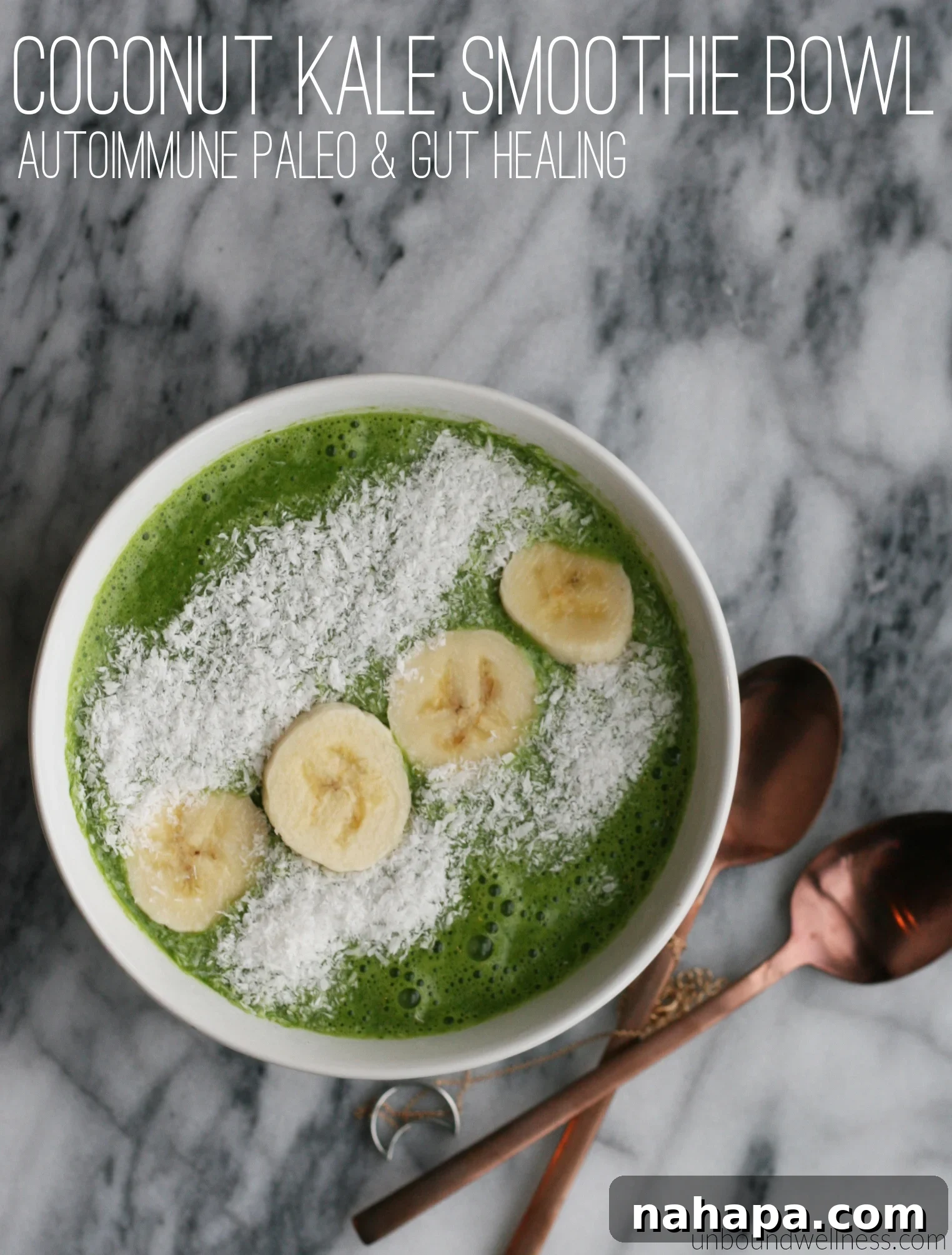
Now that we’ve covered the essentials of building a truly wholesome and satisfying blend, it’s time to put theory into practice. This Coconut Kale Smoothie Bowl is designed to be the epitome of a nutrient-dense meal, packed with greens, healthy fats, quality protein, and just enough fruit for a delicious taste, all while being Autoimmune Paleo (AIP) compliant and incredibly supportive of gut healing. It’s proof that healthy can be both incredibly flavorful and deeply satisfying.
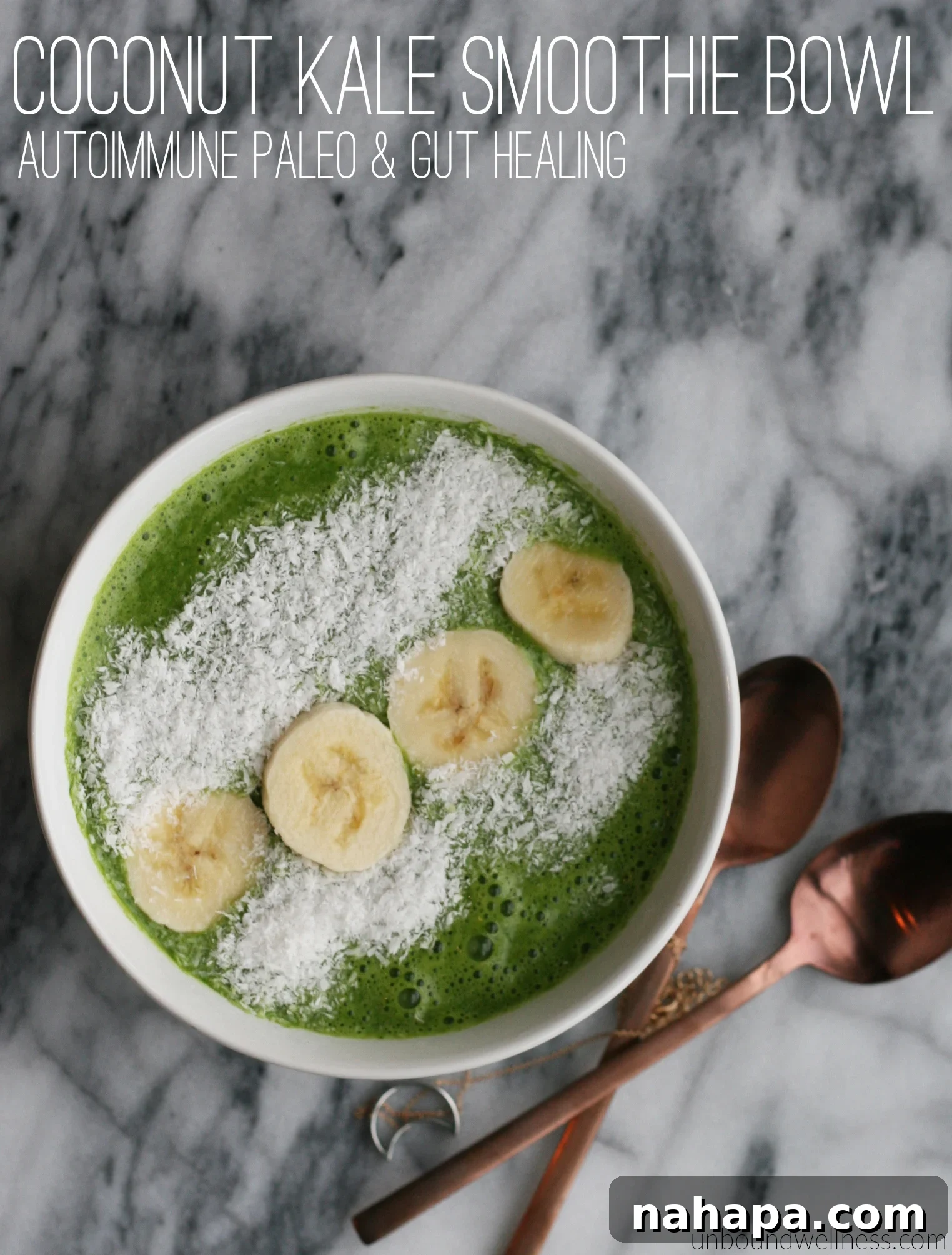
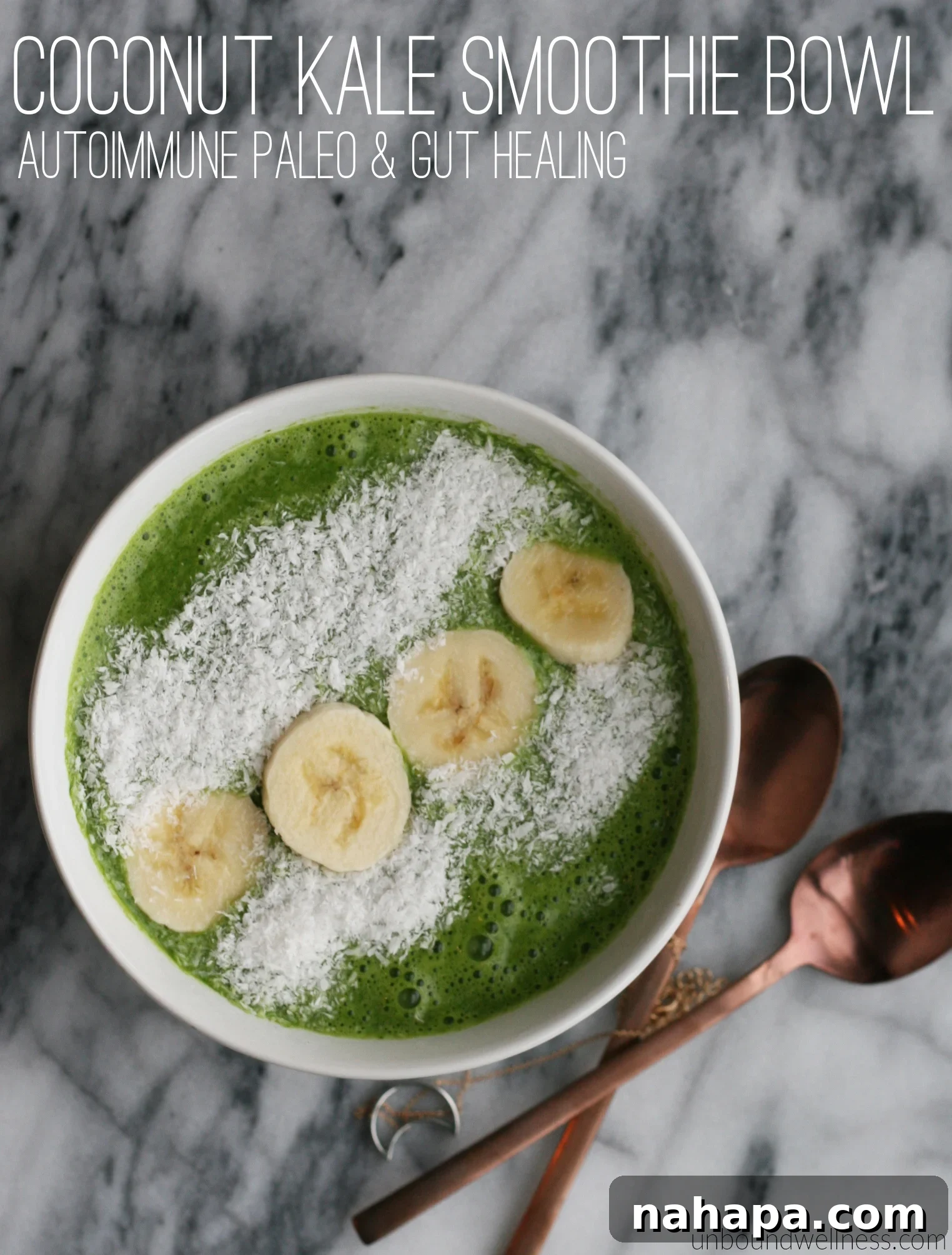
Coconut Kale Smoothie Bowl | Autoimmune Paleo & Gut Healing
Michelle
Leave a Review
Pin Recipe
Ingredients
- 3-4 large kale leaves, destemmed
- 2 pieces of frozen peach
- 1 tbsp grass-fed collagen hydrolysate
- 1 tbsp coconut oil
- 1 cup coconut milk (full-fat for extra creaminess)
- 2 ice cubes
- Juice of 1/4 lemon
For Topping:
- ½ banana, sliced
- 1 tbsp unsweetened coconut flakes
Instructions
- Wash and destem the kale leaves thoroughly.
- Add the prepared kale to your blender with the coconut milk and the juice of 1/4 lemon.
- Blend for 20-30 seconds, or until the kale is completely smooth and there are no chunky pieces remaining. This ensures a silky texture.
- Next, add in the frozen peach pieces and ice cubes. Blend again until the mixture is thick, smooth, and no frozen chunks remain. You may need to stop and scrape down the sides of the blender.
- Finally, add the collagen hydrolysate and coconut oil. Blend for just 10 seconds more to fully incorporate these ingredients without over-processing.
- Pour the thick, creamy smoothie into a bowl (or a glass if you prefer to drink it).
- Arrange the banana slices and sprinkle the coconut flakes generously over the top.
- Grab a spoon and enjoy this incredibly nourishing and delicious Coconut Kale Smoothie Bowl!
This Coconut Kale Smoothie Bowl is more than just a recipe; it’s a testament to the fact that healthy eating can be both profoundly beneficial and utterly enjoyable. If you’re seeking a refreshing, cold treat that genuinely supports your body, or if you’re looking for a delightful way to increase your intake of leafy greens, this recipe is for you. Its nutrient density provides sustained energy, aids in gut repair, and keeps you satisfied, all while tantalizing your taste buds.
I highly recommend giving this recipe a try and experiencing the difference a truly balanced smoothie can make in your daily routine. It’s a fantastic meal replacement or a powerful snack that will leave you feeling vibrant and nourished.
Did you make this recipe? Share your creation and tag @unboundwellness on Instagram with the hashtag #unboundwellness! We love seeing your delicious, healthy creations.
Do you make smoothie bowls? What are your go-to toppings for a healthy, satisfying blend? Share your favorites in the comments below!