
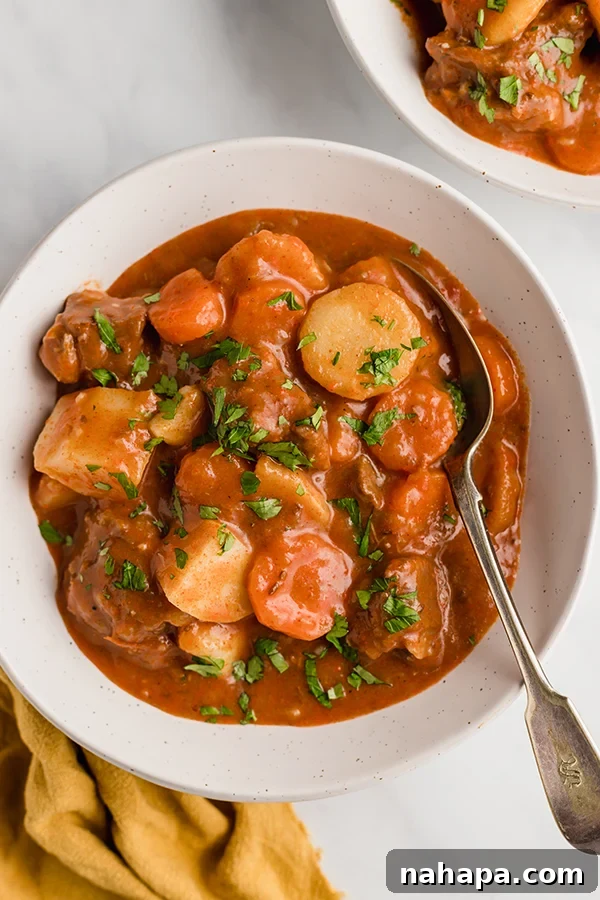
Authentic Hungarian Goulash: A Hearty, Traditional Recipe from My Hungarian Mom
Prepare to embark on a culinary journey to the heart of Central Europe with this truly authentic Hungarian Goulash recipe. This isn’t just any goulash; it’s a cherished family recipe, passed down through generations from my Hungarian mom, ensuring every spoonful delivers the comforting, hearty, and undeniably delicious taste of true Hungarian tradition. Forget everything you thought you knew about goulash, because this rich stew is the real deal, promising a soulful experience that will warm you from the inside out.
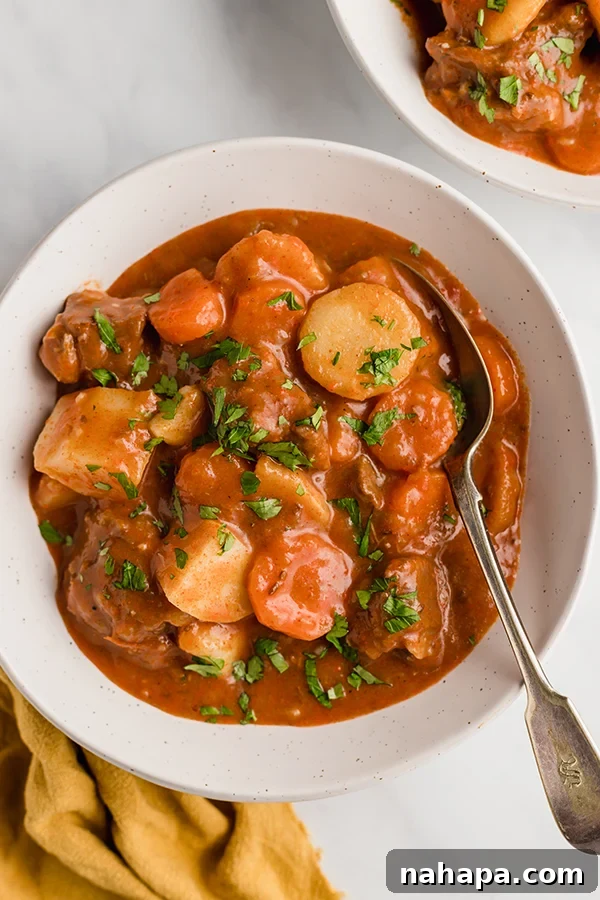
What is True Hungarian Goulash? Understanding the Authentic Dish
When most people hear “goulash,” they often picture a noodle-laden, tomato-heavy dish common in American kitchens. However, authentic Hungarian Goulash is a world apart. In its homeland, gulyás (as it’s pronounced) is a robust, savory soup or stew characterized by tender chunks of beef, an array of root vegetables, and a deep, complex broth intensely flavored with generous amounts of high-quality Hungarian paprika and a subtle touch of tomato. It’s a foundational dish in Hungarian cuisine, steeped in history and cultural significance, and enjoys immense popularity not only across Eastern Europe but also globally among those who appreciate genuine, slow-cooked flavors.
My mother, born and raised in the vibrant city of Budapest, carries the culinary heritage of Hungary in her hands. She graciously shared her treasured recipe for this authentic Hungarian Goulash, ensuring that its rich legacy continues. This isn’t merely a recipe; it’s a piece of her homeland, a comforting tradition brought straight from her kitchen to yours.
Beyond the Americanized Version: The Heart of Hungarian Gulyás
The distinction between genuine Hungarian Goulash and its Americanized counterparts is crucial. True gulyás is typically served as a substantial soup or a thick stew, rarely incorporating pasta. Its rich color and depth of flavor come predominantly from sweet Hungarian paprika, rather than relying heavily on tomatoes or other thickeners. The slow simmering process is key, allowing the beef to become incredibly tender and the flavors to meld beautifully, creating a symphony of savory notes that define this classic dish.
The Essential Ingredients for an Authentic Hungarian Goulash
Crafting a truly authentic goulash begins with selecting the right ingredients. Each component plays a vital role in achieving that signature Hungarian flavor and texture:
- Bacon Fat or Lard: The Flavor Foundation. While you can opt for coconut oil, traditional Hungarian cooking often relies on animal fats like bacon fat or lard. These fats provide a rich, deep base flavor that elevates the entire dish and contributes significantly to its authentic taste profile. They impart a subtle smokiness and a luxurious mouthfeel that vegetable oils simply cannot replicate.
- Beef Chuck: The Perfect Cut. For goulash, beef chuck is the ideal choice. Its marbling and connective tissues break down beautifully during slow cooking, yielding incredibly tender, flavorful pieces of beef that are the hallmark of a great goulash. Cubing it into 1-inch pieces ensures that each bite is perfectly sized and absorbs the rich flavors of the stew.
- Sweet Hungarian Paprika: The Soul of the Dish. This is non-negotiable. Not all paprika is created equal! Sweet Hungarian paprika provides the vibrant color and distinctive, sweet-peppery flavor that defines goulash. Invest in a good quality Hungarian paprika; it truly makes all the difference. Its aroma and taste are central to the dish’s identity.
- Ground Caraway Seeds: The Secret Spice. Often overlooked in non-Hungarian recipes, ground caraway seeds are my mom’s secret ingredient for an authentic goulash. They add a warm, slightly earthy, and subtly peppery note that complements the beef and paprika perfectly. If you can’t find ground, whole caraway seeds can be ground using a mortar and pestle or a spice grinder. This spice adds a layer of traditional complexity that sets it apart.
- Aromatic Vegetables: Green Bell Pepper, Tomato, Onion. These are sautéed to build the foundational flavor. The green bell pepper and tomato are traditionally added in large pieces and sometimes removed before serving, contributing their essence to the broth without dominating the texture. The onion, finely chopped and slowly sautéed, provides a sweet and aromatic base.
- Hearty Root Vegetables: Carrots, Parsnip, Celery, and Potatoes. These vegetables add substance, natural sweetness, and a wonderful texture to the goulash. Carrots and parsnips offer earthy notes and absorb the rich flavors, while celery adds a subtle freshness. Potatoes, added towards the end, provide a comforting starchiness that makes the stew truly satisfying.
- Beef Broth: The Liquid Gold. A good quality beef broth is essential for developing the deep, rich liquid base of the goulash. It provides moisture for slow cooking and enhances the savory notes of the beef and vegetables.
How to Make Authentic Hungarian Goulash
Making this authentic Hungarian Goulash is a labor of love, but the rich, rewarding flavors are well worth the effort. Follow these steps carefully to achieve a truly memorable dish:
- Sauté the Onion: The Flavor Base. Begin by heating your chosen fat (bacon fat, lard, or coconut oil) in a heavy-bottomed Dutch oven or large pot over medium heat. Add the finely chopped onions and sauté them gently until they become beautifully translucent and softened, without browning them too much. This slow cooking of the onions extracts their natural sweetness, forming a critical flavor base for your goulash.
- Sear the Beef and Infuse with Spices. Turn the heat up to high and add the cubed beef chuck and sea salt to the pot. Stir constantly for about 3 minutes, searing the beef on all sides until it develops a nice brown crust. This step is crucial for locking in the juices and adding depth of flavor. Immediately remove the pot from the heat and allow it to cool slightly for a minute or two. Then, stir in the sweet Hungarian paprika and ground caraway seeds. It’s vital to add the paprika off the heat to prevent it from burning, which can make it bitter. Once the spices are mixed in, add just enough water to barely cover the beef. Stir in the large pieces of green bell pepper and quartered tomato. Cover the pot and reduce the heat to a super low simmer. Cook for approximately an hour, or until the beef becomes wonderfully tender. Check periodically and add a little more water if the liquid level drops too low, but avoid exceeding the original level.
- Introduce the Hearty Vegetables and Broth. Once the beef has reached that perfect tender stage, pour in the beef broth. Add the peeled and sliced carrots, parsnips, and the halved ribs of celery, along with the bay leaves. Bring the mixture to a boil, then reduce the heat to a low simmer again. Cover the pot and continue to cook for another 30 minutes. This allows the root vegetables to soften and absorb the rich flavors of the broth and spices.
- Add the Potatoes for Fullness. After the vegetables have had their cooking time, add the peeled and cubed potatoes to the pot. Bring the goulash back to a boil, then reduce the heat once more to a gentle simmer. Cook for an additional 15 minutes, or until the potatoes are fork-tender. This ensures they don’t become mushy during the longer cooking stages.
- Serve with Traditional Flair. Using a slotted spoon, carefully remove and discard the large pieces of green bell pepper, tomato, celery, and bay leaves. These ingredients have imparted their flavor and are traditionally not eaten as part of the goulash in these larger forms. Ladle the hot, fragrant goulash into bowls and serve immediately. For an authentic garnish, sprinkle generously with fresh, chopped parsley. This adds a pop of color and a fresh herbal note that brightens the rich stew.
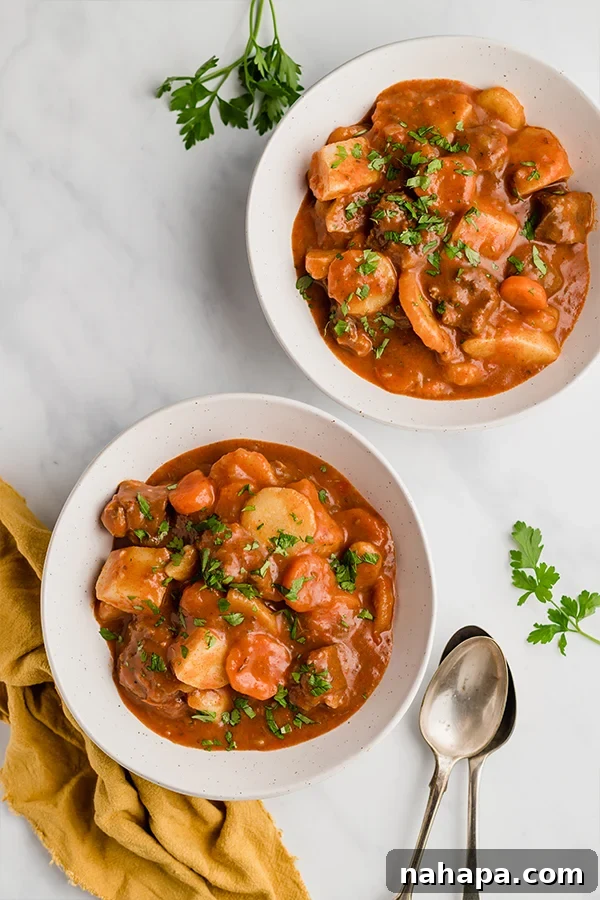
Frequently Asked Questions & Dietary Considerations
Can You Make This Recipe AIP (Autoimmune Protocol) Friendly?
As a regular reader of this blog, you might notice that this recipe isn’t typically what I share, largely because it’s not nightshade-free due to the presence of paprika, bell peppers, and tomatoes. For those following the Autoimmune Protocol (AIP), these ingredients are excluded. While this traditional goulash cannot be made truly AIP-compliant without significant modifications, I do offer an AIP-friendly version of this comforting dish in my cookbook, The Autoimmune Protocol Comfort Food Cookbook. That version provides clever substitutions and adaptations to capture the essence of goulash within AIP guidelines.
Can You Make This in an Instant Pot or Slow Cooker?
While a Dutch oven allows for the most traditional and controlled slow simmering, you can certainly adapt this recipe for modern kitchen appliances. An Instant Pot would significantly reduce the cooking time for the beef, likely needing around 30-40 minutes under high pressure for tender meat, followed by adding vegetables for a shorter pressure cook. A slow cooker offers a convenient “set-it-and-forget-it” approach, requiring a longer cooking time (4-6 hours on high or 6-8 hours on low). For both methods, it’s recommended to still sear the beef and sauté the onions in a separate pan (or using the Instant Pot’s sauté function) to build the foundational flavors before transferring for the slow cook.
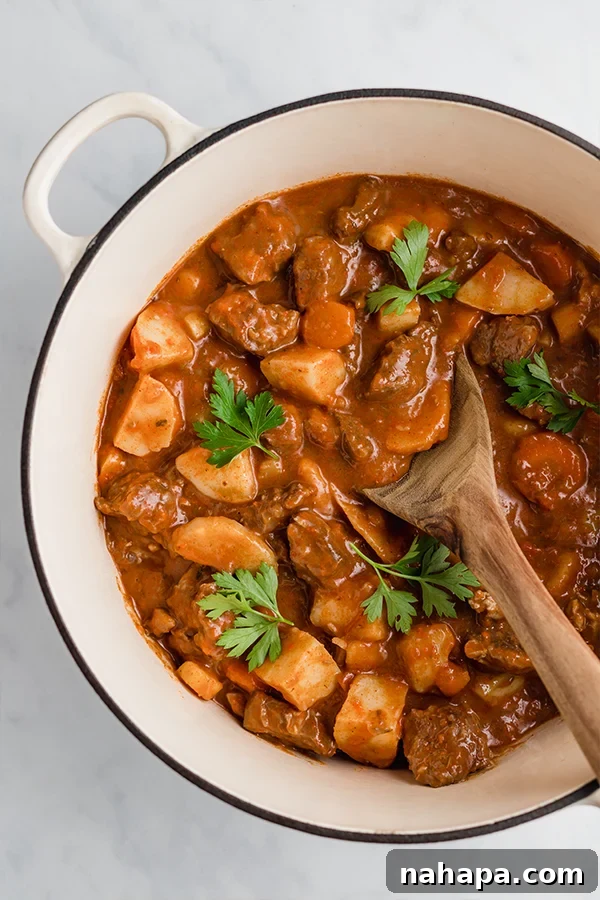
Serving Suggestions for Hungarian Goulash
Authentic Hungarian Goulash is a meal in itself, but it pairs wonderfully with a few traditional accompaniments:
- Nokedli (Hungarian Dumplings): These small, soft egg noodles are the quintessential pairing for goulash, perfect for soaking up the rich sauce.
- Mashed Potatoes: Creamy mashed potatoes offer a comforting base and balance the robust flavors of the stew.
- Crusty Bread: A good loaf of crusty bread is excellent for dipping and ensuring no drop of the delicious broth goes to waste.
- Sour Cream or Crème fraîche: A dollop of full-fat sour cream or crème fraîche on top adds a cooling, tangy counterpoint that many Hungarians enjoy.
- Pickled Vegetables: A side of fermented or pickled vegetables can offer a refreshing contrast to the richness of the goulash.
Expert Tips for the Perfect Goulash Every Time
- Quality Paprika is Key: We can’t stress this enough. The better your paprika, the better your goulash. Seek out imported Hungarian sweet paprika for the most authentic flavor.
- Don’t Rush the Onions: Sautéing the onions until deeply caramelized (but not burnt) builds a crucial sweetness and depth that flavors the entire stew. Patience here pays off immensely.
- Sear the Beef Properly: Browning the beef creates a rich layer of flavor through the Maillard reaction. Don’t skip this step!
- Add Paprika Off the Heat: Paprika can burn easily, turning bitter. Always remove the pot from direct heat when adding paprika, stir it in quickly, then add liquid.
- Slow Simmer for Tenderness: Goulash thrives on low, slow cooking. This is how the beef becomes fork-tender and the flavors fully develop. Resist the urge to rush it.
- Adjust Seasoning: Taste as you go! While salt is added initially, you may need to adjust at the end. A pinch of black pepper can also enhance the flavors.
- Serving Fresh: While goulash often tastes even better the next day, a fresh batch with bright parsley and a dollop of sour cream is truly special.
Storage and Reheating Tips
One of the best things about goulash is that it often tastes even better the next day! Allow any leftover goulash to cool completely before transferring it to an airtight container. It can be stored in the refrigerator for up to 3-4 days. For longer storage, goulash freezes exceptionally well. Portion it into freezer-safe containers or bags and freeze for up to 3 months. When ready to enjoy, thaw overnight in the refrigerator and gently reheat on the stovetop over low heat, adding a splash of water or broth if it has thickened too much.
You’ll also love exploring other Hungarian-inspired recipes and hearty stews:
- Authentic Hungarian Chicken Paprikash
- Hearty Paleo Slow Cooker Beef Stew
- Classic Slow Cooker Beef Bourguignon
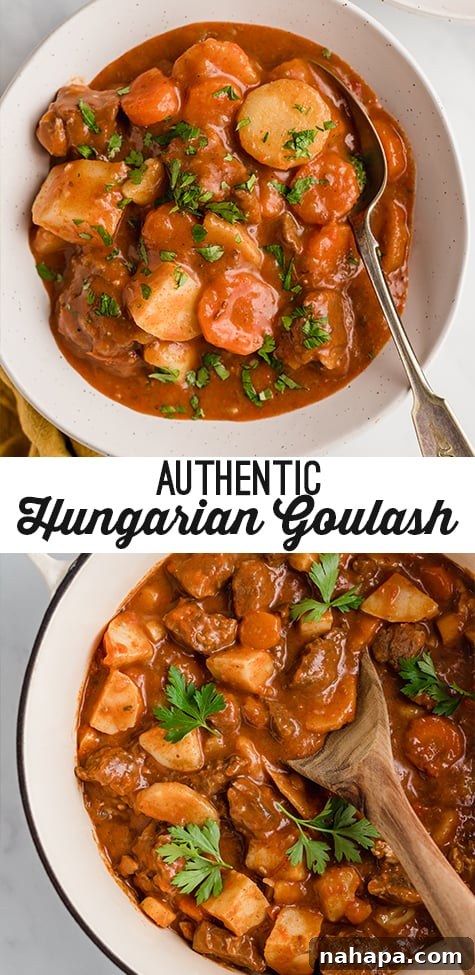
Authentic Hungarian Goulash
This Authentic Hungarian Goulash is my Hungarian mom’s real deal recipe! It’s comforting, hearty, and delicious.
Leave a Review
Pin Recipe
Ingredients
- 1 ½ tbsp bacon fat or lard (sub coconut oil)
- 1 medium onion, finely chopped
- 1.5 lbs beef chuck, cubed into 1” pieces
- 1 tsp sea salt
- 1.5 tbsp sweet Hungarian paprika (get the good stuff!)
- 1 tsp ground caraway seeds (sub whole caraway seeds)
- 1 green bell pepper, seeded and cut into large quarters
- 1 tomato, quartered
- 32 oz beef broth
- 1 ½ cup carrots, peeled and sliced
- 1 ½ cup parsnips, peeled and sliced
- 4 ribs of celery, sliced in half
- 2 bay leaves
- 2 medium potatoes, peeled and cut into one-inch cubes
- 1 tbsp fresh parsley, for garnish
Instructions
- Using a Dutch oven, heat the oil over medium heat. Sauté the onions until translucent.
- Turn heat to high and add the beef and salt, constantly stirring about 3 minutes until it’s seared on all sides. Remove the pot from the heat and allow to cool slightly. Add the paprika and caraway seeds (note that paprika will burn if you add it while it’s on high heat).
- Stir together and add just enough water to cover the beef. Stir in the green pepper and tomato, cover and cook over super low heat for about an hour until meat is tender – you can add water if it gets too low, but don’t let the water reach any higher than it was originally.
- After the meat is tender, add beef broth, carrots, parsnips, celery, and bay leaves. Bring to a boil, reduce to a low simmer, and cover. Cook for 30 minutes.
- Add potatoes, bring to a boil, reduce heat, and cook for another 15 minutes or until the potatoes are tender.
- Using a slotted spoon, remove the green pepper, tomato, celery, and bay leaves. Serve topped with fresh parsley.
Notes
All nutritional information are estimations and will vary. Estimations do not include optional ingredients.
Nutrition Information (Estimated per serving)
Serving: 1 serving, Calories: 447 kcal, Carbohydrates: 38.9g, Protein: 40.5g, Fat: 14.6g, Fiber: 9.4g
All nutrition facts are estimated and will vary.
Did you Make this Recipe?
Tag @unboundwellness on Instagram and hashtag #unboundwellness!
Recipe by Judy published on Unbound Wellness. Photos by Eat Love Eats