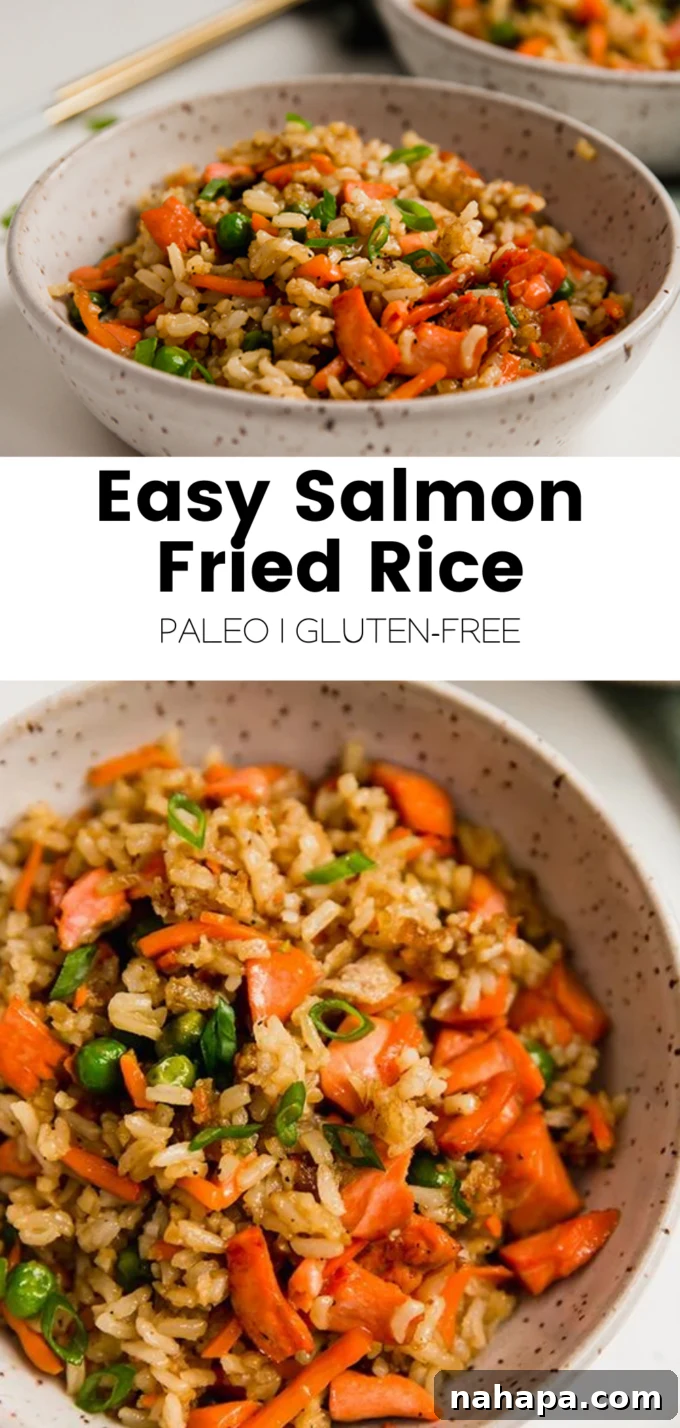
Crispy Salmon Fried Rice: Your Ultimate Guide to a Flavorful & Healthy Meal
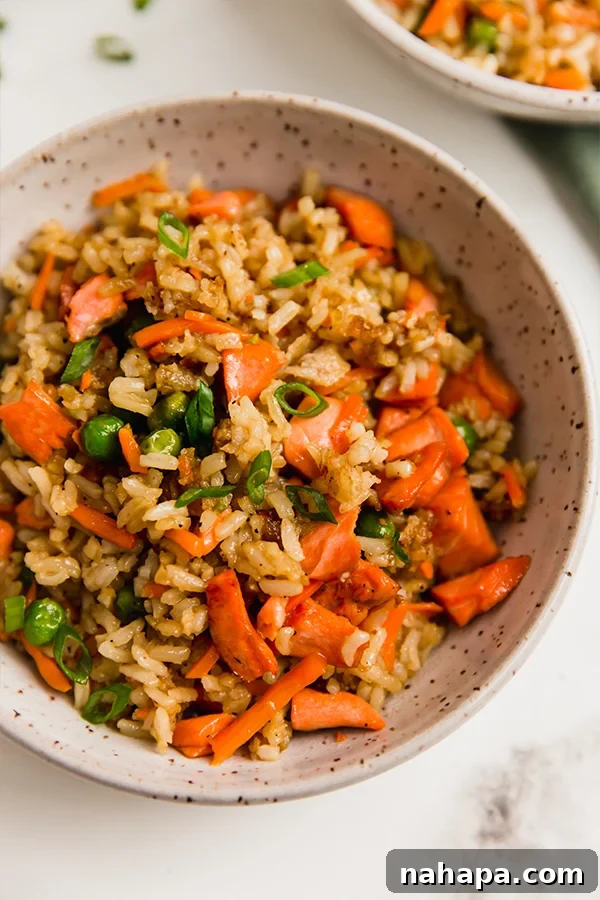
Craving a dish that’s both incredibly delicious and genuinely good for you? Look no further than this amazing Crispy Salmon Fried Rice! It’s a vibrant, nutrient-dense main dish that brings together perfectly cooked, flaky salmon with a medley of fresh vegetables and aromatic rice. Designed to be gluten-free, soy-free, and easily adaptable to be grain-free for those following an AIP (Autoimmune Protocol) diet, this recipe is a true crowd-pleaser that delivers on flavor without compromising on health.
Forget bland, greasy takeout. Our homemade version is packed with wholesome ingredients, ensuring every bite is bursting with savory goodness and a delightful crispy texture. Whether you’re a seasoned home cook or just starting your culinary journey, you’ll find this recipe surprisingly easy to master. Get ready to transform simple ingredients into a meal that will become a regular in your rotation, perfect for a quick weeknight dinner or a healthy meal prep option.
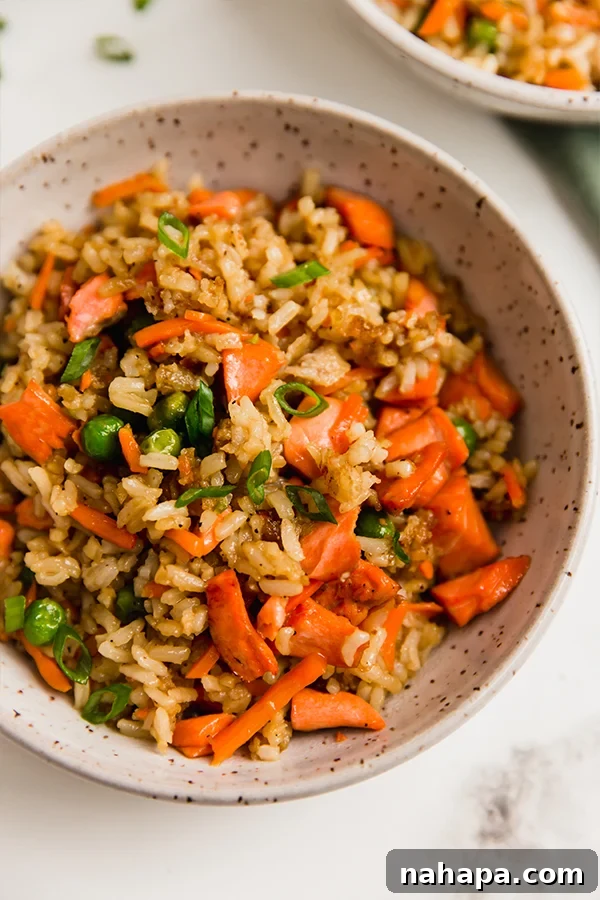
Why This Crispy Salmon Fried Rice Will Become Your Favorite
This recipe isn’t just another meal; it’s a culinary experience designed for both taste and well-being. Here’s why it stands out as a must-try:
- Unbeatable Flavor Profile: The rich, savory notes of pan-fried salmon perfectly complement the umami depth from coconut aminos and the freshness of crisp-tender vegetables. Each mouthful is a symphony of textures and tastes, from the flaky salmon to the crunchy rice, that will delight your palate.
- Nutrient-Dense Powerhouse: Salmon is a superfood, an excellent source of Omega-3 fatty acids, vital for heart and brain health, and packed with high-quality protein. Combined with a generous amount of colorful vegetables and your choice of rice, this dish is loaded with essential vitamins, minerals, and fiber, making it a truly nourishing and satisfying meal.
- Dietary Inclusivity: We understand diverse dietary needs. This recipe is naturally gluten-free and soy-free, utilizing coconut aminos as a delicious and healthier alternative to traditional soy sauce. Furthermore, with a simple swap of white rice for cauliflower rice, it becomes entirely grain-free and AIP-friendly, making it suitable for a wide range of dietary preferences.
- Quick and Easy Preparation: Despite its impressive presentation and complex-tasting flavors, this dish comes together remarkably quickly. With a prep time of just 15 minutes and a cook time of 20 minutes, it’s an ideal solution for busy weeknights when you desire a homemade, healthy, and flavorful meal without spending hours in the kitchen.
- Highly Customizable: This recipe serves as a fantastic canvas for your culinary creativity. Love extra veggies? Want to adjust the spice level? Feel free to add your favorite vegetables, tweak the seasonings to your liking, or even experiment with different proteins or healthier grain options to make it uniquely yours.
Essential Ingredients for Your Salmon Fried Rice Adventure
The beauty of this fried rice lies in its simple, high-quality ingredients that come together to create something truly extraordinary. Here’s what you’ll need, along with some insights to help you choose the best and understand their role in the dish:
Fresh Salmon Fillets
- We recommend using sockeye salmon fillets for their vibrant color, rich flavor, and firm texture, which holds up well during cooking. However, any variety of salmon, such as Atlantic, coho, or king salmon, will work wonderfully and provide that essential lean protein and healthy fats.
- Preparation Tip: You can choose to keep the skin on for extra crispiness and flavor, or remove it as described in our instructions for a smoother, skinless texture. Ensure your fillets are fresh, or properly thawed if using frozen, for the best taste and texture.
The Rice Base: White or Cauliflower
- White Rice: For a classic, comforting fried rice experience, jasmine rice is our top choice due to its fragrant aroma and ideal texture when cooked. The absolute key for fried rice is to use cold, day-old rice. This is crucial for achieving that coveted crispy, separated grain texture rather than a sticky, mushy result. Freshly cooked hot rice has too much moisture.
- Cauliflower Rice: If you’re looking for a grain-free, lower-carb, or AIP-compliant option, cauliflower rice is an excellent and healthy substitute. You can buy it pre-riced for convenience or easily make your own from a head of cauliflower using a food processor or grater. It integrates seamlessly and boosts the vegetable content even further.
- Versatility: For those who want the best of both worlds, feel free to use a mix of both white and cauliflower rice. This creates a lighter yet still satisfying dish with varied textures.
Flavor Enhancers and Healthy Fats
- Avocado Oil: This is our preferred cooking oil due to its neutral flavor, which won’t overpower the other ingredients, and its impressively high smoke point. This makes it perfect for frying at higher temperatures, ensuring your ingredients get crispy without burning or breaking down the oil.
- Coconut Aminos: A fantastic soy-free and gluten-free alternative to soy sauce, coconut aminos are derived from the sap of coconut palms. They provide a rich, umami depth with a subtly sweet and savory hint, which is absolutely essential for achieving that authentic fried rice taste while keeping it allergen-friendly.
- Apple Cider Vinegar: A small amount of apple cider vinegar (ACV) might seem unusual for fried rice, but it adds a subtle tang and brightness. This acidity helps to cut through the richness of the salmon and the savory notes, elevating the overall flavor profile and making the dish more dynamic.
Vibrant Vegetable Medley
- Cauliflower Rice: Beyond its role as a rice substitute, it adds significant bulk, texture, and nutritional value to the dish.
- Shredded Carrots: Adds a touch of natural sweetness, vibrant color, and a pleasant, tender-crisp texture.
- Peas: Provides small bursts of sweetness and a tender, slightly starchy texture that complements the rice.
- Fresh vs. Frozen: For maximum convenience, frozen vegetables are perfectly acceptable. Just remember to thaw them thoroughly and pat them very dry before adding them to the pan. Excess moisture can lower the pan’s temperature and result in a soggy fried rice.
- Expand Your Veggies: This recipe is incredibly flexible for vegetable additions. Consider incorporating other favorites like finely chopped bok choy, sliced zucchini, earthy mushrooms, colorful bell peppers, tender broccoli florets, or crisp snap peas for an even more diverse nutrient boost and textural variety.
Aromatic Seasonings
- Salt and Black Pepper: These fundamental seasonings are crucial for enhancing all the natural flavors of the salmon and vegetables. (Special Note: Omit black pepper if you are following the AIP diet.)
- Garlic Powder, Onion Powder, and Ginger Powder: These aromatic powders provide a foundational layer of savory, pungent, and warm flavors that are quintessential to the authentic taste of fried rice. They infuse the entire dish with depth and character.
Garnish for a Fresh Finish
- Green Onion: Finely chopped green onions are the perfect topping for your finished fried rice. They add a fresh, slightly pungent bite, a beautiful pop of vibrant green color, and a final layer of aromatic complexity that truly brightens the dish.
Crafting Your Crispy Salmon Fried Rice: A Step-by-Step Guide
Follow these detailed steps to create a truly spectacular crispy salmon fried rice that will impress everyone at your table with its simplicity and incredible flavor.
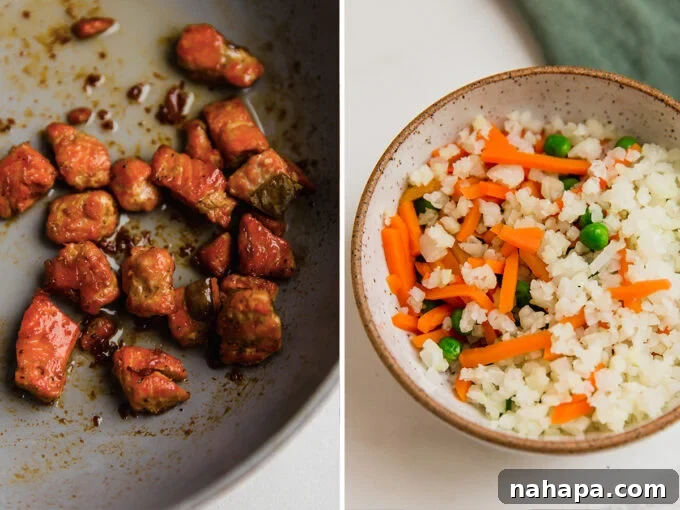
Step 1: Prepare and Marinate the Salmon
Begin by removing the skin from your salmon fillets, if desired, and pat them thoroughly dry with paper towels. Drying the fish helps achieve crispier edges when pan-frying. Slice the salmon into bite-sized cubes, ideally about 1-inch pieces, for even cooking and easy integration into the fried rice. Place the salmon cubes in a medium bowl, season generously with salt and black pepper (remember to omit black pepper if adhering to an AIP diet), and drizzle with 1 tablespoon of coconut aminos. Gently toss all ingredients together to coat the salmon pieces evenly. Allow the salmon to marinate in the refrigerator for 10-15 minutes. This brief marination step infuses the salmon with flavor and helps tenderize the fish, preparing it for cooking.
Step 2: Achieve Perfectly Crispy Salmon
Heat 1 tablespoon of avocado oil in a large non-stick pan or a well-seasoned wok over medium to medium-high heat. Once the oil is shimmering and appears to lightly ripple, carefully add the marinated salmon cubes to the pan. Ensure you add them in a single layer, making sure not to overcrowd the pan. If necessary, cook the salmon in two batches to ensure proper browning and crisping. Cook for approximately 3 minutes on each side, or until the salmon is beautifully golden-brown, cooked through, and easily flakes with a fork, but is still tender. Remove the cooked salmon from the pan and transfer it to a clean plate; set it aside for later.
Step 3: Sauté the Vibrant Vegetables
Using the same pan (there’s no need to clean it; the residual flavors from the salmon are a delicious bonus!), add a little more avocado oil if the pan seems dry. Increase the heat slightly to medium-high. Add the shredded carrots, peas, and the cauliflower rice (if you are using it as a primary vegetable or in addition to white rice). Sauté the vegetables for 5-6 minutes, stirring occasionally. You want them to become tender-crisp—softened but still retaining a slight bite and their vibrant color. Be careful not to overcook them, as this can make them mushy.
Step 4: The Secret to Crispy Rice
Now comes the crucial step for achieving truly crispy fried rice. Add your cold, day-old white rice (or additional cauliflower rice if you’re making it entirely grain-free) to the pan with the sautéed vegetables. Use the back of your spoon or spatula to break up any clumps of rice, then spread it evenly across the bottom of the pan in a thin layer. Allow the rice to cook undisturbed for a few minutes, letting it begin to crisp and brown. Turn the rice frequently, scraping the bottom of the pan to ensure it crisps on all sides and doesn’t stick. This process typically takes about 5-7 minutes, resulting in distinct, slightly browned, and wonderfully crispy grains that are the hallmark of great fried rice.
Step 5: Bringing All the Flavors Together
Once the rice has achieved its desired crispiness and texture, return the previously cooked salmon cubes to the pan. Add the remaining 2 tablespoons of coconut aminos, the apple cider vinegar, and the rest of your aromatic seasonings: salt, black pepper (if using), onion powder, garlic powder, and ginger powder. Toss everything together thoroughly, stirring gently but assertively to combine all the ingredients. Ensure the salmon, rice, and vegetables are evenly coated with the delicious sauce and seasonings. Cook for another 1-2 minutes, just long enough to heat everything through and allow all the wonderful flavors to meld beautifully.
Step 6: Garnish and Serve
Remove the pan from the heat. Carefully ladle generous portions of your crispy salmon fried rice into serving bowls. Finish each serving with a generous sprinkle of freshly chopped green onions. These add a refreshing, slightly pungent bite and a beautiful pop of vibrant green color that contrasts wonderfully with the other ingredients. Serve immediately and savor every bite of your homemade, healthy, and incredibly flavorful meal!
Expert Tips for Perfect Crispy Salmon Fried Rice
Achieving the perfect fried rice isn’t complicated, but a few insider tips can elevate your dish from good to gourmet. Pay attention to these details for truly spectacular results every time:
The Golden Rule: Use Cold, Day-Old Rice
This is arguably the single most important tip for any fried rice recipe, and one we cannot stress enough. Freshly cooked, hot rice contains an abundance of moisture, which will cause it to steam rather than fry in a hot pan, inevitably leading to a sticky, clumpy, and ultimately mushy texture. Cold, day-old rice, on the other hand, has had time to dry out slightly in the refrigerator. This dehydration allows the individual grains to separate and crisp up beautifully when exposed to high heat, giving you that distinct, satisfying fried rice texture. Plan ahead and cook your rice at least a day before you intend to make the fried rice, then cool it completely and store it in the fridge.
No Day-Old Rice? Here’s a Shortcut!
Forgot to make rice ahead of time? Don’t despair, we’ve all been there! You can quickly chill freshly cooked rice to mitigate the moisture issue. Simply cook your rice as usual, then immediately spread it out in a thin, even layer on a large baking sheet. This maximizes the surface area for cooling. Place the baking sheet in the refrigerator or even the freezer for about 20-30 minutes. This rapid cooling helps to both chill the rice quickly and evaporate some of its excess surface moisture. While not quite as ideal as overnight chilled rice, it works remarkably well in a pinch to prevent mushiness and still yield a decent crispy texture.
Don’t Overcrowd Your Pan
Whether you’re cooking the salmon, sautéing the vegetables, or crisping the rice, resist the urge to pack too much into the pan at once. Overcrowding significantly lowers the pan’s temperature, causing the food to steam rather than fry. This hinders the browning and crisping process, leading to less flavorful and less appealing results. If necessary, cook your ingredients in batches, ensuring each element has enough space to cook evenly and develop that desirable golden-brown exterior.
Mastering the Heat is Key
Authentic fried rice thrives on medium-high to high heat. This high temperature is absolutely essential for quickly cooking the ingredients, developing rich, caramelized flavors, and creating those desirable crispy bits on both the rice and the salmon. Be attentive to your stove and ingredients, and adjust the heat as needed to prevent any burning while ensuring thorough and efficient cooking. A hot pan is your friend for crispy results!
Fresh or Frozen Vegetables? Both Work Great!
For convenience and year-round availability, frozen vegetables like peas, carrots, and cauliflower rice are perfectly acceptable and can save you prep time. The critical step when using frozen vegetables is to thaw them completely and pat them very dry with paper towels before adding them to the pan. Any excess moisture from frozen veggies will rapidly cool down your pan, releasing steam and leading to a soggy fried rice rather than a crispy one. If using fresh vegetables, ensure they are cut into uniform, bite-sized pieces for even and consistent cooking.
Cook Your Salmon Promptly
While you can marinate the salmon for up to a day in the refrigerator, it’s generally best to cook it within 1-2 days of purchase (or thawing) to ensure optimal freshness, flavor, and food safety. Salmon is a delicate fish, so handling and cooking it promptly and properly is key to a delicious and healthy outcome.
Customization and Dietary Adaptations
One of the best aspects of this salmon fried rice is its incredible versatility. Feel free to adapt it to your taste preferences, what you have on hand, or specific dietary needs.
Making it AIP (Autoimmune Protocol) Friendly
For those following the Autoimmune Protocol (AIP) diet, this recipe is easily modifiable to fit the guidelines during the elimination phase:
- Omit Black Pepper: Black pepper is generally not compliant with the elimination phase of AIP, so simply leave it out of your seasoning blend.
- Use All Cauliflower Rice: To make the dish completely grain-free and AIP-compliant, replace the white rice entirely with cauliflower rice. Cook the cauliflower rice as directed for the white rice, focusing on achieving a dry, crispy texture.
- Remove Peas: Peas are also often avoided on AIP, so omit them from your vegetable mix. You can replace them with other compliant vegetables like diced zucchini or broccoli florets.
Other Vegetable Variations
Don’t limit yourself to just carrots and peas! This recipe is incredibly adaptable, and experimenting with other quick-cooking vegetables can add new dimensions of flavor and nutrition:
- Bok Choy: Sliced bok choy adds a lovely green color and a mild, slightly bitter note that pairs well with Asian flavors.
- Zucchini: Diced or thinly sliced zucchini cooks quickly and adds a tender texture.
- Mushrooms: Sliced cremini, shiitake, or even oyster mushrooms add an earthy, umami depth that enhances the savory profile.
- Bell Peppers: Red, yellow, or orange bell peppers, cut into thin strips or small dice, add sweetness, vibrant color, and a fresh crunch.
- Broccoli or Asparagus: Cut into small florets or short pieces, these vegetables add a satisfying crunch and a boost of nutrients.
- Water Chestnuts or Bamboo Shoots: For an authentic Asian texture, consider adding finely diced water chestnuts or bamboo shoots for extra crunch.
Storage and Reheating Instructions
This crispy salmon fried rice makes for excellent leftovers, perfect for meal prepping healthy lunches or quick dinners throughout the week. Proper storage and reheating will help maintain its quality.
- Storage: Allow the fried rice to cool completely to room temperature before transferring it to an airtight container. This prevents condensation and helps maintain texture. Store it in the refrigerator for up to 2 days. For the best quality and food safety, it’s advisable to consume within this timeframe, especially with fish.
- Reheating: To reheat, the best method to retain some crispiness is to spread the fried rice in a single layer in a non-stick pan over medium heat. Stir occasionally until it is warmed through, which usually takes about 5-7 minutes. If the rice seems a little dry, you can add a small splash of water or a tiny bit more coconut aminos during reheating to help re-moisturize it. While a microwave can be used, it tends to diminish the crispy texture that makes this dish so enjoyable.
Frequently Asked Questions (FAQs) About Salmon Fried Rice
Can I use frozen salmon for this recipe?
Absolutely! Frozen salmon works just as well as fresh, provided you thaw it completely and correctly before cubing and marinating. The best way to thaw frozen salmon is to place the sealed package in the refrigerator overnight. For a quicker thaw, you can submerge the sealed package in cold water for a few hours, changing the water every 30 minutes to ensure it stays cold. Once thawed, pat the salmon very dry before proceeding with the recipe.
Why is day-old or cold rice so important for fried rice?
As highlighted in our expert tips, using cold, day-old rice is critical because it has significantly less moisture content compared to freshly cooked rice. When fresh rice hits a hot pan, its high moisture content causes it to steam and clump together, resulting in a mushy texture. Rice that has sat a bit in the fridge dries out, allowing the individual grains to separate and get beautifully crispy when stir-fried over high heat. This lower moisture content is the secret to achieving that authentic, perfectly crispy fried rice texture.
What if I don’t have any cold rice on hand?
We’ve all found ourselves in this predicament! If you forget to prepare rice ahead of time, don’t worry, there’s a good hack. Cook your rice as usual, then immediately spread it thinly and evenly on a large baking sheet. This maximizes the surface area, allowing it to cool down rapidly. Place the baking sheet in the refrigerator (or even the freezer for 15-20 minutes) to cool it down quickly and help evaporate some of its surface moisture. While this method isn’t quite as perfect as overnight chilling, it’s a highly effective emergency hack to prevent mushiness and will yield a surprisingly good crispy texture.
What other vegetables can I add to salmon fried rice?
The possibilities for vegetable additions are truly endless! Beyond the core carrots, peas, and cauliflower, consider incorporating finely chopped bell peppers (any color), sliced mushrooms (cremini or shiitake are great), thinly sliced bok choy, green beans, corn, or even a handful of fresh spinach or kale at the very end. The key is to ensure they are cut into small, uniform pieces so they cook evenly and integrate well with the rice and salmon.
Can I use brown rice instead of white rice for this recipe?
While traditional fried rice recipes typically call for white jasmine rice due to its texture and ability to crisp, you can certainly use brown rice as a healthier, whole-grain alternative. However, be aware that brown rice is chewier and has a stronger, nuttier flavor profile, which will slightly alter the overall taste and texture of the dish. The “cold, day-old rice” rule still applies even more rigorously to brown rice, and it might take a little longer to achieve the desired crispiness due to its denser texture and higher fiber content.
Is this recipe suitable for meal prepping?
Yes, absolutely! This crispy salmon fried rice is an excellent option for meal prepping. You can easily prepare a larger batch at the beginning of the week, divide it into individual portions, and store it in airtight containers in the refrigerator. It reheats wonderfully (especially in a pan) and provides a healthy, satisfying, and convenient meal for a few days, making your healthy eating journey much easier.
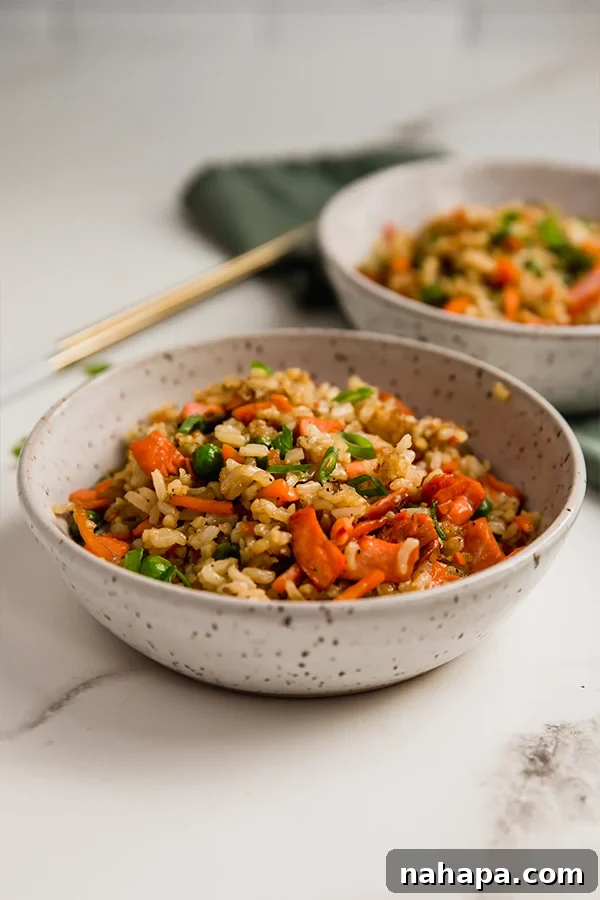
Conclusion: A Must-Try Salmon Fried Rice Recipe
This Crispy Salmon Fried Rice recipe offers a perfect blend of robust flavors, satisfying textures, and impressive nutritional benefits. It’s an accessible dish that caters to various dietary needs, promising a delicious, home-cooked meal that’s far superior to any takeout option. By following our detailed guide and incorporating our expert tips, you’re set to create a culinary masterpiece that is both wholesome and incredibly enjoyable. So, gather your ingredients, embark on this delightful cooking adventure, and prepare to indulge in the crisp, savory goodness that makes this dish an instant favorite in any healthy kitchen. Enjoy every flavorful bite!
You’ll also love these related recipes:
- Ground Beef Fried Rice
- Teriyaki Salmon Bowls
- Firecracker Salmon Lettuce Cups
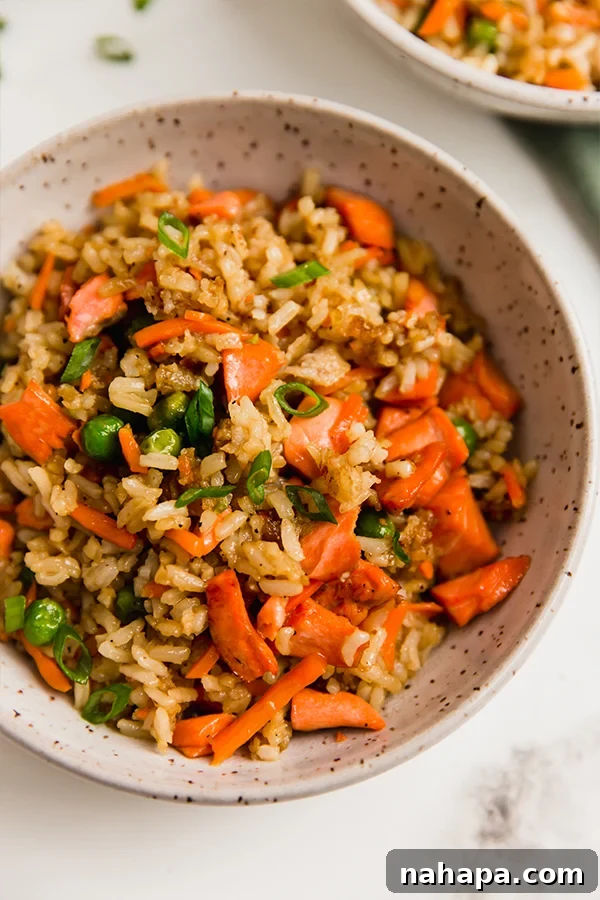
Easy Salmon Fried Rice
This crispy salmon fried rice is a flavorful and veggie-packed main dish! It’s nutrient-dense, gluten-free, and can be made grain-free.
- Yield: 2-3 servings
- Prep Time: 15 mins
- Cook Time: 20 mins
- Author: Michelle
Ingredients
- 2 salmon fillets
- Salt and pepper to taste (omit pepper for AIP)
- 3 tbsp coconut aminos, divided
- 1 tbsp avocado oil
- ½ cup cauliflower rice
- ½ cup shredded carrots
- ¼ cup peas
- 2 cups cooked white rice, cold (see notes for AIP)
- 2 tsp apple cider vinegar
- 2 tsp garlic powder
- 1 tsp onion powder
- 1 tsp ginger powder
- 2 tbsp green onion, chopped
Instructions
- Remove the skin from the salmon and pat dry. Slice the salmon into small cubes and add to a bowl. Season with salt and pepper and top with 1 tbsp coconut aminos. Allow to marinate for 10-15 minutes in the fridge.
- Heat the avocado oil in a pan over medium heat and add the salmon. Cook for about 3 minutes on each side or until cooked through. Remove from the pan and set aside.
- Using the same pan, heat the oil over medium heat. Add the carrots, peas, and cauliflower rice and sauté for 5-6 minutes or until the vegetables are tender.
- Add the white rice to the pan, break it up, and spread it to the bottom of the pan so there are no clumps. Allow the rice to begin to crisp, turning it often to crisp on all sides. This will take about 5-7 minutes.
- Once the rice is lightly crisp, stir in the cooked salmon, 2 tbsp of coconut aminos, apple cider vinegar, salt, pepper, onion, garlic, and ginger powder. Stir to combine.
- Serve topped with green onion.
Notes
- To make AIP, omit the peas and black pepper. Use all raw cauliflower rice and cook as directed rather than using white rice.
- Make sure that the rice is cold, and not fresh so it will more easily crisp.
- All nutrition facts are estimated and will vary.
Nutrition Information
Serving: 1 serving, Calories: 488kcal, Carbohydrates: 57.3g, Protein: 35.8g, Fat: 12.6g, Fiber: 2.3g
All nutrition facts are estimated and will vary.