
Have you ever found yourself drawn to the idea of knowing exactly where your food comes from? For many, including myself, this journey often begins with a simple curiosity that quickly blossoms into a full-fledged passion for local food. Residing in Dallas, a city I cherish for its vibrant culture, my enthusiasm for local food transcends typical hometown pride. While I’m certainly not a Dallas-exclusive blogger, my dedication to the local food scene here is absolute. I’ve explored countless farm stores, engaged with numerous vendors, and joined several co-ops and CSAs within a 50-mile radius, building relationships with many local farmers along the way. But why this unwavering commitment to eating local? And more importantly, how can you embark on your own journey to access high-quality, locally sourced food?
The Journey to Local Food: It’s Not About Perfection, But Progress
Before diving into the myriad benefits and practical steps, it’s crucial to clarify a fundamental point: the essence of embracing local food is not about achieving absolute perfection. It’s about making conscious choices and integrating more wholesome options into your lifestyle. Your dietary approach doesn’t need to be 100% local to unlock significant health benefits! In today’s interconnected world, even those living on self-sufficient homesteads often rely on some external resources. Convenience is a valued aspect of modern life, and we should feel empowered to leverage it where appropriate. The pursuit of local food isn’t an elitist endeavor, nor does it demand that every single item on your plate originates from your immediate vicinity. Perhaps you begin by cultivating a small herb garden on your balcony, or sourcing all your eggs from a neighbor with happy hens. Maybe you decide to join a local Community Supported Agriculture (CSA) program. Whatever your starting point, every single step towards eating more locally contributes positively to your health, your community, and the environment. So, let’s explore why these small, intentional choices truly matter.
Why High-Quality Local Food is Essential for Your Health and Well-being
In the age of social media and health-focused blogs, it’s common to see popular stores like Whole Foods, Trader Joe’s, and Natural Grocers frequently recommended as the go-to destinations for healthy eating. The narrative often suggests that eating well is synonymous with shopping exclusively at these establishments. While I appreciate the accessibility and selection these stores offer, much like any other wellness enthusiast, I firmly believe that when it comes to true nutritional value and impact, local food consistently comes out on top. Here’s a comprehensive look at why incorporating local foods into your diet is a superior choice for your overall health:
1. Local Food Promotes Seasonal Eating: A Cornerstone for Gut Health and Holistic Wellness
One of the most pervasive, and frankly, misguided pieces of nutrition advice I often encounter is the recommendation to consume the same meals and foods day in and day out. While the convenience of grabbing an apple every morning might be appealing, this approach fundamentally misunderstands our physiological needs and evolutionary history. Our ancestors did not have year-round access to the same produce. Apples, for instance, are not perpetually in season. Modern grocery stores, through global shipping networks, create an illusion of constant availability for all types of produce, tricking us into believing that any food can be eaten at any time. However, our bodies were never designed for such monotonous eating patterns. This practice disrupts the natural rhythm of how our bodies adapt to seasonal changes and can unfortunately be a common precursor to developing food intolerances.
Our digestive systems and, more specifically, our gut bacteria thrive on variety. The human microbiome, a complex ecosystem within our gut, requires a diverse range of fibers and nutrients found in different seasonal foods to maintain optimal diversity and function. When we consistently feed our gut the same limited selection of foods, we starve it of the varied nourishment it needs to flourish, potentially leading to imbalances and reduced microbial diversity. Eating seasonally aligns us with nature’s intelligent design, ensuring we receive a broad spectrum of vital nutrients throughout the year. Relying solely on apples as our primary fruit source limits us to the specific nutrients apples offer. Conversely, by enjoying apples in the fall, citrus fruits in the winter, vibrant berries in the spring, and refreshing melons in the summer, we unlock a dynamic array of vitamins, minerals, and antioxidants that our bodies require for peak performance and long-term health. This seasonal rotation is not just a culinary delight; it’s a profound nutritional strategy.
2. Local Food Guarantees Superior Freshness and Nutrient Density
Despite appearances—the glossy sheen and seemingly perfect presentation—produce found in conventional grocery stores often lacks true freshness. Consider the journey: if I’m in Texas and see produce from Ecuador, it’s safe to assume those items were not harvested just days ago. The considerable distance food travels, often thousands of miles, means it must be picked prematurely, stored for extended periods, and sometimes treated with chemicals or waxes to withstand the journey and maintain an appealing look. This extensive travel time inevitably leads to a significant degradation of nutrients. Many vitamins and antioxidants begin to diminish the moment produce is harvested, making the time between farm and plate critical.
Local food, by its very definition, minimizes this travel time, often arriving on your table within hours or a few days of harvest. This rapid turnaround ensures maximum freshness, resulting in produce that is not only more flavorful but also significantly more nutrient-dense. The vibrant taste of a locally grown tomato, bursting with natural sugars and acidity, stands in stark contrast to its conventionally-sourced counterpart. Furthermore, fresher local produce often comes devoid of the preservatives, artificial ripening agents, and coatings frequently applied to commercial produce to extend shelf life. There’s a particular joy in bringing home local vegetables that still bear a bit of honest dirt—a testament to their direct-from-the-earth origin and minimal handling.
3. Local Food Embraces a More Natural and Ancestral Eating Pattern
While my commitment to local eating is strong, I’m certainly not an extremist; cassava and plantains still make their way into my kitchen! However, a deeper reflection reveals that many of the exotic foods readily available at modern grocery stores would have been utterly foreign to my Jewish, Polish, and Italian ancestors. It’s hard to imagine a traditional Jewish recipe calling for plantains, especially since they don’t grow anywhere near my region. While this global variety offers culinary adventure, it often distances us from a more natural and ancestral way of eating.
Local food systems inherently encourage consumption of what is naturally available in a particular bioregion. This approach mirrors how our ancestors ate for millennia, relying on the land and seasons around them. It’s a fundamental principle of ancestral living and the paleo diet philosophy—aligning our diets with what our bodies are evolutionarily designed to consume. When we eat locally, we are not just choosing food; we are reconnecting with a historical and biological blueprint for human nutrition. This natural alignment can lead to better digestion, greater satiety, and a more harmonious relationship with our environment. It’s about respecting the wisdom of our heritage and embracing the foods that are truly indigenous to our locale.
4. The Critical Importance of Grass-Fed and Pasture-Raised Animal Products
I cannot overstate the profound difference that truly grass-fed and pasture-raised animal proteins make, both for human health and animal welfare. There is a vast chasm between “organic” meat from a conventional grocery store and protein sourced from a local farmer who prioritizes pasture-raising and grass-feeding practices. The “organic” label, while a step up from conventional, often simply means animals were fed organic grains rather than GMO grains. The critical issue remains: cows and chickens, by their nature, are not meant to subsist on grains. Such a diet renders them unhealthy, similar to how it impacts humans who cannot tolerate grains, and consequently, makes their meat less nutritious for us. Many individuals meticulously avoid soy or corn in their own diets but overlook the fact that their store-bought chicken sausage might come from chickens fed a diet heavily reliant on soy and corn.
The most humane and healthful method for raising animals involves allowing them to live on pasture, where they can forage naturally. Animals raised on pasture receive more Vitamin D from sunlight and consume their species-appropriate diet, leading to a significantly superior nutritional profile in their meat, dairy, and eggs. This includes higher levels of beneficial omega-3 fatty acids, conjugated linoleic acid (CLA), and various vitamins and minerals. Finding truly trustworthy meat at a conventional store is incredibly challenging. I personally make it a point to engage local farmers, delving into their specific farming practices, and the difference is palpable. Not only does the meat taste superior, but it’s also easier on my stomach, and produces bone broths and meals of unparalleled quality. Investing in pasture-raised products is an investment in your health and in ethical, sustainable agriculture.
5. Choosing Local is a Significant Step Towards Environmental Stewardship
The environmental impact of our food choices extends far beyond the well-documented issues surrounding non-pasture-raised meat. While concentrated animal feeding operations (CAFOs) certainly pose significant ecological challenges, the sheer carbon footprint generated by flying mangoes from Chile to Chicago, or shipping produce across continents, is equally concerning. The transportation of food across vast distances contributes substantially to greenhouse gas emissions, depletes fossil fuels, and relies on extensive packaging and refrigeration, all of which take a toll on our planet. Sourcing food from down the street, rather than around the globe, is inherently more environmentally friendly and aligns more closely with natural, regional ecosystems.
Again, perfect environmentalism in eating is an aspirational goal, and I too enjoy an occasional mango from the grocery store. However, recognizing the impact of our choices and striving to eat more locally whenever possible makes a tangible difference. Local food systems generally involve fewer “food miles,” less energy consumption for transport and storage, and often support smaller farms that practice more sustainable and regenerative agricultural methods. These practices can contribute to healthier soil, conserve water, and protect local biodiversity. By prioritizing local food, we actively reduce our ecological footprint and contribute to a more sustainable, resilient food system for future generations.
Your Guide to Discovering High-Quality Local Food Sources
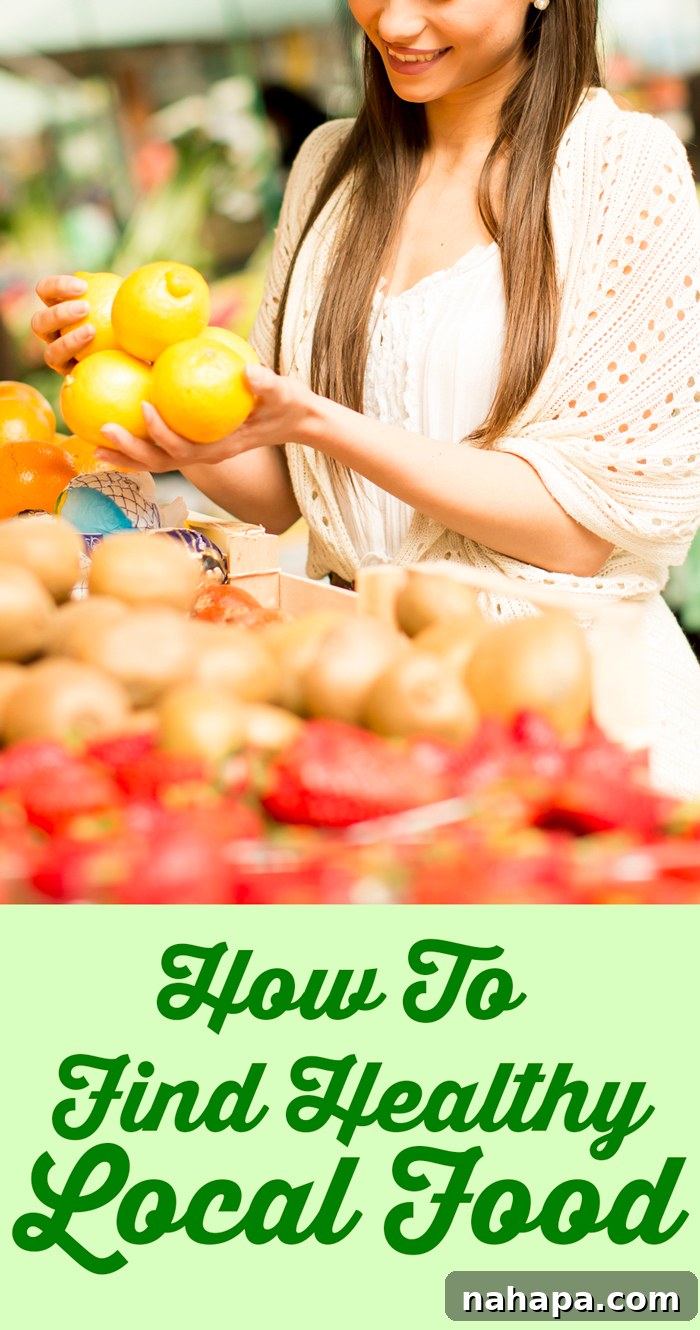
One of the most encouraging truths about local food is its surprising accessibility. Many people quickly dismiss local options, believing they are either too difficult to find or non-existent in their area, simply because they haven’t actively sought them out. While it does require a little initial effort and “legwork” to discover your preferred sources and build relationships, the process of finding and integrating local food into your life is incredibly rewarding and profoundly worthwhile. Think of it as an exciting treasure hunt for delicious, healthy, and sustainably produced sustenance.
1. Actively Seek Out Farmers Markets, CSAs, Farm Stores, and Food Co-ops
Local food manifests in diverse forms and structures, so you don’t necessarily need a sprawling, bustling farmers market right on your doorstep to enjoy its benefits. Here are various avenues to explore when searching for local food:
- Farmers Markets: These are arguably one of the most straightforward entry points into the local food scene. Beyond the obvious, be sure to look for markets in less conventional locations such as church parking lots, community centers, local libraries, or even school grounds. They aren’t always prominently advertised or located in predictable spots, so a bit of local searching can yield pleasant surprises. Engaging with the farmers directly at these markets is also an invaluable opportunity to learn about their practices and ask questions.
- Farm Stores: Often acting as miniature farmers markets, farm stores provide a convenient, direct-from-the-farm shopping experience. Many farms establish on-site shops where customers can purchase their produce, meats, eggs, and other artisanal products throughout the week, offering more flexibility than weekly markets. This allows for a deeper connection to the source and often provides a wider selection of products directly from that specific farm.
- Community Supported Agriculture (CSA): A CSA program involves purchasing a “share” or subscription from a local farm at the beginning of the growing season. In return, you receive regular (often weekly or bi-weekly) boxes of fresh, seasonal produce and sometimes other farm products. CSAs often operate without a central retail location, utilizing various drop-off points for their weekly deliveries. While customization might be limited as you receive what’s freshest that week, CSAs are an excellent way to guarantee incredibly fresh, hyper-local food and directly support a specific farm. It’s a true partnership between consumer and producer.
- Food Co-operatives (Co-ops): Food co-ops are member-owned and often community-organized initiatives that consolidate orders from multiple local farms. They can range from small, informal groups facilitating bulk drops at a member’s home to larger, more established grocery stores owned by their members. Co-ops provide a convenient way to access a wide variety of local products from different producers, often at competitive prices, all within a single pickup or delivery. They foster a strong sense of community and shared commitment to local food systems.
- Direct from a Farm: Many farms offer direct sales to consumers. While not every farm provides this, an increasing number allow weekly on-site pickups, or even offer home delivery services for a fee. I once sourced beef from a farmer who delivered our monthly order directly to our home, straight from their farm. This method provides the most direct connection to your food source, allowing you to establish personal relationships with the growers and gain intimate knowledge of their agricultural practices.
2. Uncover Underground Local Food Movements and Community Networks
One fascinating discovery I made on my local food journey is the existence of numerous CSAs, meat shares, and small farms that operate largely beneath the radar of conventional advertising. These initiatives often thrive through word-of-mouth and, notably, through social media platforms. I’ve found a wealth of sources that manage small, private groups on platforms like Facebook, organizing monthly home pickups for their members. While these might seem modest compared to larger operations, they can be incredibly effective and provide access to unique, high-quality products. Try searching “[Your Town] CSA” or “[Your County] Farm Share” on Facebook or other local social media groups. You might be genuinely surprised by the hidden gems and vibrant local food communities you can uncover, offering fresh produce, ethically raised meats, and artisanal goods right in your neighborhood.
3. Leverage Search Engines and Specialized Directories for Local Food Sources
Beyond standard search engines like Google, which are always a good starting point (try terms like “local farms near me,” “grass-fed beef [your state],” or “farmers market [your city]”), other platforms can prove invaluable. Yelp and Trip Advisor, typically used for restaurants and travel, can sometimes help locate farms with storefronts or agri-tourism components. Additionally, for a more targeted approach, I frequently direct my clients to the Weston A. Price Foundation’s Local Chapter search engine. The Weston A. Price Foundation champions traditional, nutrient-dense, local foods and organizes chapters across the United States. These local chapters are excellent resources for connecting with a vast network of local vendors, farmers, and producers who may not advertise through mainstream channels. These specialized directories are goldmines for finding truly authentic, local food providers committed to traditional farming and food preparation methods.
4. Cultivate Your Own: Start a Backyard or Indoor Garden
When all other avenues seem challenging, take “local” to its most literal and accessible extreme: your own home! My husband and I recently embarked on our backyard gardening adventure, and there’s immense satisfaction in stepping outside daily to check on our budding onion sprouts and other vegetables. Starting a garden can be surprisingly affordable, requiring good quality soil and seeds or starter plants. Beyond the sheer freshness, home gardening offers numerous benefits: it’s a therapeutic activity, a wonderful way to educate yourself and your family about where food comes from, and a fantastic step towards greater food security.
Even if a sprawling backyard isn’t an option, you can still embrace gardening with an indoor herb garden. Growing fresh herbs like rosemary, basil, mint, or chives on a windowsill provides an abundant supply of nutrient-dense ingredients that elevate the flavor of your meals. All it takes is one small rosemary plant on your windowsill to begin experiencing the incredible benefits of growing and consuming truly local food, adding a vibrant touch to your culinary creations and fostering a deeper connection to what you eat.
Bonus: My Favorite Local Food Gems in Dallas, TX
Since I proudly call Dallas, TX home, it’s only right to share some of my absolute favorite local food heroes here! You all truly make living here a culinary delight. (And yes, I rarely use “y’all” in real life, but for you, my readers, I’ll make an exception! 😜)
Top-tier Local Meat Providers:
- Juha Ranch – My go-to source for all my bone broth needs! Juha Ranch consistently offers the best bones in town, incredible organ meats, and absolutely phenomenal chuck roast. You can regularly find them at the Dallas Farmers Market and several other local markets, ensuring access to their outstanding products.
- Bois D’Arc Meat Co – For the finest eggs, chicken, and pork shoulder in Dallas, Bois D’Arc Meat Co is unparalleled! Their beef is equally exceptional. Tyler, the owner, takes immense pride in every aspect of his product, from thoughtful branding to the superior quality of the meat itself. Their active presence on social media also makes them highly transparent, trustworthy, and engaging. I always look forward to catching them at the Dallas Farmers Market.
Favorite Farmers Markets for Variety and Quality:
- Dallas Farmers Market – This is my absolute favorite, offering the widest and most diverse selection of local produce, meats, and artisanal goods. It’s a vibrant hub for the community and an essential stop for local food enthusiasts.
- Coppell Farmers Market – A fantastic suburban alternative, the Coppell Farmers Market is a solid second favorite, providing a wonderful array of fresh, local products in a welcoming community setting.
Standout Local Farm Store:
- Farm To Fork Foods – Owned and passionately operated by a fellow Nutritional Therapy Practitioner (NTP), Farm To Fork Foods in Arlington is an absolute gem for local provisions. They consistently deliver high-quality, local food options that are both nourishing and delicious.
Premier Local Veggie Source:
- JBG Organic – JBG Organic is a fantastic source for fresh, organic vegetables. They sell their produce at various markets throughout the Dallas area and also operate a popular local CSA program, making it easy to access their seasonal bounty.