
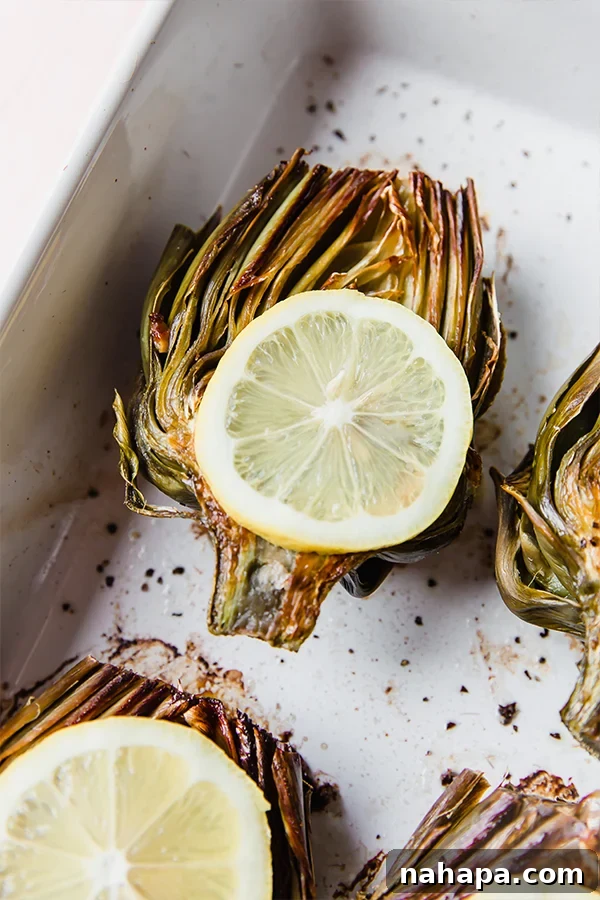
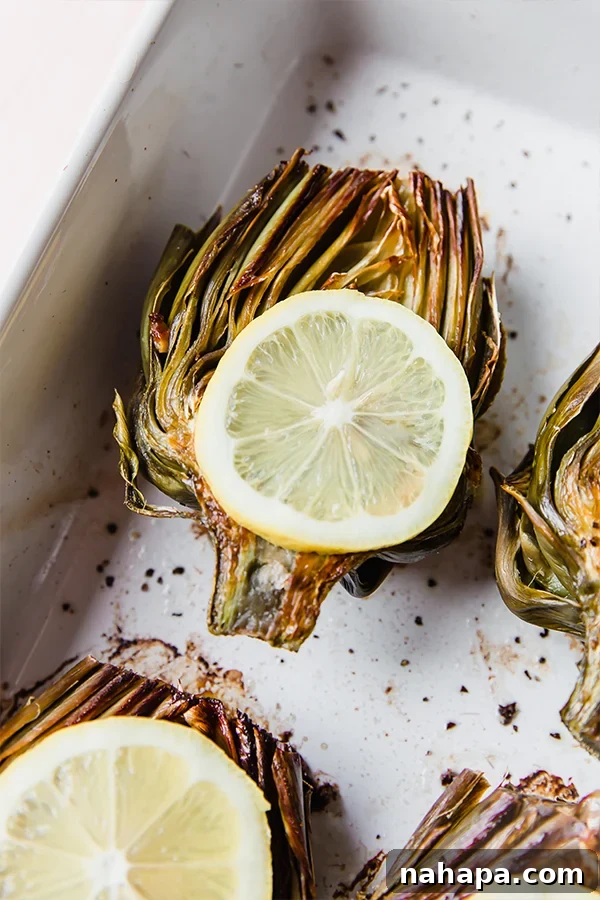
Mastering Oven-Baked Artichokes: An Easy & Delicious Guide
Unlock the secrets to preparing and enjoying perfectly oven-baked artichokes right in your own kitchen. This comprehensive guide will transform the beautiful, often intimidating, artichoke into an easy-to-make, delectable side dish or appetizer that will impress your family and friends.
For many years, the idea of preparing a whole artichoke at home seemed daunting. I’d admire them at the grocery store, captivated by their unique form, yet convinced they were far too complicated for a home cook. My experience with artichokes was limited to canned hearts, perhaps in a salad, a creamy dip, or on a pizza. The thought of tackling a fresh, whole artichoke? Completely out of my culinary comfort zone. However, I soon discovered that this perception couldn’t be further from the truth. Baking artichokes is not only surprisingly simple but also incredibly rewarding, yielding a tender, flavorful vegetable that is a true delight to eat.
This recipe for oven-baked artichokes has quickly become a beloved springtime tradition in my home. It’s a versatile dish that pairs beautifully with a wide array of main courses. Imagine serving these tender artichoke halves alongside perfectly baked chicken, a succulent pan-seared steak, or even grilled fish for a complete and satisfying meal. Their unique flavor and texture add an elegant touch to any dinner table, making them perfect for both casual weeknights and special occasions. Once you try this method, you’ll wonder why you ever hesitated.
The Wonderful World of Artichokes
Before diving into the recipe, let’s explore a bit more about this fascinating vegetable. Artichokes are more than just a pretty face; they are packed with nutrients and offer numerous health benefits.
Why Artichokes are a Nutritional Powerhouse
Artichokes are a fantastic addition to any diet, celebrated for their impressive nutritional profile. They are incredibly rich in fiber, which is essential for digestive health, promoting regularity, and helping to maintain stable blood sugar levels. A single artichoke can provide a significant portion of your daily recommended fiber intake. Beyond fiber, artichokes are an excellent source of Vitamin C, a powerful antioxidant that supports immune function and skin health. They also contain Vitamin K, important for blood clotting and bone health, and a good amount of folate, magnesium, and potassium.
One of the most noteworthy benefits of artichokes is their positive impact on liver health. They contain compounds like cynarin and silymarin, which are known to stimulate bile production. Increased bile flow aids in the digestion of fats and helps the liver detoxify the body more efficiently. Incorporating artichokes into your meals is not just about adding a unique flavor; it’s about enriching your diet with a vegetable that actively contributes to your overall well-being. It’s always a good practice to diversify your vegetable intake, and artichokes offer a distinct taste and texture that can break up mealtime monotony.
Where to Find the Best Artichokes
Finding fresh artichokes is usually quite straightforward, especially when they are in season. While availability can vary by region, most major grocery stores, particularly those focusing on fresh produce and natural foods like Sprouts, Whole Foods, or Natural Grocers, will carry them. Look for them in the produce section, often near other specialty vegetables. Don’t hesitate to ask a produce clerk if you can’t spot them right away.
The Peak Season for Artichokes
Timing is everything when it comes to fresh produce, and artichokes are no exception. The prime season for artichokes typically runs from March through May. During these spring months, you’ll find them at their most abundant, freshest, and often at the best prices. While you might occasionally see them available out of season, their quality and flavor are unparalleled during their peak. Spring artichokes are generally more tender, have a better texture, and a more vibrant taste, making them ideal for baking and enjoying whole.
Essential Artichoke Preparation Steps
Preparing a whole artichoke might seem complex at first glance, but with a few simple steps, you’ll find it’s quite manageable. While some methods suggest roasting them mostly whole, my preferred approach involves halving them for a more even cook and easier access to the delicious interior. Here’s a detailed guide to prepping your artichokes for baking:
- Trim the Top: Begin by placing the artichoke on a cutting board. Using a sharp, sturdy knife, carefully slice off about one inch from the pointed top of the artichoke. This removes the very tip of the inedible leaves and creates a flat base for halving.
- Neaten the Stem: Next, trim any excessive length from the stem at the bottom of the artichoke, leaving only a short base of about an inch. Some prefer to remove the stem entirely and trim the very bottom of the artichoke flat, which can also work well.
- Remove Outer Leaves: Pull off the small, tough, and often discolored leaves at the very base of the artichoke. These are typically too fibrous to eat. You should only need to remove about 3-5 of these tougher outer leaves.
- Snip Leaf Tips: With kitchen scissors, snip off the sharp, pointed tips from each of the remaining leaves. This step is crucial for making the artichoke more pleasant to handle and eat, as the thorns can be quite prickly. Exercise caution to avoid pricking your fingers.
- Halve and Clean: Carefully slice the artichoke in half vertically, from top to bottom. Once halved, you’ll expose the fuzzy choke in the center. Use a spoon, preferably a sturdy metal one, to scoop out and discard this fibrous, inedible choke. This is the part that gives the artichoke its name and can be quite sharp if ingested.
- Prevent Browning: Immediately after cleaning, brush the cut surfaces of the artichoke halves with fresh lemon juice. This simple step helps prevent oxidation and browning, keeping your artichokes looking vibrant and fresh.
Although these steps may sound like a lot, the process is surprisingly quick and straightforward. Artichokes are not as hard to cut as some dense vegetables like squash or sweet potatoes, so you’ll find the preparation flows smoothly. The effort invested results in beautifully prepared artichoke halves, ready to absorb all the wonderful flavors during baking.
How to Effortlessly Enjoy Whole Baked Artichokes
Many people are only familiar with eating the tender heart of the artichoke, unknowingly missing out on the equally delicious experience of savoring the leaves. Eating a whole baked artichoke is a unique culinary journey, offering different textures and flavors from start to finish. Here’s how to fully appreciate every part:
Beginning with the Flavorful Leaves
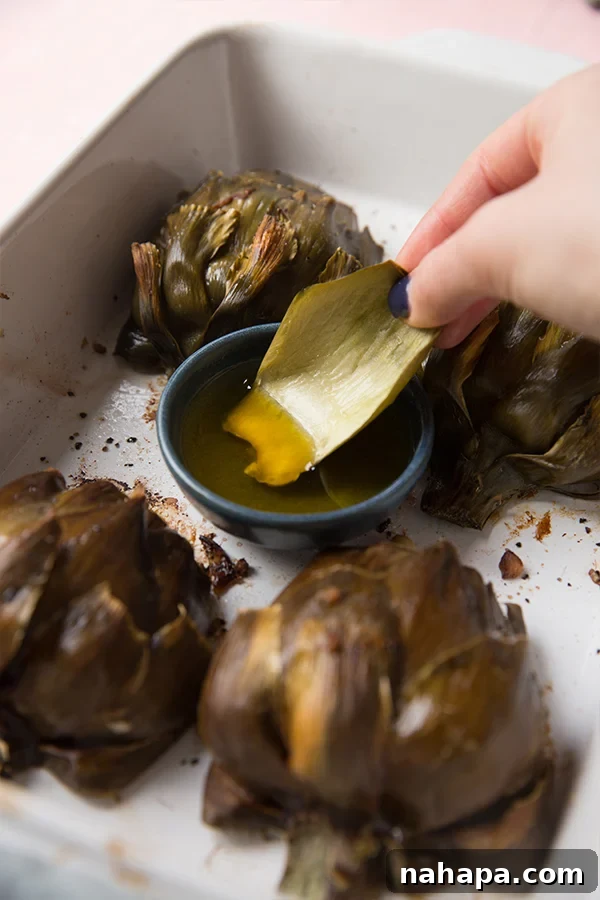
The leaves of a baked artichoke are surprisingly meaty and flavorful, offering a delightful appetizer experience. To enjoy them, simply pull off one of the outer leaves. Hold the leaf by its pointed end and gently scrape the soft, meaty pulp at the base with your front teeth. You’ll find a tender, creamy texture that melts in your mouth. Repeat this process with each leaf, working your way towards the center. The amount of edible flesh on each leaf increases as you get closer to the heart, making each successive leaf a more rewarding bite. For an extra layer of richness and flavor, I highly recommend dipping the scraped base of each leaf into a small bowl of melted ghee or butter. This simple addition elevates the experience, adding a luxurious, savory note that complements the artichoke’s natural taste.
Finishing with the Prized Artichoke Heart
Once you’ve enjoyed all the outer leaves, you’ll reach the highly anticipated artichoke heart. This is the innermost and most tender part of the artichoke, connected to the stem, and often considered the ultimate prize. The heart is robust, succulent, and incredibly satisfying. Unlike the leaves, which require scraping, the heart can be eaten whole, much like a tender vegetable. You can simply nibble on it, or if it’s particularly large, slice it into smaller pieces. Its smooth texture and concentrated flavor are a delightful conclusion to your artichoke eating experience. A little dip in melted ghee or butter also works wonders here, enhancing its natural sweetness and savory notes.
The Simple Ingredients & Essential Tools You’ll Need
One of the beauties of this oven-baked artichoke recipe is its reliance on fresh, simple ingredients and basic kitchen tools. You don’t need anything fancy to create this culinary masterpiece.
Star Ingredients for Perfect Baked Artichokes:
- Artichokes: These are, of course, the undisputed stars of our dish. For best results, select firm, heavy artichokes with tightly closed leaves. I typically prepare at least two at a time – one for myself and one for my husband – but often bake an extra for delicious leftovers. Look for medium to large-sized globes for a good amount of tender meat.
- Garlic: Freshly minced garlic cloves are tucked into the heart of each artichoke half, infusing it with an incredible aromatic flavor as it bakes. The garlic softens and caramelizes, adding a sweet and savory depth that truly elevates the dish.
- Lemon: Fresh lemon juice serves a dual purpose here. Firstly, it adds a bright, zesty flavor that beautifully complements the earthy notes of the artichoke. Secondly, it plays a practical role in preventing the cut surfaces of the artichoke from browning during preparation and baking, ensuring a visually appealing final product.
- Salt & Pepper: Simple sea salt and freshly ground black pepper are the foundational seasonings for this recipe. They enhance the artichoke’s natural flavors without overpowering them. For those following an AIP (Autoimmune Protocol) diet, the black pepper can be easily omitted without compromising the deliciousness.
- Avocado Oil: A good quality cooking oil like avocado oil is perfect for roasting. It has a high smoke point and a neutral flavor, allowing the artichoke’s taste to shine through while ensuring a tender interior and slightly crispy exterior. Olive oil can also be used.
- Optional – Melted Butter or Ghee for Dipping: While entirely optional, dipping the artichoke leaves and heart in melted butter or ghee (clarified butter) is a traditional and utterly decadent way to enjoy them. The rich, creamy texture and nutty flavor of ghee or butter add a layer of indulgence that is truly irresistible. If following AIP, ensure your ghee is compliant or omit it.
Essential Kitchen Tools:
- Sharp Knife: Crucial for safely and efficiently trimming the artichoke tops and stems, and for halving them.
- Kitchen Scissors: Ideal for snipping off the sharp tips of the artichoke leaves, making the preparation much easier and safer.
- Sturdy Spoon: Necessary for scooping out the fuzzy choke from the center of the artichoke halves.
- Baking Dish with a Cover: This is a key tool for achieving perfectly tender artichokes. You’ll need a casserole dish or a similar baking vessel that has a tight-fitting lid. The lid creates a steaming effect during a portion of the baking process, ensuring the artichokes become incredibly tender.
- Alternative to Aluminum Foil: A note on covers – I personally prefer to avoid using aluminum foil in cooking when possible, as aluminum can leach into food, especially with acidic ingredients. However, if it’s your only option, it will work for this recipe to create the necessary steam. A more ideal alternative is to use a ceramic or glass baking dish with its own lid, or even another oven-safe dish inverted over the top of your baking dish to create a seal.
The Recipe: How to Bake & Eat Artichokes
How to Bake & Eat Artichokes
Yield: 2-3 servings
Prep Time: 15 mins
Cook Time: 45 mins
Author: Michelle
These oven-baked artichokes are a flavorful spring side dish!
Ingredients
- 2 whole artichokes
- Juice of one lemon, plus lemon slices for garnish
- 5-6 cloves of garlic, minced
- 1 tsp sea salt
- ½ tsp black pepper (omit for AIP)
- 3 tbsp avocado oil
- Optional: melted ghee for dipping (omit for AIP)
Instructions
- Preheat your oven to 400°F (200°C). Prepare a casserole dish (ensure it has a lid or a suitable cover as described in the notes below) and lightly grease it with oil.
- Prepare the artichokes by cleaning them thoroughly. Use a sharp knife to slice off about one inch from the pointed top. Trim any excess from the stem, leaving a short base. Remove the hard, small leaves at the very bottom by pulling them off (usually 3-5). With kitchen scissors, snip the pointed, thorny tops off each leaf, taking care as they can be sharp. Slice each artichoke in half vertically. Use a spoon to scoop out and discard the fuzzy choke from the center of each half. Brush the cut surfaces of the artichokes generously with lemon juice to prevent browning.
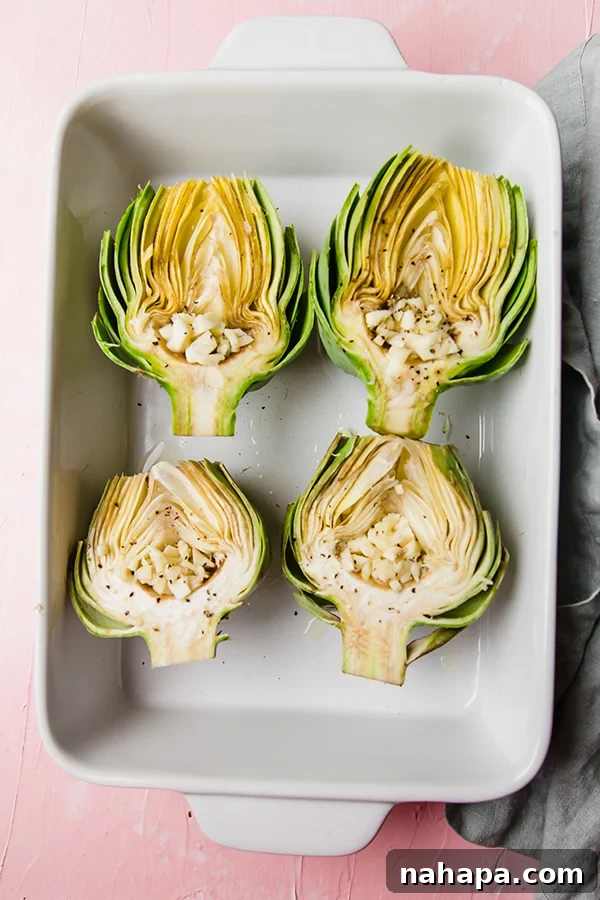
- Place the prepared artichoke halves into the greased casserole dish, leaf side down and heart side up. Fill the scooped-out heart cavity of each artichoke half with the minced garlic cloves. Season generously with about half of the sea salt and black pepper (if using), and drizzle with half of the avocado oil.
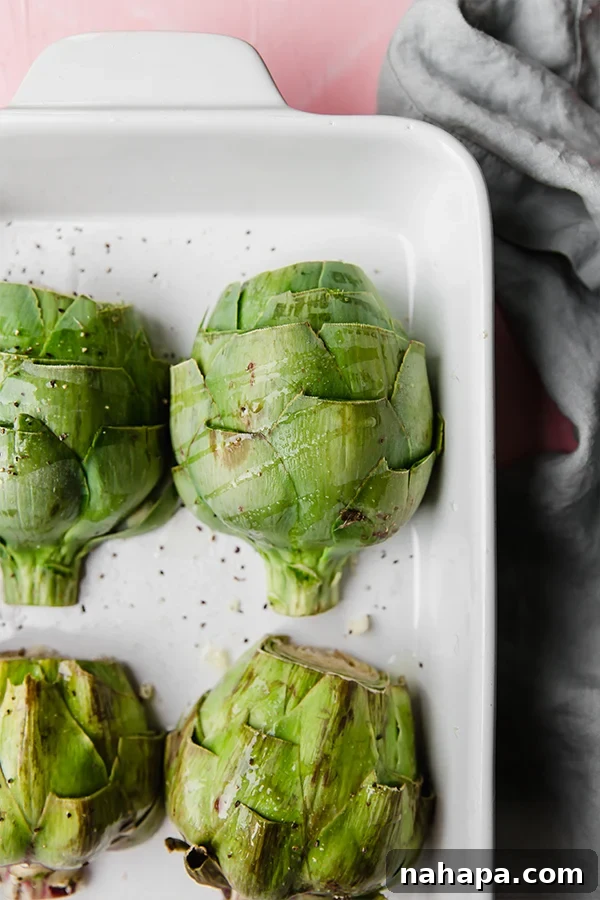
- Carefully flip the artichokes so they are now leaf side up (try to keep the garlic tucked inside as best as possible). Add the remaining salt, pepper, and avocado oil, ensuring the seasonings are distributed over the leaves.
- Bake in the preheated oven for 20 minutes, uncovered.
- After 20 minutes, remove the dish from the oven. Cover the casserole dish tightly with its lid (or an appropriate alternative as discussed in the notes). Return it to the oven and continue baking for another 20-25 minutes, or until the leaves can be easily pulled from the artichoke and the heart is tender when pierced with a fork.
- Allow the artichokes to cool slightly before serving. Using a spoon, gently flip them to expose the delicious heart.
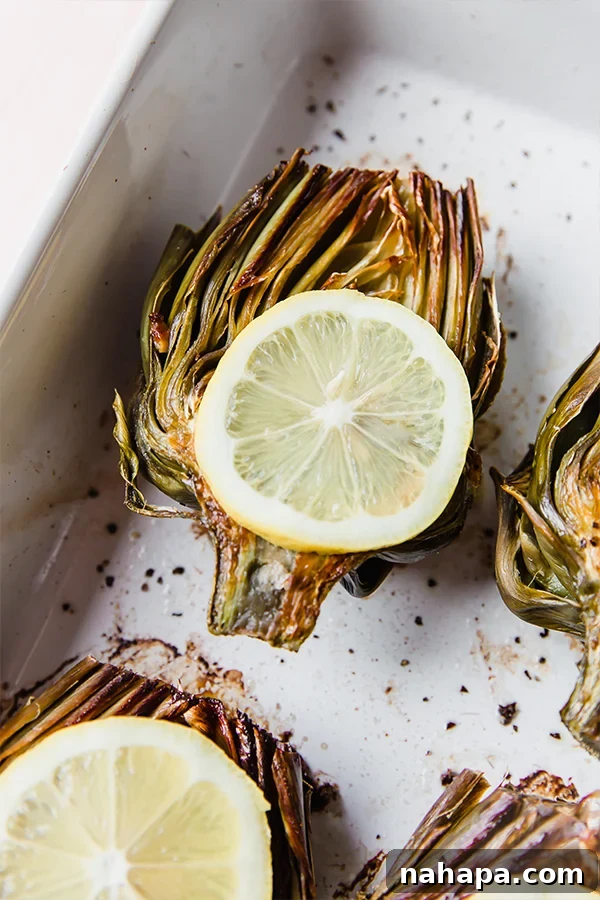
- Garnish with fresh lemon wedges, which can be squeezed over the artichokes for extra zest. Serve immediately with optional melted ghee or butter for dipping.
- To eat, pull off the leaves one by one, dip the base in melted ghee (if using), and scrape the tender flesh from the base of the leaf with your teeth. Continue until you reach the center. The soft, tender heart is then fully edible and can also be enjoyed with a dip.
Notes
Covering your baking dish: I generally avoid using aluminum foil for cooking due to concerns about aluminum leaching into food. However, if it’s your only option, it will work for this recipe to create the necessary steam. A better alternative is to use an oven-safe casserole dish with a tight-fitting lid, or even another oven-safe pan or baking sheet inverted over your dish to create a seal and trap the steam.
All nutrition facts provided are estimations and can vary based on specific ingredients and preparation. Nutrition facts do not include optional dipping ghee or garnishes.
Nutrition Information
Serving: 1 serving, Calories: 176kcal, Carbohydrates: 12g, Protein: 3.2g, Fat: 14.2g, Fiber: 4.9g
All nutrition facts are estimated and will vary.
Pro Tips for the Best Oven-Baked Artichokes
Elevate your artichoke game with these expert tips and serving ideas:
- Doneness Test: The ultimate test for a perfectly baked artichoke is its tenderness. A leaf from the middle should pull away easily, and the bottom of the artichoke heart should be tender when pierced with a fork. If it’s still firm, give it a few more minutes in the oven, covered.
- Flavor Boosters: Don’t be afraid to experiment with additional herbs. Fresh rosemary or thyme sprigs tucked into the artichoke halves alongside the garlic can add wonderful aromatic notes. A sprinkle of red pepper flakes can introduce a subtle heat.
- Stuffing Variations: For a heartier dish, consider stuffing the artichoke hearts. Before baking, mix the minced garlic with a bit of seasoned breadcrumbs, Parmesan cheese (if not AIP), or even a dollop of a flavorful herb pesto.
- Serving Suggestions: While they shine as a standalone side dish, baked artichokes are also excellent as an appetizer. Serve them on a large platter with individual ramekins of melted butter, ghee, or a homemade aioli for dipping. They are particularly fantastic paired with roasted meats, poultry, or seafood.
- Storage and Reheating: Leftover baked artichokes can be stored in an airtight container in the refrigerator for up to 3-4 days. To reheat, you can warm them gently in the oven at a lower temperature (around 300°F/150°C) until heated through, or briefly in the microwave. Add a splash of water to the dish before reheating to help maintain moisture.
- Choosing Quality Artichokes: Always select artichokes that feel heavy for their size. The leaves should be tightly closed and firm, not loose or wilted. A healthy artichoke will often make a squeaking sound when squeezed gently. Avoid those with dry, split, or bruised leaves.