

Duck Fat Parsnip Fries: A Delicious and Healthy Alternative (AIP, Nightshade-Free, Paleo)
There’s something truly special about parsnips, a root vegetable that has completely transformed my culinary landscape. For years, I considered myself an unwavering devotee of the classic white potato. However, my journey toward better health revealed a common truth for many with conditions like Hashimoto’s thyroid disease and persistent gut issues: nightshades, a family of plants including potatoes, were not my friend. Discovering this intolerance was a pivotal moment, leading me down a path of exploration for suitable and satisfying substitutes.
The internet, a boundless source of information and inspiration, quickly provided an answer to my potato-free fry dilemma: parsnips! Their subtle sweetness and earthy flavor proved to be an exceptional alternative. But the true game-changer came with my recent deep dive into the culinary wonders of duck fat. This revelation led to the creation of my absolute favorite recipe: Duck Fat Parsnip Fries. These aren’t just any fries; they are an AIP (Autoimmune Protocol), nightshade-free, and Paleo-friendly option that doesn’t compromise on flavor or texture. They’ve become a staple in my kitchen, offering a guilt-free indulgence that supports my health goals.

Why Parsnips? The Sweet & Savory Root Vegetable
Parsnips, often overlooked in favor of their more popular potato cousins, are a truly remarkable root vegetable deserving of a spot in your healthy diet. Their flavor profile is a delightful balance of sweet, earthy, and slightly nutty notes, which deepens and caramelizes beautifully when roasted. Unlike potatoes, parsnips offer a unique sweetness that makes them an excellent ingredient for both savory and even some sweet dishes.
Beyond their enticing flavor, parsnips are packed with nutritional benefits. They are an excellent source of dietary fiber, crucial for digestive health and maintaining stable blood sugar levels. They also provide a good dose of vitamins and minerals, including vitamin C, vitamin K, folate, and manganese. For those avoiding nightshades, parsnips offer a safe and nutrient-dense alternative to white potatoes, allowing you to enjoy a similar texture and versatility without triggering sensitivities. When cut into sticks and roasted, their interior becomes wonderfully tender, while their exterior can achieve a satisfying crispness, making them ideal for “fries.”
The Duck Fat Difference: More Than Just Flavor
For years, the mere mention of duck fat fries conjured images of extravagant, unhealthy indulgence. This misconception, however, couldn’t be further from the truth when comparing it to the standard frying practices in many establishments. Understanding the science behind cooking fats reveals why duck fat is not only incredibly flavorful but also a far superior, healthier choice than commonly used oils.
A Healthier Choice for Frying
The vast majority of commercial fries are deep-fried in highly processed seed oils like canola oil, vegetable oil, and soybean oil. These oils are extracted using harsh chemical processes and are typically very unstable at high temperatures. When heated, especially repeatedly, they can oxidize and produce inflammatory compounds and free radicals that are detrimental to human health. These “industrial seed oils” are a relatively new addition to our diets and are associated with a myriad of health issues, including chronic inflammation, cardiovascular problems, and gut dysbiosis.
In stark contrast, duck fat is a traditional cooking fat that boasts a high smoke point, making it exceptionally stable under high heat conditions, such as roasting or frying. This stability means it resists oxidation and doesn’t break down into harmful compounds as easily as seed oils do. Nutritionally, duck fat is rich in monounsaturated fatty acids, particularly oleic acid, the same heart-healthy fat found abundantly in olive oil. It also contains a balanced profile of saturated fats, which are vital for cell membrane integrity, brain health, and hormone production. Sourced from well-raised ducks, duck fat can be a nourishing addition to your diet, contributing essential fatty acids that support cellular function and overall well-being.
Unparalleled Flavor and Texture
Beyond its health advantages, the flavor that duck fat imparts is truly extraordinary. It’s a rich, savory, and deeply satisfying taste that enhances vegetables without overshadowing their natural goodness. Unlike some fats that can impart an odd or overpowering flavor, duck fat offers a subtle umami depth that elevates dishes from ordinary to gourmet. There’s a reason why duck fat fries are often featured on the menus of high-end restaurants – the flavor is simply unparalleled.
When used for roasting, duck fat creates an incredibly crispy exterior on vegetables, while keeping the inside tender and moist. This is the secret to achieving that perfect “fry” texture that’s often sought after but rarely achieved with other fats. The richness of duck fat also means you need less of it to achieve maximum flavor and crispness, making it an efficient and impactful cooking medium.
Sourcing Quality Duck Fat
You don’t need to reserve duck fat for special occasions or pricey restaurant meals. High-quality duck fat is becoming increasingly accessible for home cooks. Brands like EPIC offer excellent options, readily available in many grocery stores or online. You might also find rendered duck fat at local butcher shops or specialty food stores. When purchasing, look for products from humanely raised ducks, ideally pasture-raised, to ensure the highest quality and best nutrient profile. You can even render your own duck fat from whole ducks if you’re feeling adventurous!
Once you’ve tried cooking with duck fat, you’ll find it incredibly versatile. It’s not just for fries; it’s fantastic for roasting any root vegetable, searing meats, or sautéing greens. It stores well in the refrigerator for extended periods, making it a convenient staple to keep on hand. Its rich flavor and stability make it an invaluable addition to any health-conscious kitchen seeking to add depth and nutrition to their meals.
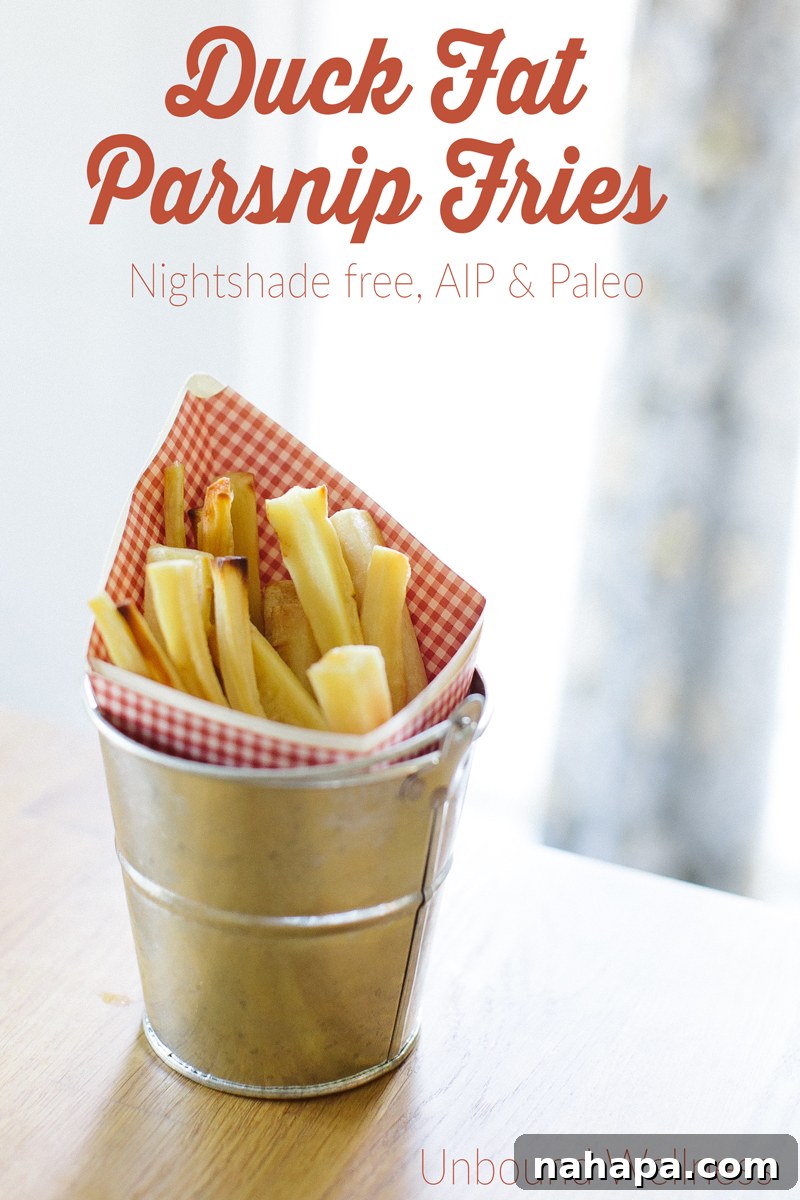
Duck Fat Parsnip Fries (AIP, Nightshade-Free, Paleo)
Yield: 2 servings | Prep Time: 5 mins | Cook Time: 35 mins | Total Time: 40 mins
Ingredients
- 2 large Parsnips
- 2 tbsp Duck Fat
- 1 tsp Sea Salt
Instructions
- Preheat your oven to 400°F (200°C). Line a large baking sheet with parchment paper to prevent sticking and for easy cleanup.
- Prepare the parsnips: Begin by peeling the parsnips thoroughly. Trim off both ends. Then, slice each parsnip lengthwise into thick, fry-like strips. Aim for uniform thickness to ensure all fries cook evenly and reach the same perfect crispness.
- Place the prepared parsnip fries onto the lined baking sheet. Drizzle the melted duck fat over the parsnips and sprinkle with sea salt. Use your hands to thoroughly toss and coat all the parsnip pieces, ensuring they are evenly covered in the fat and seasoning.
- Arrange the coated parsnips in a single layer on the baking sheet, making sure they are not overlapping. This crucial step prevents steaming and encourages optimal crisping. Bake in the preheated oven for 35 minutes, rotating the baking sheet and flipping the fries halfway through the cooking time. Continue baking until the fries are golden brown, tender on the inside, and beautifully crisped to your preference.
- Once baked, taste a fry and add any additional sea salt if desired. Serve immediately and savor these delicious, healthy, and flavorful Duck Fat Parsnip Fries!
All nutrition facts are estimated and will vary.
Tips for Perfect Parsnip Fries
Achieving the perfect Duck Fat Parsnip Fries is simple with a few key tips. First, ensure your parsnips are sliced into uniform thicknesses. Inconsistent cuts will lead to some fries being burnt while others are still undercooked. Secondly, do not overcrowd your baking sheet. Giving the parsnips enough space allows the hot air to circulate freely, promoting crisping rather than steaming. If necessary, use two baking sheets. Finally, keep an eye on them towards the end of the cooking time, as oven temperatures can vary, and parsnips can go from perfectly golden to slightly burnt quite quickly. Adjust the baking time as needed to achieve your desired level of tenderness and crispness.
Serving Suggestions and Variations
These Duck Fat Parsnip Fries are incredibly versatile and can be paired with a wide range of dishes. They make an excellent side to roasted chicken, grilled steak, or baked fish for a complete and wholesome meal. For dipping, consider a homemade AIP-friendly mayonnaise, a tangy mustard sauce, or a simple sprinkle of fresh herbs. To add variety, experiment with different seasonings: a pinch of rosemary or thyme tossed with the parsnips before roasting can add an aromatic twist, or a dash of garlic powder for a savory kick. The natural sweetness of the parsnips combined with the rich duck fat creates a flavor profile that stands alone beautifully but also complements many other flavors.
If you’re still not entirely sold on the magic of duck fat, or perhaps looking for another nightshade-free fry option, I also have a delightful recipe for Herbed Parsnip Fries cooked in avocado oil. It’s another fantastic way to enjoy this wonderful root vegetable.
Ready to elevate your fry game and discover a healthier, more flavorful alternative? Give these Duck Fat Parsnip Fries a try! They’re proof that healthy eating doesn’t mean sacrificing taste or satisfaction. In fact, it often opens the door to even more delicious culinary experiences.

Have you tried the incredible taste of duck fat parsnip fries yet? Share your thoughts and experience in the comments below!