
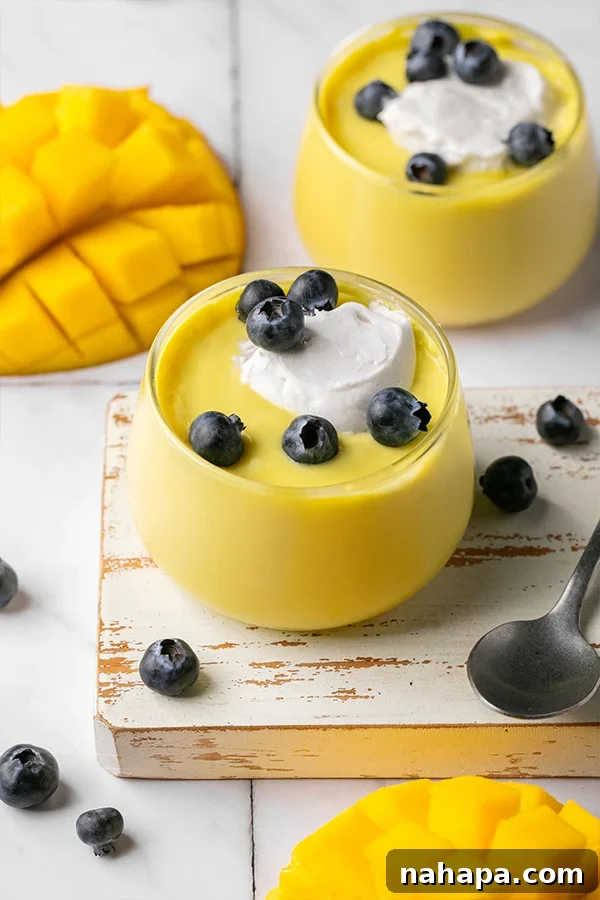
Welcome to the ultimate guide for creating a refreshingly delicious **Dairy-Free Mango Pudding**! This delightful recipe offers a taste of tropical paradise, perfect for warm weather or whenever you crave a naturally sweet, creamy, and wholesome treat. Crafted with the vibrant essence of fresh mangoes, the luscious richness of coconut milk, and expertly thickened with arrowroot starch, this pudding promises a smooth, melt-in-your-mouth texture that will leave you wanting more.
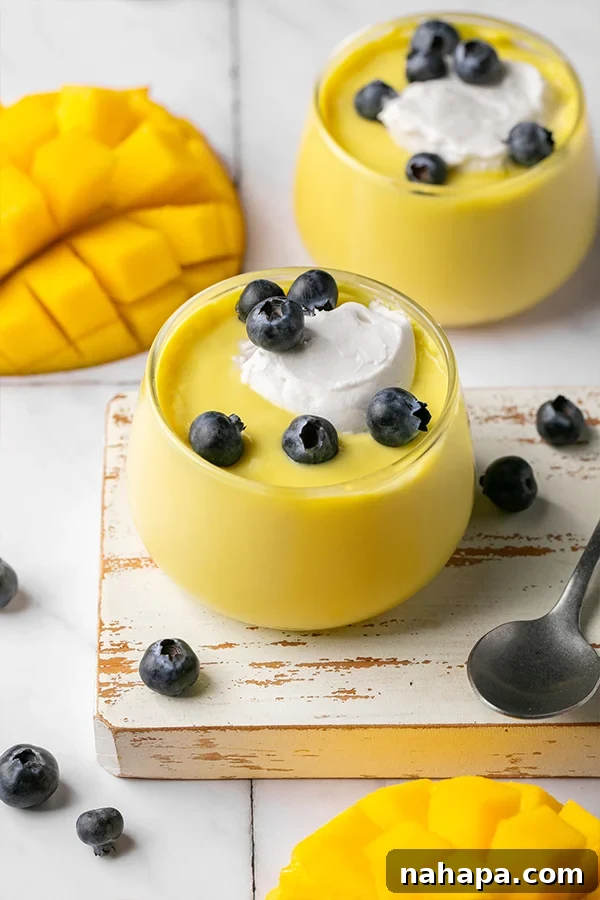
Mangoes are truly one of nature’s greatest gifts, especially when summer rolls around. Their juicy, sweet, and aromatic flesh makes them incredibly versatile, suitable for everything from refreshing salsas to decadent desserts. When blended, mangoes transform into a wonderfully smooth base, ideal for sorbets, smoothies, and of course, this luxurious pudding. My inspiration for this particular recipe stemmed from a desire for a quick and easy summer indulgence that requires minimal cooking and no dairy. The result is a healthy yet utterly decadent dessert that consistently impresses and truly does not disappoint!
Why You’ll Fall in Love with This Dairy-Free Mango Pudding
There are countless reasons why this mango pudding will become your new go-to dessert, whether you’re a seasoned chef or a beginner in the kitchen:
- A Taste of Summer in Every Spoonful: The bright, sweet, and tangy flavor of fresh mangoes instantly evokes sunny days and tropical getaways, making it the quintessential summer dessert. It’s a fantastic way to cool down and refresh after a long day.
- Effortlessly Quick & Easy: Forget spending hours in the kitchen! This recipe comes together incredibly fast, with only about 5 minutes of active cook time on the stove. Most of the magic happens in your refrigerator as the pudding chills to perfection.
- Naturally Dairy-Free & Vegan-Friendly: Made entirely without animal products, this pudding is perfect for those with dairy allergies, lactose intolerance, or anyone following a vegan lifestyle. Coconut milk provides all the creaminess you could ever desire.
- Healthy & Wholesome: Packed with the goodness of fresh fruit and healthy fats from coconut, this pudding is a guilt-free pleasure. It’s naturally sweetened by the mangoes themselves, allowing you to control any additional sweeteners.
- Vibrant & Visually Appealing: The stunning golden hue of fresh mango makes for a truly beautiful dessert that’s sure to impress your guests, even with its simple preparation.
- Make-Ahead Convenience: This pudding needs time to chill and set, making it an ideal make-ahead dessert for parties, gatherings, or simply to have on hand for a spontaneous sweet craving.
The Star Ingredient: Unveiling the Magic of Mangoes
For a truly exceptional mango pudding, the quality of your mangoes is paramount. Fresh mangoes bring an unparalleled depth of flavor, natural sweetness, and vibrant color that simply cannot be matched by their frozen counterparts. While frozen mangoes can work in a pinch, fresh ones are highly recommended for the best results.
Choosing the Perfect Mango:
When selecting mangoes for your pudding, look for ones that are slightly soft to the touch, similar to a ripe avocado. They should also emit a fragrant, sweet aroma near the stem. Don’t rely solely on color, as some varieties remain green even when ripe. Popular varieties like Ataulfo (honey mangoes) or Alphonso mangoes are particularly excellent for pudding due due to their smooth, less fibrous flesh and intense sweetness. Tommy Atkins or Haden varieties also work wonderfully if they are perfectly ripe.
Health Benefits of Mangoes:
Beyond their delicious taste, mangoes are nutritional powerhouses. They are rich in Vitamin C, which supports immune health and acts as a powerful antioxidant. They also provide Vitamin A, important for vision and skin, and a good amount of dietary fiber, aiding in digestion. Their natural sweetness means you often need less added sugar in recipes, making them a healthier choice for desserts.
Essential Ingredients for a Silky Smooth Dairy-Free Mango Pudding
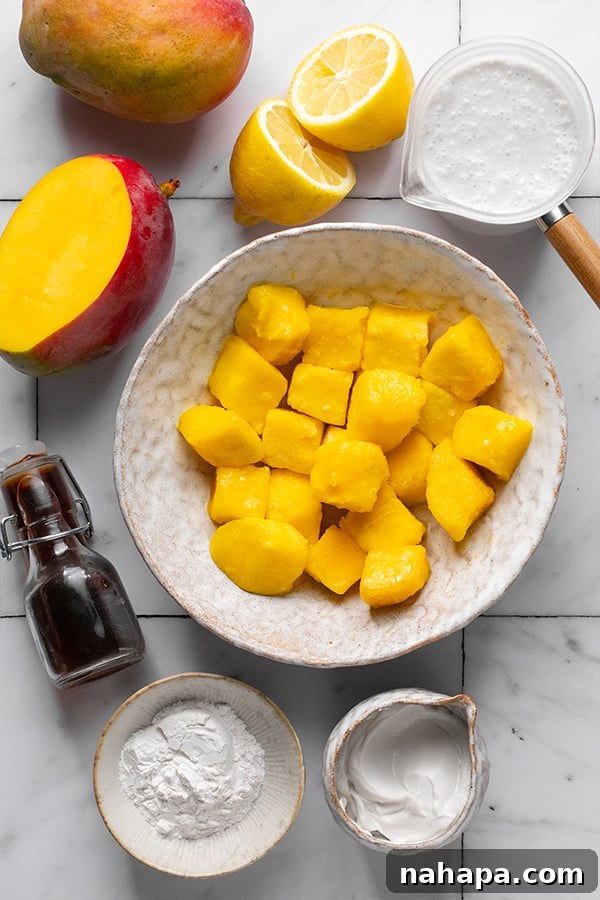
Crafting this delightful pudding requires a handful of simple, wholesome ingredients. Each plays a crucial role in achieving the perfect balance of flavor and texture:
- Fresh Mango: As discussed, fresh mangoes are key for their intense flavor and natural sweetness. You’ll want about 1.5 cups of cubed mango for this recipe. Ensure they are ripe for optimal taste and ease of blending.
- Lemon Juice: A splash of fresh lemon juice is essential. It brightens the mango flavor, adds a subtle tang that balances the sweetness, and helps to preserve the vibrant color of the mango.
- Full-Fat Coconut Milk and Coconut Cream: These are the heroes of our dairy-free base. Full-fat coconut milk provides the liquid consistency and rich flavor, while coconut cream adds an extra layer of decadence and helps achieve that luxuriously thick, creamy texture without any dairy. Make sure to use canned full-fat coconut milk, not the beverage kind, and ideally, refrigerate it beforehand to easily separate the cream.
- Arrowroot Starch: This is our preferred natural thickener. Arrowroot starch creates a wonderfully clear, glossy, and smooth pudding without any starchy aftertaste. It’s also naturally gluten-free. While cornstarch can be used as a substitute, arrowroot generally offers a superior texture in puddings.
- Vanilla Extract: Just a teaspoon of vanilla extract enhances the overall sweetness and complexity of the pudding, adding a warm, aromatic note that complements the tropical mango beautifully.
- Optional Toppings: Whipped Coconut Cream and Blueberries: These toppings elevate the pudding from simple to extraordinary. Whipped coconut cream adds an extra cloud of creamy indulgence, while fresh blueberries provide a burst of contrasting color and tartness. Other excellent topping ideas include toasted coconut flakes, a sprinkle of lime zest, fresh mint leaves, or a drizzle of maple syrup.
How to Make Dairy-Free Mango Pudding: A Step-by-Step Guide
Making this incredible dairy-free mango pudding is surprisingly simple. Follow these detailed steps to achieve a perfectly smooth and flavorful dessert:
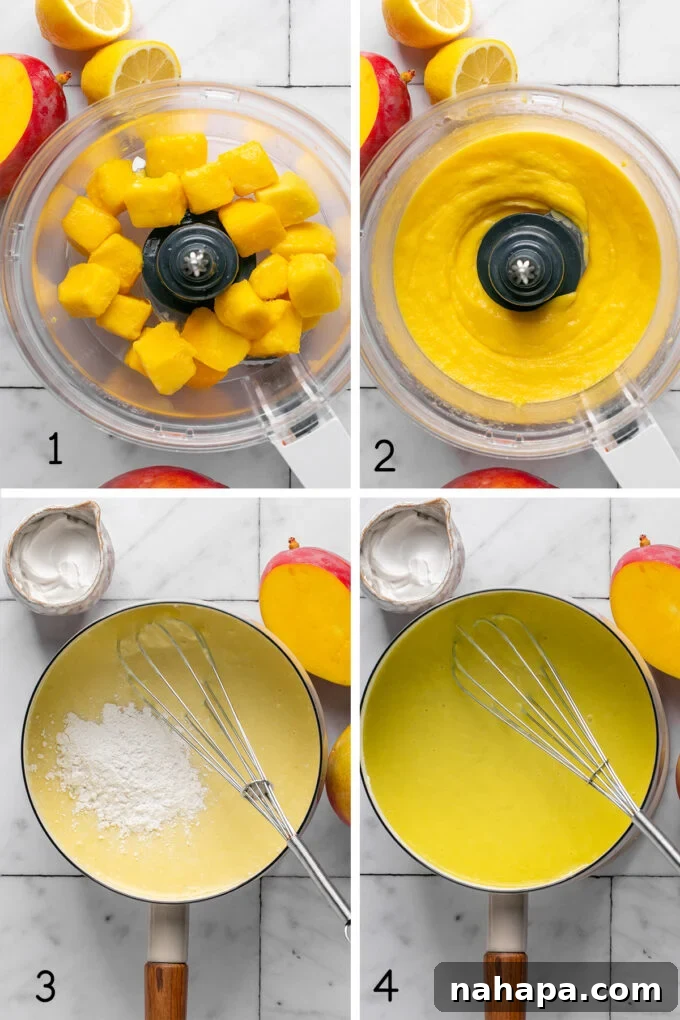
- Prepare the Mango Puree: Begin by combining the fresh, cubed mango and lemon juice in a food processor or a high-speed blender. Process until you achieve a completely smooth, liquid puree. The smoother the puree, the creamier your pudding will be.
- Strain for Silky Smoothness: Place a fine-mesh strainer over a medium-sized pot. Pour the mango puree through the strainer, using a silicone spatula to gently press down on the mango pulp. This step is crucial for removing any fibrous bits, ensuring your pudding has that coveted silky-smooth texture. Don’t discard the strained pulp – it’s delicious added to yogurt, smoothies, or oatmeal!
- Combine Wet Ingredients & Thickeners: To the pot containing your strained mango juice, add the full-fat coconut milk and coconut cream. Whisk these ingredients together until thoroughly combined and smooth. Next, sprinkle in the arrowroot starch and whisk again vigorously to ensure there are no lumps. A well-whisked mixture here prevents a lumpy pudding later.
- Heat and Thicken: Place the pot over medium-low heat. Cook, stirring constantly, until the mixture begins to simmer gently and visibly thickens. This usually takes about 2-3 minutes. The pudding should coat the back of a spoon. Be careful not to bring it to a rolling boil, as arrowroot can lose some of its thickening power with excessive heat. Remove the pot from the heat as soon as it reaches the desired consistency.
- Add Vanilla & Portion: Once removed from the heat, stir in the vanilla extract. Its aroma and flavor will deepen as it mixes with the warm pudding. Immediately divide the pudding evenly among 2-3 small pudding cups or ramekins.
- Chill to Perfection: Allow the pudding to cool slightly at room temperature before covering each cup tightly. You can use plastic wrap or simply place a plate over the cups. Transfer the covered puddings to the refrigerator and allow them to chill and set for at least 4 hours, or preferably overnight. Chilling is essential for the pudding to achieve its final thick and creamy consistency.
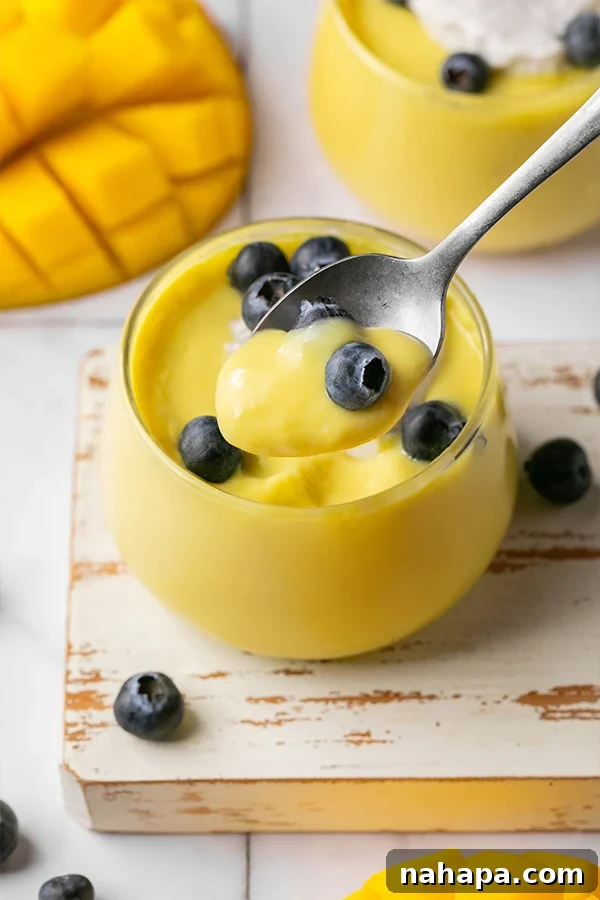
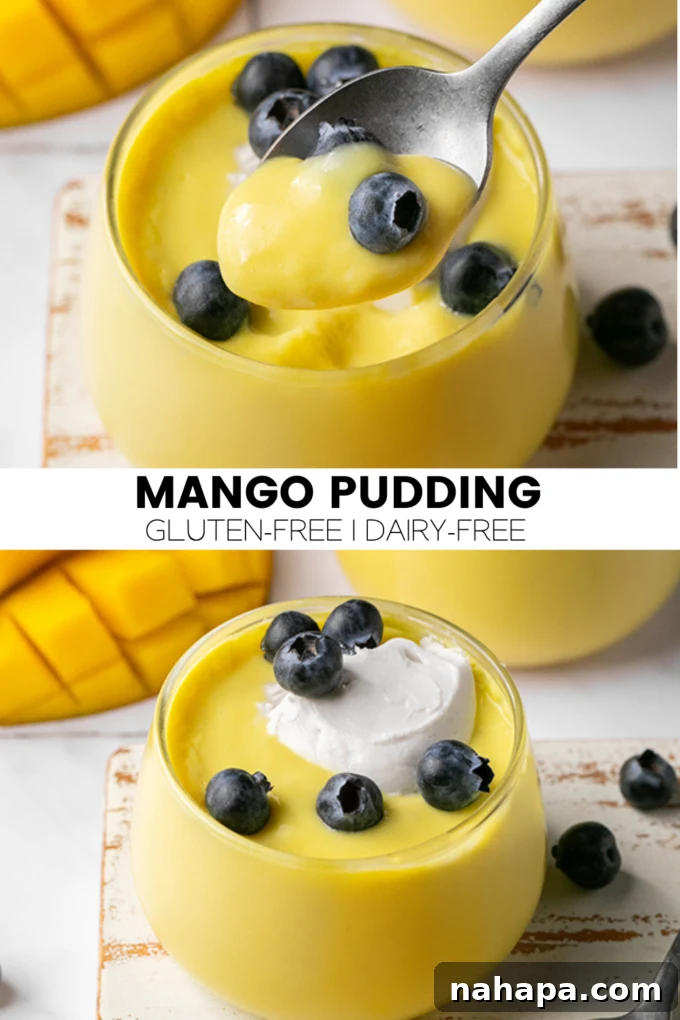
- Serve and Enjoy: Once thoroughly chilled and set, your dairy-free mango pudding is ready! Top with a generous dollop of whipped coconut cream and a scattering of fresh blueberries, or any other desired garnishes, and savor this delightful tropical treat!
Expert Tips for a Flawless Dairy-Free Mango Pudding
Achieving the perfect mango pudding is easy with a few insider tips:
- Prioritize Fresh Mangoes: While frozen mangoes can be a convenient shortcut, fresh, ripe mangoes are truly the secret to superior flavor and texture. Fresh mangoes offer a brighter, more intense flavor and naturally less water content. If you must use frozen mango, ensure it is completely thawed and drain any excess liquid before blending to prevent a watery pudding. You may also need to slightly increase the arrowroot starch if your frozen mango yielded a thinner puree.
- Achieve Ultimate Smoothness by Straining: Don’t skip the straining step! Even a high-powered blender can leave behind tiny fibrous strands, especially with certain mango varieties. Straining guarantees a luxuriously smooth, restaurant-quality pudding.
- Proper Chilling is Non-Negotiable: Patience is a virtue when it comes to pudding. The chilling time is crucial for the arrowroot starch to fully set and for the flavors to meld beautifully. Rushing this step will result in a runny pudding. For best results, allow it to chill overnight.
- Prevent a “Skin” by Covering Tightly: Pudding, especially when stored uncovered, tends to form a thin film or “skin” on its surface in the refrigerator. To prevent this, make sure to cover each individual pudding cup tightly with plastic wrap, pressing the wrap directly onto the surface of the pudding, or place a plate over the cups.
- Adjust Sweetness to Your Liking: The sweetness of your pudding will largely depend on the ripeness of your mangoes. Taste your mango puree before adding it to the pot. If your mangoes aren’t very sweet, you can add a touch of maple syrup, agave nectar, or your preferred natural sweetener during the cooking process.
- Troubleshooting Texture: If your pudding seems too thin after chilling, it might be due to insufficient arrowroot or not enough simmering time. If it’s too thick, you can gently warm it on the stove with a tablespoon or two of extra coconut milk, stirring until it reaches your desired consistency, then re-chill.
Serving Suggestions & Creative Variations
This dairy-free mango pudding is delightful on its own, but it also lends itself beautifully to various serving styles and flavor enhancements:
- Classic Toppings: As suggested, whipped coconut cream and fresh blueberries are a winning combination. The creamy texture of the coconut cream and the tartness of the berries perfectly complement the sweet mango.
- Tropical Twists: Garnish with toasted coconut flakes for added texture and nutty flavor, a sprinkle of fresh lime zest for extra brightness, or a few sprigs of fresh mint for a refreshing aroma.
- Fruity Pairings: Experiment with other tropical fruits! Diced pineapple, passion fruit pulp, or thinly sliced kiwi can add additional layers of flavor and visual appeal.
- Pudding Parfait: Layer the mango pudding with granola, toasted nuts, or crushed gluten-free cookies for a more substantial dessert that’s perfect for breakfast or brunch.
- Spice it Up: For an exotic touch, consider adding a tiny pinch of cardamom powder or a whisper of grated fresh ginger to the mango puree before blending. These spices beautifully enhance the mango’s natural flavor.
Frequently Asked Questions About Dairy-Free Mango Pudding
Can I use frozen mangoes instead of fresh?
While fresh mangoes are highly recommended for the best flavor and texture, you can use frozen mangoes in a pinch. Be sure to thaw them completely and drain any excess liquid before blending, as frozen mangoes contain more moisture which can thin out the pudding. You may need to slightly adjust the amount of arrowroot starch if your puree seems too watery.
How long does this mango pudding last in the fridge?
When stored properly in an airtight container or covered tightly with plastic wrap (with the wrap pressed directly onto the surface), this dairy-free mango pudding will last for 3-4 days in the refrigerator.
Is this recipe naturally gluten-free?
Yes, this recipe is naturally gluten-free as all the ingredients listed are free of gluten. Arrowroot starch is a fantastic gluten-free thickener.
Can I make this pudding less sweet?
The sweetness primarily comes from the mangoes. If your mangoes are very ripe, you might find it sweet enough without any additional sweetener. If you want it less sweet, ensure you use perfectly ripe mangoes and avoid adding any extra sweeteners. You can also increase the amount of lemon juice slightly to balance the sweetness.
What if my pudding doesn’t thicken?
If your pudding hasn’t thickened sufficiently after chilling, it could be due to not enough arrowroot starch, not heating it long enough to activate the starch, or overheating the arrowroot (which can sometimes break it down). You can try gently reheating the pudding on the stove with an additional half teaspoon of arrowroot starch dissolved in a tablespoon of cold coconut milk. Whisk constantly until it thickens, then re-chill.
This dairy-free mango pudding is more than just a dessert; it’s a vibrant, refreshing experience that brings the joy of tropical flavors right to your table. It’s proof that healthy, simple ingredients can create something truly extraordinary. Whether you’re making it for a special occasion or just to treat yourself, this pudding is sure to become a beloved recipe in your collection. Dive into the creamy, sweet goodness and let your taste buds take a delightful journey!
You’ll also love these delicious dairy-free puddings:
- Homemade Chocolate Pudding
- Caramel Apple Vanilla Pudding
- Strawberries & Cream Pudding
Mango Pudding (Dairy-Free)
Rated 5 out of 5 stars by 1 reviewer
Yield: 2.5 servings
Prep Time: 10 mins
Cook Time: 5 mins
Total Time: 4 hrs 15 mins (includes chilling time)
Author: Unbound Wellness
Leave a Review |
Pin Recipe
Ingredients
- For the Pudding:
- 1 ½ cup fresh mango, cubed
- 1 tbsp lemon juice
- 1 cup full-fat coconut milk
- ¼ cup coconut cream
- 2 tbsp arrowroot starch
- 1 tsp vanilla extract
- For Toppings (Optional):
- Whipped coconut cream
- Blueberries
Instructions
- Using a food processor or high-speed blender, blend the mango and lemon juice until completely liquid and smooth.
- Set a fine mesh strainer over a pot and pour the mango puree through the strainer. Use a silicone spatula to push down and extract as much juice as possible from the mango pulp. Save the pulp for other uses if desired.
- Add the full-fat coconut milk and coconut cream to the pot with the strained mango juice and whisk thoroughly to combine.
- Add the arrowroot starch to the mixture and whisk again until fully dissolved and no lumps remain.
- Place the pot over medium-low heat and bring it to a very low simmer, stirring continuously. Allow the mixture to thicken for 2-3 minutes until it coats the back of a spoon. Do not bring to a rolling boil.
- Remove the pot from the heat and whisk in the vanilla extract.
- Divide the hot pudding evenly between 2-3 small pudding cups or ramekins.
- Allow the pudding to cool slightly at room temperature, then cover each cup tightly with plastic wrap (pressing it directly onto the surface) or a plate.
- Transfer the covered puddings to the refrigerator and chill for at least 4 hours, or ideally overnight, until firm and creamy.
- Serve topped with whipped coconut cream and fresh blueberries, or your favorite garnishes, and enjoy!
Notes
All nutrition facts are estimations and will vary based on specific ingredients and brands used.
Nutrition Information (Estimated per serving)
Serving: 1 serving
Calories: 315 kcal
Carbohydrates: 23.6g
Protein: 3g
Fat: 19.7g
Fiber: 1.8g
Did you Make this Recipe?
Tag @unboundwellness on Instagram and hashtag #unboundwellness!
Images by : Sierra Ashleigh