
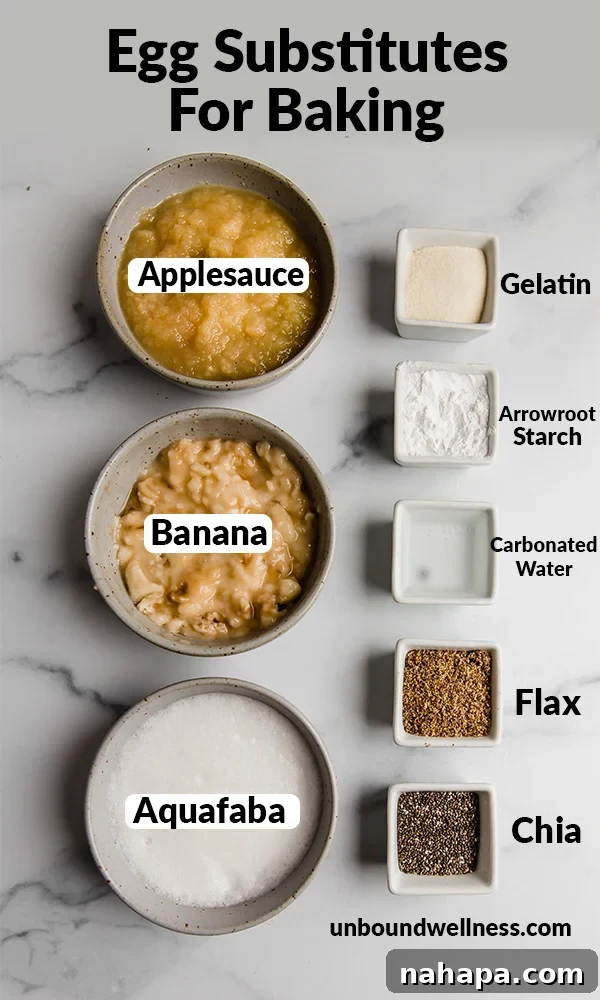
Unlock the secrets to successful baking with our comprehensive guide to the 8 best egg substitutes. Whether you’re navigating dietary restrictions, embracing a plant-based lifestyle, or simply ran out of eggs, this article offers invaluable tips, tricks, and expert advice to ensure your baked goods turn out perfectly every time. Dive in to discover how these clever alternatives can revolutionize your kitchen!
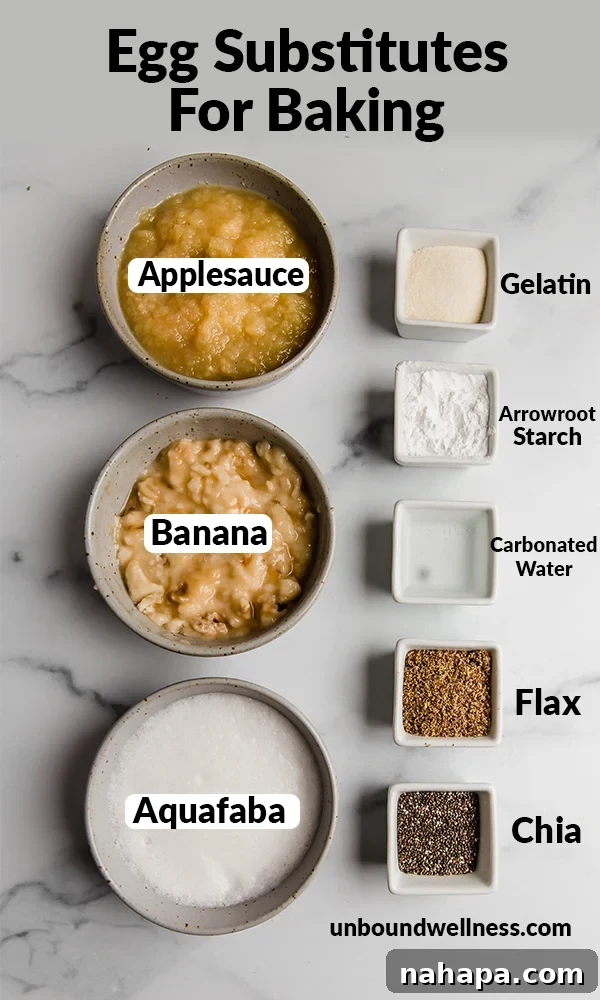
Why You Might Need an Egg Substitute
Eggs are undeniably a foundational ingredient in countless recipes, celebrated for their versatility and nutritional value. They play a critical role in baking, acting as binders, leavening agents, and moisture providers. While there’s absolutely nothing inherently wrong with eggs, various circumstances can lead a baker to seek out reliable alternatives. Understanding these reasons is the first step toward mastering the art of egg-free baking.
- Embracing Vegan or Plant-Based Diets: For individuals committed to a vegan or plant-based lifestyle, eggs are naturally excluded. Finding effective substitutes is essential for enjoying traditional baked goods without compromising dietary principles. This guide focuses heavily on plant-based options, with gelatin being the sole exception.
- Following the Autoimmune Protocol (AIP) Diet: The Autoimmune Protocol (AIP) diet is designed to help manage autoimmune conditions by eliminating potential inflammatory foods, including eggs, during its initial elimination phase. While not all substitutes listed here are AIP compliant, options like banana, applesauce, gelatin, arrowroot starch, and carbonated water offer excellent solutions for those adhering to this specific dietary framework.
- Managing Egg Allergies or Intolerances: Egg allergies are among the most common food allergies, particularly in children. For those with diagnosed allergies or intolerances, avoiding eggs is not just a preference but a necessity for health and well-being. These substitutes provide safe and delicious ways to enjoy baked treats without adverse reactions.
- When You’ve Simply Run Out of Eggs: Let’s face it – we’ve all been there. You’re halfway through preparing a batch of cookies or brownies, only to discover an empty egg carton. In these moments of culinary crisis, knowing a few reliable egg substitutes can be a true lifesaver, allowing you to proceed with your baking plans without an emergency trip to the grocery store.
The Multifaceted Role of Eggs in Baking: Why They Can’t Be Simply Omitted
Eggs are far more than just an ingredient; they are workhorses in the kitchen, contributing to the structure, texture, and rise of baked goods in complex ways. Simply leaving them out without a proper substitute often leads to disappointing results. Here’s a deeper look into their crucial functions:
- Binding, Texture & Structure: Eggs contain proteins that coagulate when heated, forming a network that helps bind ingredients together. This binding action is vital for maintaining the integrity of baked goods, preventing them from crumbling. They also contribute significantly to a desired cakey or chewy texture and provide structural support, allowing muffins, cakes, and loaves to hold their shape. Without them, cookies might spread too thin, and breads could lack firmness.
- Leavening: While not primary leavening agents like baking soda or powder, eggs assist in the leavening process. When eggs are whipped, they incorporate air, creating a light and airy texture. This trapped air expands during baking, contributing to the rise and fluffiness of products like muffins, soufflés, and even some cakes. Egg-free versions often appear denser and lack the same impressive height.
- Moisture: Eggs are rich in liquid, which adds essential moisture to baked goods. This moisture keeps products from being dry, crumbly, or dense. When an egg is omitted without a suitable, moist replacement, the final product can be noticeably dry and unappealing. Many effective egg substitutes inherently contain or require additional liquid to compensate for this aspect.
Navigating Egg Substitute Choices: Are They Interchangeable?
The short answer is: not exactly. While many egg substitutes exist, choosing the right one requires careful consideration. A “one-size-fits-all” approach rarely yields the best results due to the varying properties of each substitute and the specific demands of different recipes.
- Dietary Compliance is Key: First and foremost, not all egg substitutes align with every dietary restriction. For example, gelatin is suitable for AIP but not vegan, while flax and chia eggs are perfect for vegan diets but not necessarily AIP-friendly due to seed reintroduction phases. Always cross-reference your chosen substitute with your specific dietary needs.
- Consider the Recipe’s Foundation and Complexity: The type of recipe you’re working with plays a critical role. Swapping an egg in a standard wheat-flour muffin recipe is vastly different from doing so in a complex grain-free, dairy-free, and egg-free muffin recipe. Grain-free baking, in particular, often relies heavily on precise ingredient ratios to achieve structure and texture. If a recipe is already formulated to be free from multiple common allergens, it likely has a specific egg substitute in mind for optimal results. In such cases, it’s always best to follow the recipe’s recommendations or consult the recipe developer for advice on alternative swaps.
Which Egg Substitute Reigns Supreme?
This is truly a trick question, as the “best” egg substitute is entirely dependent on the specific recipe and desired outcome. There isn’t a single universal champion. However, based on extensive experience, some stand out for their versatility and efficacy in certain contexts. Personally, for vegan recipes, I consistently find a flax egg to be a highly reliable and flavor-neutral choice, yielding excellent binding and texture. For AIP-compliant baking, the gelatin egg is my go-to. It’s remarkably effective at mimicking the binding and structural properties of eggs, making it indispensable for a wide range of AIP baked goods.
How to Make an Informed Choice for Your Recipe
Making the right selection can feel daunting, but a few simple guidelines can help you navigate the options:
- Adhere to the Recipe’s Guidelines: The most straightforward approach is to follow the instructions provided by the recipe developer. Many modern recipes, especially those found on blogs or in specialty cookbooks, will explicitly state if an egg can be swapped for a flax or chia egg, or suggest a particular alternative. Sticking to these recommendations is the surest path to successful results.
- Utilize the Detailed Tips Below: If the recipe offers no guidance, or if you’re experimenting, the comprehensive breakdown for each substitute below will equip you with the knowledge to make an educated guess. Consider the primary function you need the egg to perform (binding, leavening, moisture), the flavor profile of your dish, and your dietary requirements.
8 Best Egg Substitutes for Baking
1. Flax Egg: The Vegan Baking Staple
The flax egg has earned its place as a cornerstone in vegan baking due to its incredible versatility and neutral flavor profile. It’s a quick, easy, and effective binder that mimics many of an egg’s functions, especially in recipes where structure and moisture are paramount. Beyond its functional benefits, a flax egg also adds a dose of healthy omega-3 fatty acids and dietary fiber, subtly boosting the nutritional content of your baked creations.
How to Make It:
- For 1 Egg: 1 tablespoon finely ground flaxseed + 3 tablespoons water
- In a small bowl, combine the ground flaxseed with water. Stir well and let the mixture sit for at least 5-10 minutes. During this time, the flaxseed will absorb the water and form a gelatinous, egg-like consistency. Use this thickened mixture immediately as your egg substitute.
Best Use Cases:
- Vegan Baking: An absolute essential for virtually any vegan recipe requiring eggs.
- Cookies, Muffins, and Quick Breads: Excellent for providing binding and moisture in these types of baked goods, helping them hold together without becoming dry or crumbly.
- Pancakes and Waffles: Contributes to a pleasant texture and helps keep the batter cohesive.
- Meatless Loaves/Patties: Acts as a strong binder for veggie burgers or lentil loaves.
Pros:
- Neutral flavor, won’t alter the taste of your recipe.
- Adds beneficial fiber and omega-3s.
- Easy to make with common pantry ingredients.
- Strong binding properties.
Cons:
- Not suitable for recipes requiring significant leavening or fluffiness (e.g., meringues, light sponge cakes).
- Can sometimes create a slightly denser texture in very delicate baked goods.
- Not AIP compliant due to seeds.
Tips & Tricks:
- Always use *ground* flaxseed, not whole, as whole seeds won’t absorb water effectively.
- For best results, grind whole flaxseeds fresh for maximum potency and nutrient availability.
- Let it sit long enough to become thick and gel-like; don’t rush the process.
- Avoid using more than 2-3 flax eggs per recipe, as too many can alter texture.
2. Chia Egg: A Nutrient-Rich Alternative
Much like its flax counterpart, the chia egg is another stellar performer in the realm of vegan baking. Chia seeds are hydroscopic, meaning they readily absorb liquid to form a thick, gelatinous consistency similar to an egg. This makes them an excellent binding agent, and they bring additional nutritional benefits, including fiber, protein, and omega-3 fatty acids, to your baked goods.
How to Make It:
- For 1 Egg: 1 tablespoon whole or ground chia seeds + 3 tablespoons water
- Combine the chia seeds and water in a small bowl. Stir thoroughly to prevent clumping and allow the mixture to sit for 5-10 minutes. The chia seeds will expand and create a thick, gel-like substance. Use this mixture directly in your recipe.
Best Use Cases:
- Vegan Recipes: A reliable substitute for binding in a wide range of plant-based recipes.
- Cookies, Muffins, and Quick Breads: Provides excellent binding and moisture, contributing to a good structure in these popular baked items.
- Energy Bites and Bars: Helps hold together no-bake treats.
- Puddings and Jams: Can also be used as a thickening agent.
Pros:
- Neutral flavor, making it versatile for various recipes.
- Rich in fiber, protein, and omega-3s.
- Easy to prepare and readily available.
- Effective binder for many baked goods.
Cons:
- Can leave tiny black specs if using whole chia seeds, which might be visually unappealing in lighter colored baked goods (can be mitigated by using ground chia).
- Similar to flax eggs, it doesn’t provide significant leavening.
- Not AIP compliant due to seeds.
Tips & Tricks:
- While whole chia seeds work, grinding them can sometimes create a smoother, less textured result.
- Ensure adequate time for gelling; a properly thick chia egg is crucial for its binding power.
- Stirring after a few minutes can help prevent seeds from settling at the bottom.
- Good for replacing up to 2-3 eggs in a recipe.
3. Arrowroot Starch: The Subtle Thickener
Arrowroot starch, derived from the arrowroot plant, is a fantastic, gluten-free, and grain-free thickening agent that can double as a mild egg substitute. It’s particularly useful for its ability to create a delicate binding effect without imparting any discernible flavor. While it works well in a pinch for certain applications, it’s important to understand its limitations, especially in complex grain-free recipes that already rely on similar starches.
How to Make It:
- For 1 Egg: 2 tablespoons arrowroot starch + 3 tablespoons water
- In a small bowl, combine the arrowroot starch and water. Whisk vigorously until a smooth slurry forms, ensuring no lumps remain. Use this mixture immediately as an egg substitute.
Best Use Cases:
- Vegan and AIP Recipes: A suitable choice for both dietary requirements.
- Light Binding: Works well in recipes where a subtle binder is needed, rather than significant structure or leavening.
- Thickening Sauces and Gravies: Its primary strength lies in thickening, making it excellent for sauces.
- Fritters or Patties: Can help hold together savory dishes.
Pros:
- Completely flavorless and odorless.
- Gluten-free, grain-free, and AIP compliant.
- Excellent thickening agent.
- Easy to mix and use.
Cons:
- Provides minimal leavening.
- Not ideal as the sole binder in complex grain-free recipes that already use arrowroot or similar starches as a main flour, as it may lead to a gummy texture or lack sufficient structure. It typically needs a stronger binder alongside it in such cases.
- Can result in a slightly gelatinous texture if too much is used.
Tips & Tricks:
- Always mix arrowroot with a cold liquid first to create a slurry before adding it to hot mixtures, preventing lumps.
- Use sparingly for egg substitution; it’s a lighter binder compared to flax or chia.
- Consider pairing it with another substitute if strong binding or structure is crucial.
4. Carbonated Water: The Unexpected Leavener
Carbonated water might seem like an unusual egg substitute, but its effervescence can cleverly mimic some of an egg’s leavening properties, especially in quick breads and lighter batters. It’s an incredibly simple, flavorless, and readily available option, making it a convenient choice when you need a little lift without the need for a strong binder.
How to Make It:
- For 1 Egg: 1/4 cup carbonated water (sparkling water or club soda)
- Simply measure out 1/4 cup of fresh, newly opened carbonated water and add it directly to your batter in place of one egg.
Best Use Cases:
- Quick Breads: Excellent for recipes like banana bread, zucchini bread, or simple loaf cakes, where it helps with a light, airy texture.
- Pancakes and Waffles: Contributes to a fluffier consistency.
- Standard Flour Recipes: Works particularly well in recipes that use regular wheat flour and already have other binders present.
Pros:
- Completely flavorless, so it won’t impact the taste of your dish.
- Easy to use; no preparation needed beyond opening a bottle.
- Provides a degree of leavening and lightness.
- AIP compliant and vegan.
Cons:
- Does not provide strong binding, so it’s not ideal for recipes that heavily rely on eggs for structure (e.g., custards, dense cookies).
- Not recommended for most grain-free or gluten-free recipes, as these often require stronger binders to compensate for the lack of gluten.
- The carbonation dissipates quickly, so it needs to be added to the batter just before baking.
Tips & Tricks:
- Always use freshly opened, very cold carbonated water to maximize its effervescence.
- Avoid flavored sparkling waters, as they can introduce unwanted tastes.
- Mix the batter minimally after adding the carbonated water to preserve the bubbles.
- Best for replacing 1-2 eggs; substituting too many may compromise structure.
5. Gelatin Egg: The AIP Baking Champion
For those navigating the Autoimmune Protocol (AIP) diet, the gelatin egg is an absolute game-changer. It is, without a doubt, the most effective egg substitute for AIP baking, brilliantly mimicking the binding and structural properties of an egg. While the preparation might seem a little more involved than other substitutes, mastering the gelatin egg will unlock a world of AIP-compliant baked goods that truly hold together and achieve a satisfying texture. It’s flavorless and remarkably versatile once you get the hang of it.
How to Make It:
- For 1 Egg: 1 tablespoon unflavored gelatin powder + 1/4 cup water (cold, then hot)
- Begin by adding 1 tablespoon of cold water to a small, heat-safe saucepot. Sprinkle the gelatin powder evenly over the cold water (this is called “blooming” the gelatin). Allow it to sit for 5 minutes until it has absorbed the water and hardened into a gel.
- Place the pot on the stove over very low heat. Gently melt the bloomed gelatin, stirring constantly, for just about 30-60 seconds, until it becomes a clear liquid. Do not let it boil.
- Remove from heat. Immediately and vigorously whisk the melted gelatin using a fork, whisk, or even a milk frother, until it becomes frothy and slightly thickened, resembling beaten egg whites.
- Add this frothy gelatin egg to your mixture immediately and combine thoroughly.
Best Use Cases:
- AIP Recipes: The premier choice for all AIP baking needs, from cookies to muffins to dense breads.
- Strong Binding: Excellent for recipes that require significant binding and structure.
- Thickening Agent: Also highly effective for thickening sauces, custards, or gravies where a clear, stable thickener is desired.
- Denser Baked Goods: Performs exceptionally well in recipes for brownies, loaf cakes, and muffins that benefit from a sturdy crumb.
Pros:
- Highly effective at mimicking egg’s binding properties.
- Flavorless and odorless.
- AIP compliant (ensure gelatin is from a trusted source, e.g., grass-fed).
- Provides excellent structure and a good crumb.
Cons:
- Not vegan-friendly (derived from animal collagen).
- Preparation is slightly more involved than other substitutes.
- Requires immediate use once frothed, as it will re-solidify.
- Not suitable for recipes needing significant leavening (e.g., airy cakes).
Tips & Tricks:
- Act Fast: The most crucial tip is to use the gelatin egg *immediately* after frothing it. It will begin to set quickly, so pour it into your batter or dough without delay and mix well.
- Don’t Over-Substitute: While effective, avoid replacing more than 3 eggs with gelatin eggs in a single recipe, as too much can create a slightly rubbery texture.
- Milk Frother Magic: A small handheld milk frother is your best friend for quickly achieving a perfectly frothy gelatin egg. It’s much more efficient than a whisk.
- Quality Gelatin: Opt for high-quality, unflavored beef gelatin, especially for AIP.
6. Aquafaba: The Meringue Marvel
Aquafaba, the liquid drained from a can of chickpeas (or other legumes), is a miraculous and relatively recent discovery in the world of egg substitutes, particularly cherished by vegan bakers. Its unique composition allows it to emulsify, bind, and even whip into stiff peaks, making it an incredible stand-in for egg whites in many applications. While it carries a very subtle chickpea flavor, it’s largely undetectable in most finished baked goods.
How to Make It:
- For 1 Egg: 3 tablespoons aquafaba (liquid from canned chickpeas)
- Carefully drain the liquid from a can of chickpeas (preferably unsalted) into a clean, grease-free bowl.
- To substitute for a whole egg in recipes requiring binding, simply use 3 tablespoons as is.
- To mimic egg whites for aeration (e.g., meringues, mousses): Use an electric hand mixer or stand mixer to whip the aquafaba on high speed until stiff peaks form (this can take 5-10 minutes). Use immediately.
Best Use Cases:
- Vegan Recipes: Especially effective where eggs act as a binder or where egg whites are whipped for aeration.
- Meringues and Macarons: Its ability to whip into stiff peaks makes it perfect for these delicate, airy treats.
- Mousses and Marshmallows: Creates light, fluffy textures.
- Mayonnaise and Aioli: An excellent emulsifier for vegan versions of these condiments.
- Pancakes, Waffles, and Fritters: Works as a binder.
Pros:
- Remarkably versatile, capable of mimicking both whole eggs and egg whites.
- Vegan and gluten-free.
- Utilizes a commonly discarded byproduct, reducing food waste.
- Neutral flavor in most applications when baked.
Cons:
- Does not add significant moisture to recipes, so you might need to adjust other liquids.
- Whipping for meringues can be time-consuming.
- Not suitable for AIP due to legumes.
- Requires a powerful mixer for whipping.
Tips & Tricks:
- Unsalted Chickpeas: Opt for canned chickpeas with no added salt or additives to ensure the purest aquafaba flavor.
- Reduction for Strength: For even stronger whipping ability, you can gently simmer aquafaba on the stove to reduce its volume by about 25-30%, concentrating its proteins.
- Clean Equipment: Ensure your bowl and beaters are impeccably clean and grease-free when whipping aquafaba; any trace of fat can prevent it from foaming.
- Cream of Tartar: A pinch of cream of tartar can help stabilize whipped aquafaba, similar to egg whites.
7. Mashed Banana: The Sweet & Moist Binder
Mashed banana offers a wonderfully natural, whole-food egg substitute that excels in adding moisture, sweetness, and a pleasant fruitiness to baked goods. It’s an ideal choice when you don’t mind a subtle banana flavor in your final product. Its natural sugars also contribute to browning, making it a favorite for many home bakers.
How to Make It:
- For 1 Egg: 1/4 cup thoroughly mashed ripe banana
- Simply peel a ripe banana and mash it with a fork until it forms a smooth, lump-free puree. Measure out 1/4 cup for each egg you need to replace.
Best Use Cases:
- Pancakes and Waffles: Adds a delightful flavor, moisture, and natural sweetness.
- Cookies: Can work well, but may result in a chewier, cakier cookie.
- Muffins and Quick Breads: Excellent for adding moisture and structure.
- Brownies: Contributes to a fudgy texture.
Pros:
- Adds natural sweetness, potentially allowing you to reduce added sugar.
- Provides significant moisture to baked goods.
- A whole-food, unprocessed option.
- Vegan, gluten-free, and AIP compliant.
- Readily available and inexpensive.
Cons:
- Imparts a distinct banana flavor, which may not be desired in all recipes.
- Can sometimes result in a denser, slightly gummier texture if too much is used or if the banana is under-ripe.
- Does not provide leavening.
Tips & Tricks:
- Ripe is Key: Always use very ripe bananas (those with brown spots) for maximum sweetness and ease of mashing. They also have a stronger binding capacity.
- Flavor Pairing: Use in recipes where banana flavor complements other ingredients (e.g., chocolate, cinnamon, nuts).
- Moisture Adjustment: Since bananas add a lot of moisture, you might need to slightly reduce other liquid ingredients in your recipe if the batter seems too wet.
- Don’t Overdo It: Generally best for replacing 1-2 eggs. Too many can overwhelm the flavor and alter the texture significantly.
8. Applesauce: The Fruity Moisturizer
Applesauce is another fantastic fruit-based egg substitute that brings a wealth of moisture and a subtle sweetness to baked goods. Like mashed banana, it works beautifully as a binder, and its mild flavor makes it more versatile than banana in some recipes. It’s a healthy, fat-free, and readily available option for a wide array of baking projects.
How to Make It:
- For 1 Egg: 1/4 cup unsweetened applesauce
- Simply measure out 1/4 cup of plain, unsweetened applesauce for each egg you wish to replace. Incorporate it directly into your wet ingredients.
Best Use Cases:
- Pancakes and Waffles: Contributes moisture and a delicate sweetness.
- Cookies: Can create a softer, chewier texture, especially good for oatmeal cookies.
- Muffins and Quick Breads: Ideal for adding moisture and binding.
- Cakes: Can work in some cake recipes, particularly those with a denser crumb.
Pros:
- Adds natural sweetness and considerable moisture, potentially reducing the need for added sugar and fat.
- Mild flavor that complements a wide range of recipes.
- Fat-free, cholesterol-free, and generally healthy.
- Vegan, gluten-free, and AIP compliant (ensure no added spices like cinnamon if strictly AIP).
- Widely available and affordable.
Cons:
- Imparts a subtle apple flavor, which might not be desired in savory dishes or highly neutral-flavored baked goods.
- Does not provide any leavening, so recipes may be denser if relying solely on applesauce.
- Can make baked goods slightly too moist or dense if overused.
Tips & Tricks:
- Unsweetened is Best: Always opt for plain, unsweetened applesauce to control the sugar content of your recipe and avoid unexpected flavors.
- No Added Spices: For AIP recipes or specific flavor profiles, ensure the applesauce contains no added spices like cinnamon.
- Adjust Liquids: Given its high moisture content, you may need to slightly reduce other liquids in your recipe, particularly if replacing multiple eggs.
- Balance is Key: Works best for replacing 1-2 eggs. For more eggs, consider combining it with a stronger binder or leavening agent.