
This post contains affiliate links. Learn what that means, here.
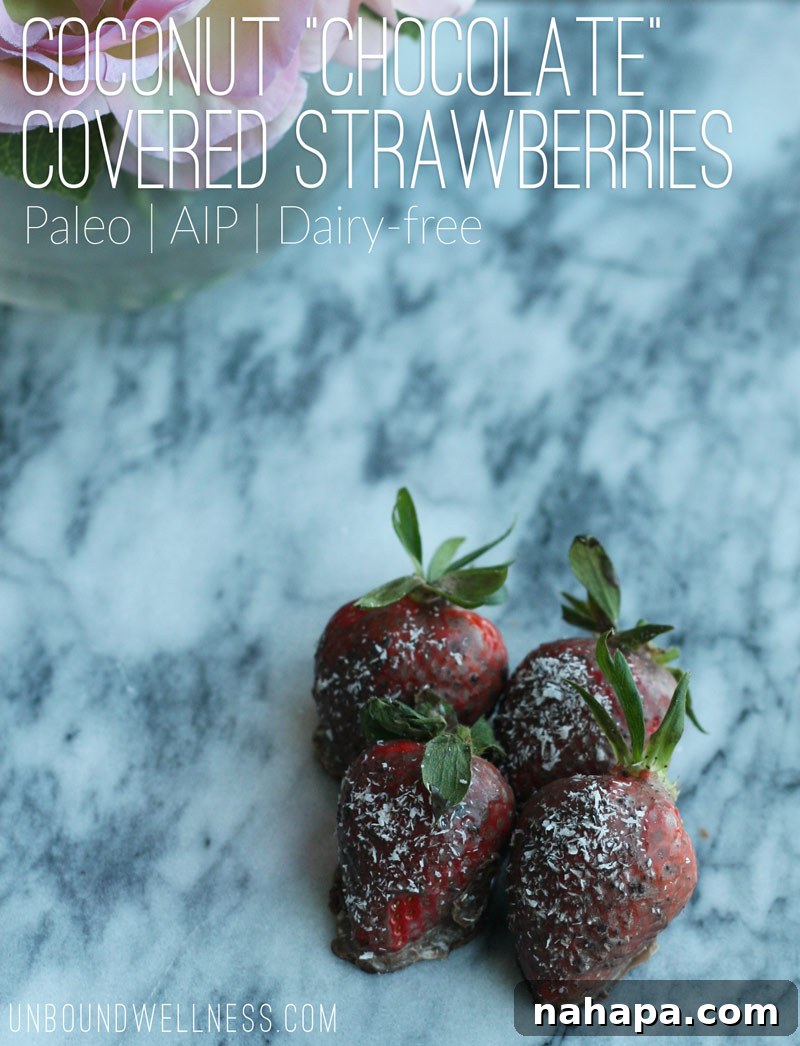
Indulge Guilt-Free This Valentine’s Day: AIP & Paleo Coconut Carob Covered Strawberries
There’s an undeniable charm to chocolate-covered strawberries, especially when Valentine’s Day rolls around. They embody the perfect blend of sweet and refreshing, rich and indulgent, making them a classic symbol of love and celebration. However, for those navigating the complexities of dietary restrictions, particularly the Autoimmune Protocol (AIP) or a Paleo lifestyle, enjoying this beloved treat can often feel out of reach. Many conventional versions are laden with ingredients that trigger sensitivities and inflammation, turning a simple pleasure into a source of worry.
This year, you don’t have to miss out on the magic. We’re revolutionizing this romantic classic with a recipe for Coconut Carob Covered Strawberries that’s not only incredibly delicious but also completely AIP and Paleo compliant. Imagine biting into a juicy, fresh strawberry, enrorobed in a luscious, “chocolatey” coating that supports your health, rather than compromising it. This recipe is meticulously crafted to be soy-free, refined sugar-free, and dairy-free, ensuring everyone can savor a truly decadent and worry-free Valentine’s Day.
The Sweet Truth About Traditional Chocolate Covered Strawberries
At first glance, chocolate-covered strawberries might seem like a safe bet for those with food allergies or sensitivities. After all, they’re often perceived as a simple combination of fruit and chocolate. Unfortunately, the reality is far from ideal when you scrutinize the ingredients of most store-bought or even many homemade versions. The “chocolate” often contains hidden inflammatory components, turning a seemingly innocent treat into a potential dietary landmine. Understanding these hidden dangers is crucial for anyone striving to maintain optimal health, particularly those managing autoimmune conditions.
Why Soy Is a No-Go for Autoimmune Health
One of the most pervasive and problematic ingredients found in conventional chocolate, including the coating on chocolate-covered strawberries, is soy. Specifically, soybean oil and soy lecithin are commonly used as emulsifiers to create that smooth, uniform texture. While soy might be widely used in the food industry, it is strictly non-compliant on the Autoimmune Protocol for very good reasons. Beyond AIP, soy poses significant health concerns for individuals with various conditions, particularly those with Hashimoto’s thyroiditis and other autoimmune diseases.
Soy is a potent endocrine disruptor, meaning it can interfere with the body’s natural hormone balance. It contains phytoestrogens, plant compounds that mimic estrogen in the body, which can further aggravate existing thyroid conditions and contribute to hormonal imbalances. For individuals with Hashimoto’s, whose thyroid function is already compromised, consuming soy can exacerbate symptoms and hinder healing. Historically, soy was consumed by certain cultures only after extensive fermentation processes, which helped neutralize some of its harmful compounds and make it safer for digestion. However, modern processing methods strip away these benefits, making unfermented soy products like soybean oil particularly detrimental. Our recipe completely eliminates soy, offering you a truly clean and thyroid-friendly alternative.
The Problem with Refined Sugars and Unhealthy Oils
Beyond soy, traditional chocolate-covered strawberries often contain an excessive amount of refined sugars. While strawberries are naturally sweet, many recipes add additional white sugar, high-fructose corn syrup, or other processed sweeteners to the chocolate coating. Refined sugars are known to fuel inflammation, disrupt gut health, and contribute to blood sugar imbalances, all of which are counterproductive for managing autoimmune conditions and maintaining overall wellness. Our recipe celebrates the natural sweetness of strawberries, eliminating the need for any added refined sugars, making it a naturally wholesome indulgence.
Furthermore, many commercial chocolates and DIY coatings use unhealthy vegetable oils, such as canola oil or palm oil (unless sustainably sourced), which can be pro-inflammatory and processed using harsh chemicals. These oils often contribute to an unhealthy omega-6 to omega-3 fatty acid ratio in the body, promoting systemic inflammation. By utilizing nutrient-dense coconut oil, our recipe ensures that your treat is not only delicious but also packed with healthy fats that support brain function and metabolism.
Introducing Your New Favorite Healthy Indulgence: Coconut Carob Covered Strawberries
It’s time to put those concerns aside and embrace a healthier, equally delicious alternative. Our AIP and Paleo Coconut Carob Covered Strawberries recipe is designed to bring back the joy of this classic treat without any of the dietary compromises. This recipe is a testament to the fact that healthy eating doesn’t mean sacrificing flavor or special occasions. We’ve meticulously chosen each ingredient to ensure it aligns perfectly with the strictest dietary guidelines, making it safe and enjoyable for everyone.
Here’s what makes this recipe a game-changer for your Valentine’s Day:
- Soy-Free: Absolutely no soybean oil or soy lecithin, ensuring it’s safe for those with Hashimoto’s and other autoimmune concerns.
- Refined Sugar-Free: We let the natural sweetness of the strawberries shine, complemented by the subtle sweetness of carob, without any added processed sugars.
- Dairy-Free: Coconut oil provides the creamy texture, making it suitable for those avoiding dairy.
- Gluten-Free: Naturally gluten-free, this recipe fits perfectly into a Paleo or AIP diet.
- AIP & Paleo Compliant: Every ingredient is carefully selected to adhere to the strict guidelines of the Autoimmune Protocol and Paleo diet, supporting your healing journey.
Carob: The Autoimmune-Friendly “Chocolate” Alternative
For those on the Autoimmune Protocol, one of the biggest challenges can be finding suitable substitutes for beloved ingredients like chocolate. Cacao, the main ingredient in chocolate, contains compounds that can be inflammatory or trigger sensitivities for many individuals in the early stages of AIP. This is where carob powder truly shines as an exceptional alternative. Carob is derived from the pods of the carob tree and offers a naturally sweet, earthy flavor profile that remarkably mimics chocolate without the inflammatory compounds found in cacao.
Carob is naturally caffeine-free and contains no oxalates, which can be an issue for some sensitive individuals. Its mild, sweet taste means you often need less added sweetener in recipes, further aligning with a healthy eating approach. While some individuals, including myself, may eventually reintroduce cacao without issues, carob provides a fantastic and safe option from the outset of the AIP journey. It allows you to enjoy that deep, “chocolatey” richness in your desserts without any worry about potential flares or digestive discomfort. It’s truly a pantry staple for anyone on AIP looking for versatile and delicious alternatives.
The carob powder I personally use and highly recommend for its quality and flavor is this one. It consistently delivers the rich, satisfying taste that makes these strawberries truly special!
The Magic of Simple, Wholesome Ingredients
One of the beauties of this recipe lies in its simplicity and the power of its few, carefully chosen ingredients. Each component plays a vital role in creating a delicious and health-supportive treat:
- Fresh Strawberries: The star of the show! Strawberries are naturally sweet, juicy, and packed with antioxidants like Vitamin C, manganese, and fiber. They provide the perfect refreshing base for our “chocolate” coating, negating the need for any added sugars.
- Organic Coconut Oil: This healthy fat is not only AIP and Paleo compliant but also rich in medium-chain triglycerides (MCTs), which are easily digestible and provide a quick source of energy. In this recipe, coconut oil acts as the creamy base for our carob coating, solidifying beautifully when chilled to give that satisfying snap.
- Pure Carob Powder: As discussed, carob provides the deep, earthy, “chocolatey” flavor that makes this treat so comforting and indulgent, all while remaining fully compliant with your dietary needs.
- Unsweetened Coconut Flakes (Optional): A sprinkle of coconut flakes adds a delightful textural contrast and another layer of mild, sweet flavor. It’s a wonderful garnish that makes these strawberries look even more appealing and adds healthy fats. You can find high-quality coconut flakes here.
By focusing on these unprocessed, natural ingredients, we ensure that every bite is not only a treat for your taste buds but also a boost for your well-being. The inherent sweetness of the strawberries truly eliminates any desire for additional sugar, allowing you to enjoy a genuinely guilt-free indulgence.
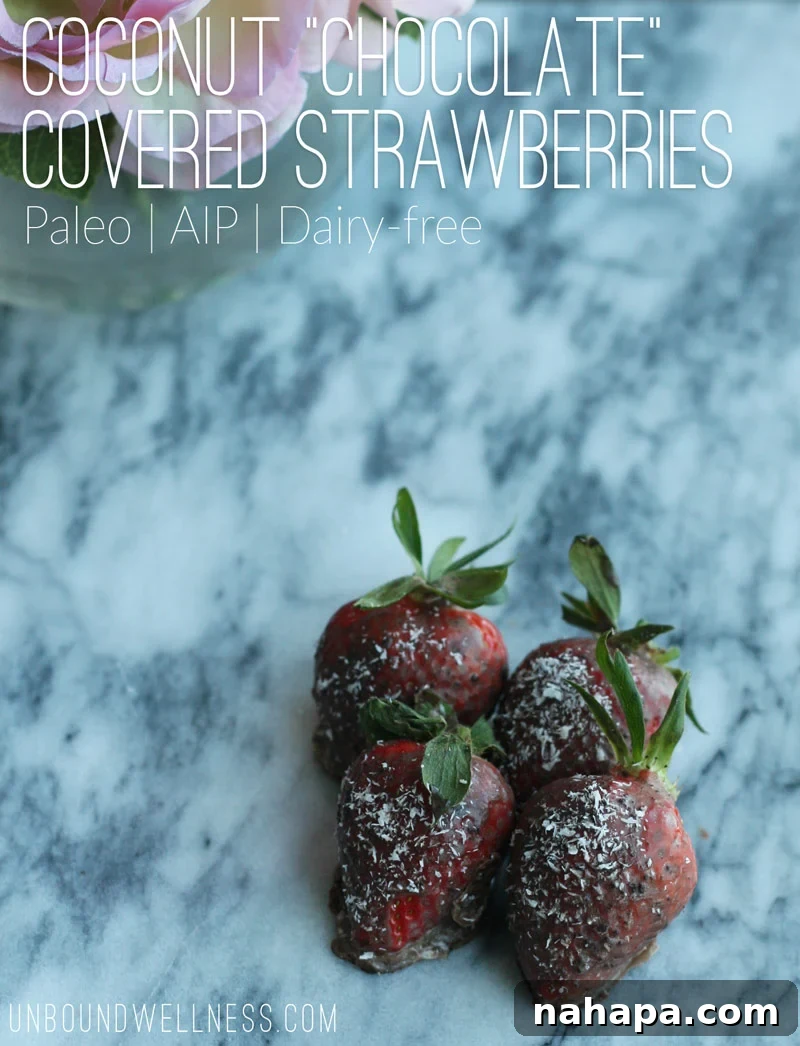
Recipe: AIP & Paleo Coconut Carob Covered Strawberries
Valentines Day Coconut “Chocolate” Covered Strawberries | Autoimmune Paleo
This simple recipe is quick to prepare, requiring minimal effort for maximum deliciousness. You’ll be amazed at how easily you can whip up such an elegant and healthy dessert.
Yield & Prep Time
- Yields: 6 delightful strawberries
- Prep time: Approximately 10 minutes
- Chill time: At least 30 minutes
Ingredients
- 6 large, fresh strawberries, washed and thoroughly dried
- 3 tablespoons organic virgin coconut oil
- 2 teaspoons pure carob powder (the one I love!)
- 1 teaspoon unsweetened coconut flakes (optional, for garnish and added texture)
Instructions
- Gently melt the coconut oil in a small saucepan over medium-low heat until it turns completely liquid. Be careful not to overheat it; a gentle melt is all you need.
- Remove the saucepan from the heat. Add the carob powder to the melted coconut oil. Whisk continuously until the carob powder is fully incorporated and the mixture is smooth, with no clumps remaining. This will create your rich, “chocolatey” coating.
- Prepare a plate or baking sheet by lining it with parchment paper. This will prevent the strawberries from sticking as they chill.
- Holding a strawberry by its stem, dip it into the carob mixture. Turn and rotate the strawberry to ensure it gets a nice, even coating. Expect the coating to be *lightly* applied, not as thick as conventional store-bought versions (we’ll explain why below!).
- Place the coated strawberry back onto the parchment paper. Repeat the dipping process with the remaining strawberries until all are coated.
- If there’s any remaining carob mixture in the saucepan, use a spoon to drizzle it over the already coated strawberries for an extra layer of flavor and visual appeal.
- Immediately sprinkle the tops of the strawberries with unsweetened coconut flakes, if using, before the coating begins to set.
- Carefully transfer the plate of coated strawberries to the refrigerator. Chill them for at least 30 minutes, or until the carob coating has completely hardened and set.
- Serve chilled and enjoy your healthy, homemade Valentine’s Day treat!
Important Note on Coating Texture
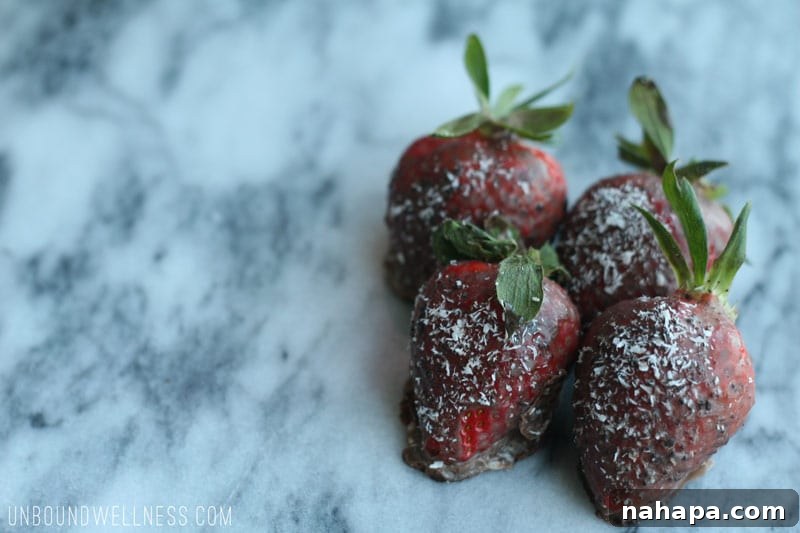
It’s important to set expectations regarding the texture of the carob coating. Unlike the thick, often glossy coating you might find on store-bought chocolate-covered strawberries, our AIP-friendly version will be much lighter. This difference is primarily due to the absence of soy lecithin and other emulsifiers that give conventional chocolate its characteristic thick, uniform appearance and firm snap. Without these additives, our coating is naturally thinner, embracing the wholesome simplicity of its ingredients. Rest assured, while the coating is lighter, the flavor is incredibly rich, satisfying, and utterly delicious! You get all the decadent taste without any of the undesirable additives. This subtle difference is a small price to pay for a treat that truly nourishes your body.
Serving Suggestions and Customization
These AIP & Paleo Coconut Carob Covered Strawberries are perfect as they are, but you can also get creative with how you serve and customize them! For a romantic presentation, arrange them artfully on a small platter with a few fresh mint leaves. You could also serve them alongside a small bowl of fresh berries for an extra burst of fruitiness. If you’ve successfully reintroduced certain foods, a tiny sprinkle of flaky sea salt on top before chilling can enhance the carob flavor beautifully, providing a delightful sweet and salty contrast. For an even more textural experience, consider adding finely chopped AIP-compliant nuts or seeds (if reintroduced) to the coconut flakes or directly into the carob mixture for an added crunch. These treats are also wonderful when shared as a thoughtful homemade gift for loved ones who appreciate healthy indulgence.
Why This Recipe is Perfect for Valentine’s Day (and Beyond!)
This recipe isn’t just a delicious dessert; it’s a statement. It’s proof that you don’t have to compromise your health goals to celebrate special moments or indulge in classic treats. For Valentine’s Day, these Coconut Carob Covered Strawberries offer a truly thoughtful gesture. They show care not only for the person you’re sharing them with but also for their well-being, especially if they follow a specific dietary protocol. They are inherently romantic, nostalgic, and satisfying, hitting all the right notes for a holiday centered around love and appreciation.
But the appeal of these strawberries extends far beyond February 14th. They are an ideal healthy treat year-round. Whether you need a quick pick-me-up, a light dessert after dinner, or a guilt-free snack, these AIP and Paleo compliant beauties are a staple. They’re easy to make, require minimal ingredients, and store well in the fridge, making them a fantastic addition to your repertoire of healthy, homemade indulgences. Embrace them as your new go-to for satisfying your sweet tooth, knowing you’re nourishing your body with every delightful bite.
Frequently Asked Questions (FAQ)
Can I use cacao instead of carob?
If you are strictly following the Autoimmune Protocol, particularly in its elimination phase, cacao (chocolate) is typically avoided. This recipe is designed with carob specifically to be AIP compliant. However, if you have successfully reintroduced cacao into your diet and know you tolerate it well, you can certainly substitute carob powder with unsweetened cacao powder for a more traditional “chocolate” flavor. Always listen to your body and its unique reactions to reintroduced foods.
How long do these carob-covered strawberries last?
For the best taste and texture, these strawberries are best enjoyed within 1-2 days of preparation. While they will remain safe to eat for a bit longer, the strawberries may start to release more moisture, and the coating can become less firm over time. Always store them in an airtight container in the refrigerator to maintain freshness.
Can I make these ahead of time?
Yes, absolutely! These are a perfect make-ahead dessert. Preparing them a few hours before you plan to serve them allows the coating ample time to set beautifully. Just keep them chilled in the refrigerator until you’re ready to enjoy. For optimal freshness and to prevent the strawberries from becoming too soft, avoid making them more than 24 hours in advance if possible.
What if my coating isn’t hardening properly?
If your carob coating isn’t hardening as expected, there could be a few reasons. Ensure your coconut oil was completely melted and whisked thoroughly with the carob powder. Most importantly, make sure your refrigerator is cold enough and that the strawberries are allowed sufficient time to chill, at least 30 minutes, or even longer if your kitchen is particularly warm. Coconut oil naturally solidifies at cooler temperatures, so a longer chill time usually does the trick. You can also briefly place them in the freezer for about 10-15 minutes if you’re in a hurry, but watch them closely to prevent freezing.
Embrace a Healthier Dessert Lifestyle
This recipe for AIP & Paleo Coconut Carob Covered Strawberries is more than just a treat; it’s an invitation to rediscover the joy of healthy indulgence. It demonstrates that living with dietary restrictions doesn’t mean a life devoid of delicious, celebratory foods. By choosing simple, whole ingredients, we can create desserts that are not only satisfying to the palate but also supportive of our overall health and healing journeys. So, go ahead, gather your ingredients, and whip up a batch of these exquisite strawberries. Share them with loved ones, or keep them all to yourself – either way, you’ll be savoring a sweet moment that aligns perfectly with your wellness goals.
What’s your favorite Valentine’s Day treat (healthy or otherwise)? Share your thoughts in the comments below!
This recipe was proudly shared on the Phoenix Helix recipe roundtable. Go check it out here for more amazing AIP-friendly dishes!