
This post contains affiliate links. Learn what that means here.
Unlock the Secret to Truly Healthy Smoothies: The Ultimate Gut-Healing Coconut Kale Smoothie Bowl
In the vibrant world of social media, beautifully crafted smoothie bowls often dominate our feeds. These visually stunning creations, overflowing from mason jars or adorned with intricate topping mosaics, promise health and vitality. However, a closer look at many popular green smoothie bowls and juices reveals a different story: they are frequently overloaded with sugar, surprisingly sparse on vital vegetables, and almost always lacking in healthy fats and quality protein. This common pitfall can transform what appears to be a health-conscious choice into a sugar bomb that leaves you hungry and craving more. But it doesn’t have to be this way!
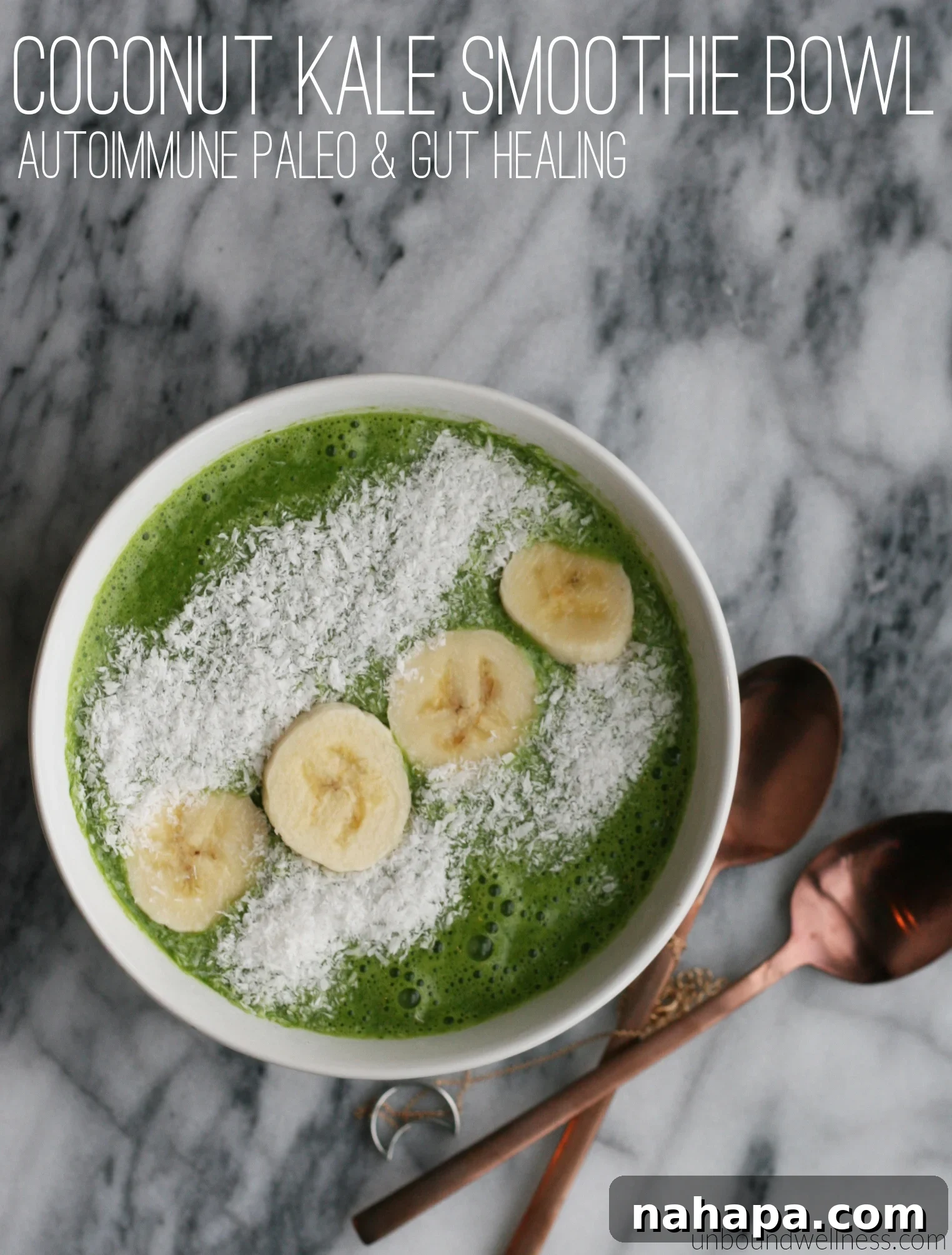
The truth is, smoothies can be one of those deceptive “pseudo-health foods” – appearing beneficial while potentially packing as much sugar as a fizzy drink, or even more, if not prepared thoughtfully. The key lies in understanding what truly constitutes a nutrient-dense, balanced smoothie that supports your well-being, rather than hindering it. Today, we’re going to dive deep into building the perfect smoothie, one that not only tastes incredible but also fuels your body, promotes satiety, and supports gut health. This is precisely why I developed this nourishing Coconut Kale Smoothie Bowl, a recipe brimming with beneficial ingredients, rich in flavor, and designed with your health goals in mind.
The Hidden Pitfalls of Conventional Smoothies and Juices
Before we build the ideal smoothie, let’s understand why many popular versions fall short. The allure of a quick, liquid meal often overshadows the nutritional reality. Without careful ingredient selection, a smoothie can quickly become detrimental to your health, particularly concerning blood sugar management and overall satiety.
Sugar Overload and Blood Sugar Spikes
Many commercially available smoothies or popular recipes on social media rely heavily on high-sugar fruits, added sweeteners, and fruit juices. While fruit sugar is natural, consuming it in large quantities, especially without sufficient fiber, fat, or protein, can lead to rapid blood sugar spikes. These spikes are followed by crashes, leaving you feeling tired, irritable, and craving more sugar. This vicious cycle sabotages energy levels and makes weight management challenging. The absence of fiber in fruit juices further exacerbates this problem, as fiber is crucial for slowing down sugar absorption and promoting a steady release of energy.
Lack of Satiety and Nutrient Deficiency
A smoothie primarily made from fruit and low-quality protein will likely leave you feeling hungry soon after consumption. This is because it lacks the macronutrients essential for long-lasting fullness: healthy fats and adequate protein. When a smoothie doesn’t satisfy, you’re more prone to snacking on less healthy options later. Furthermore, without a diverse range of nutrient-rich ingredients, your “healthy” smoothie might actually be deficient in key vitamins, minerals, and antioxidants your body needs to thrive.
Building a Better Smoothie: The Pillars of Nutrient Density
To transform your smoothie from a potential sugar trap into a powerhouse of nutrition, we need to focus on four essential components. These elements work synergistically to create a balanced, satisfying, and health-promoting meal or snack.
1. Mostly Veggies: Embrace the Green Power
Vegetables, especially leafy greens, should form the foundation of your smoothie. They are incredibly rich in vitamins, minerals, fiber, and antioxidants, with very few calories and minimal impact on blood sugar. Smoothies provide an excellent, often undetectable way to significantly boost your daily vegetable intake, even for those who typically struggle to eat enough greens.
- Leafy Green Superstars: Kale and spinach are go-to choices due to their mild flavor profiles (especially spinach, which is almost imperceptible when blended) and high nutrient density. Other great options include Swiss chard, romaine lettuce, or even a small amount of parsley for a fresh kick.
- Beyond Leafy Greens: Don’t limit yourself. Cucumber adds hydration and a fresh taste, while zucchini (peeled and frozen) can contribute creaminess without altering the flavor significantly. Carrots offer sweetness and beta-carotene. Feel free to be generous with your vegetable portions – the more, the merrier!
- Tip for Success: Start with a small amount if you’re new to green smoothies and gradually increase as your palate adjusts. Blending greens with a liquid base first ensures a super smooth texture.
2. Moderate Fruit: Sweetness with Wisdom
While fruit provides natural sugars, vitamins, and fiber, moderation is key. Excess fruit sugar, even natural sugar, can still impact blood sugar levels if consumed without balance. If your smoothie relies predominantly on fruit for sweetness and volume, you’ll likely experience the sugar spikes and subsequent hunger pangs we discussed earlier.
- Portion Control: Aim for just one serving of fruit per smoothie. This helps manage sugar intake while still providing natural sweetness and nutrients.
- Smart Fruit Choices: Frozen bananas are excellent for creaminess and a touch of sweetness. Berries (strawberries, blueberries, raspberries) are particularly beneficial as they are lower in sugar and high in antioxidants. Other good options include small amounts of green apple, a few peach slices, or a handful of mango.
- Why Frozen? Frozen fruit not only chills your smoothie without diluting it but also contributes to a thicker, more satisfying texture, making it feel more like a treat.
3. Healthy Fats: The Key to Satiety and Absorption
Healthy fats are often the biggest missing piece in many smoothie recipes, yet they are crucial for satiety, sustained energy, and the absorption of fat-soluble vitamins (A, D, E, K) from your greens. Adding a tablespoon or two of healthy fat will keep you feeling full and satisfied for much longer, preventing those mid-morning or mid-afternoon energy slumps.
- Avocado: A fantastic source of monounsaturated fats, avocado lends an incredibly creamy texture to smoothies without a strong flavor. It’s a game-changer for richness.
- Coconut Oil: Rich in medium-chain triglycerides (MCTs), coconut oil provides quick energy and can support metabolism. Its subtle coconut flavor pairs beautifully with many ingredients.
- Other Options: A spoonful of almond butter, cashew butter, or tahini can add healthy fats and a nutty flavor. Chia seeds or flax seeds are also great additions, offering omega-3 fatty acids and fiber, which thicken the smoothie naturally.
4. Good Quality Protein: Build, Repair, and Satisfy
Including a source of high-quality protein is vital for muscle repair, sustained energy, and enhancing satiety. However, be wary of many commercial protein powders, which can be loaded with hidden sugars, artificial ingredients, and inflammatory soy. Choosing clean, minimally processed protein is paramount.
- Grass-Fed Collagen: My personal favorite addition is grass-fed collagen hydrolysate. It’s tasteless, dissolves easily, and is packed with amino acids that are fantastic for gut healing. Collagen helps restore the intestinal lining, which is often compromised in conditions like leaky gut. It also supports healthy skin, hair, and nails. You can find high-quality grass-fed collagen here.
- Other Clean Proteins: If collagen isn’t for you, opt for a high-quality, unsweetened pea protein, hemp protein, or a grass-fed whey protein (if dairy is tolerated). Always check the ingredient list for hidden sugars and artificial additives.
Smoothies, Not Juices: The Fiber Factor
It’s crucial to distinguish between smoothies and juices. While vegetable juices can be beneficial in moderation, especially when mostly vegetable-based, fruit juice is an entirely different story. Fruit juice, stripped of its pulp and fiber, delivers a concentrated shot of sugar directly into your bloodstream, leading to a rapid and pronounced blood sugar spike. Smoothies, on the other hand, retain the whole fruit and vegetable, including all the beneficial fiber. This fiber is essential for slowing down sugar absorption, promoting digestive health, and contributing to a feeling of fullness. Always opt for a whole-food smoothie over a juice for maximum nutritional benefit.
Now that we’ve established the fundamental principles of a truly nourishing smoothie, let’s combine all these essentials into a delicious and gut-healing recipe: my Coconut Kale Smoothie Bowl!
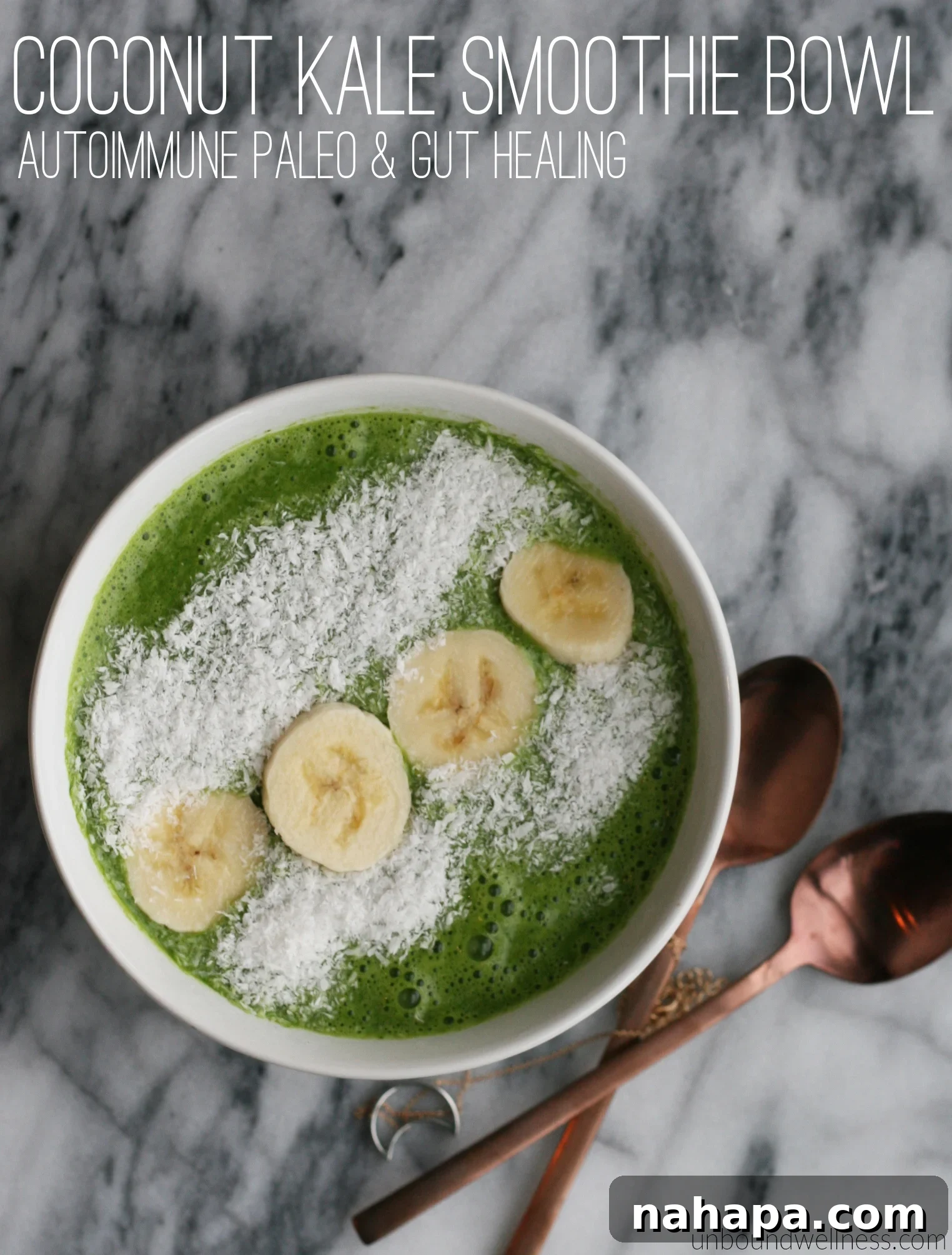
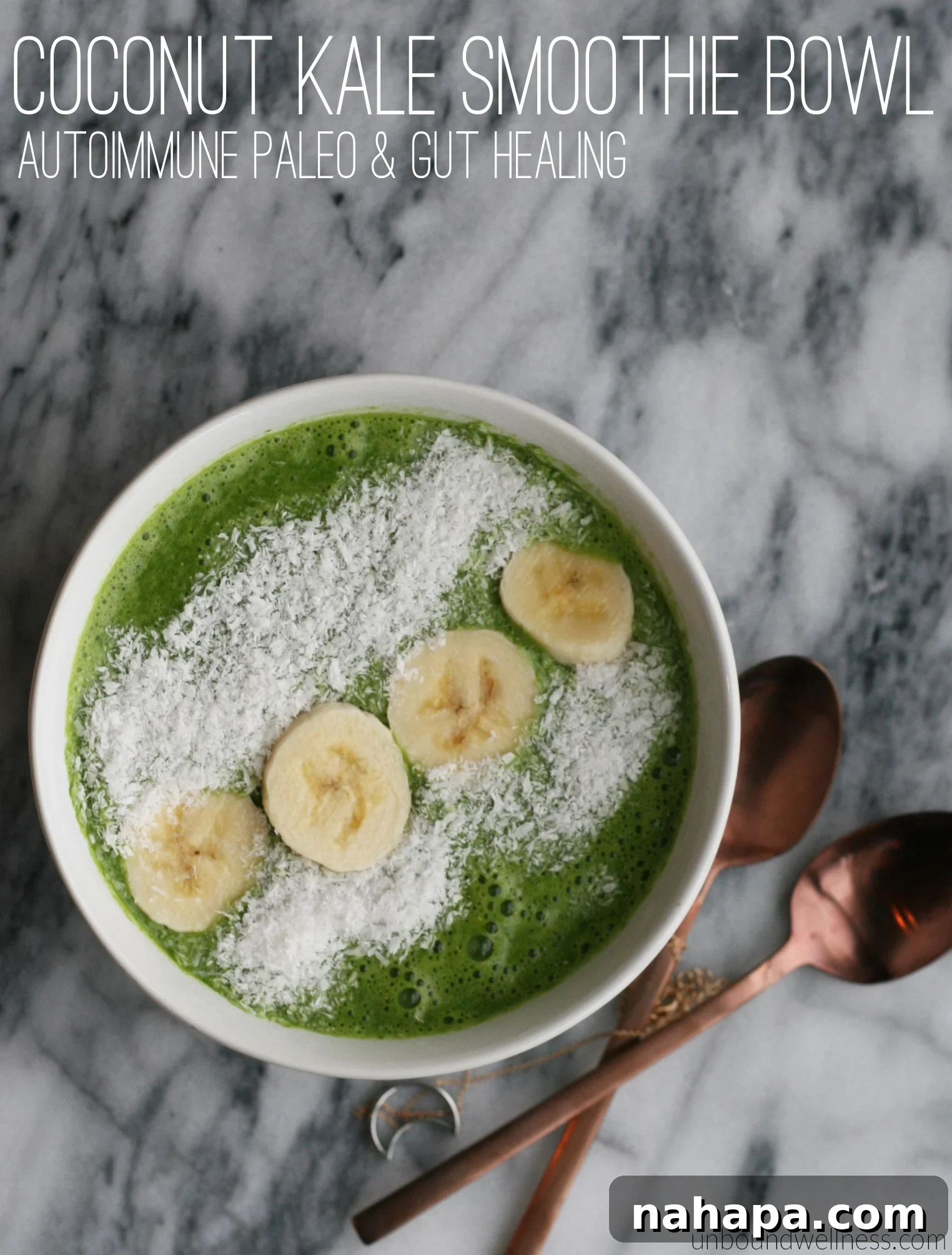
Coconut Kale Smoothie Bowl | Autoimmune Paleo and Gut Healing
Leave a Review
Pin Recipe
Want to save this for later?
Just drop your name and email below. Then we’ll email it right to your inbox. ✉️
(Please note: This is a placeholder for an email signup form. For functionality, a real form integration would be required.)
Ingredients
- 3-4 large kale leaves, destemmed
- 2 frozen peach slices
- 1 cup coconut milk (recommended brand)
- 1 tbsp coconut oil (recommended brand)
- 1 tbsp collagen hydrolysate
- 3 ice cubes
- Juice from 1/4 lemon
- Optional Toppings:
- ½ banana, sliced
- 1 tbsp coconut flakes
Instructions
- Add the destemmed kale leaves and coconut milk to your blender (e.g., Vitamix, Ninja, Nutribullet). Blend until the kale is completely smooth and no large pieces remain. This creates a creamy base for your smoothie bowl.
- Next, add the frozen peach slices, coconut oil, collagen hydrolysate, ice cubes, and fresh lemon juice to the blender. Blend again until the mixture is thick, smooth, and all frozen chunks are thoroughly incorporated. For a thicker bowl, add less liquid; for a thinner one, add a splash more coconut milk.
- Once blended to your desired consistency, pour the nutrient-rich smoothie into a bowl. If you prefer a drinkable smoothie, pour it into a tall glass.
- Artfully arrange your chosen toppings. For this recipe, we recommend sliced banana and a sprinkle of coconut flakes to add texture and additional flavor. Feel free to customize with other AIP-friendly toppings like berries, tiger nuts, or a drizzle of compliant syrup if desired.
- Grab a spoon and enjoy this delightful, gut-healing, and satiating Coconut Kale Smoothie Bowl immediately!
Did you Make this Recipe?
Tag @unboundwellness on Instagram and hashtag #unboundwellness!
I wholeheartedly recommend incorporating this Coconut Kale Smoothie Bowl into your routine, whether you’re seeking a refreshing cold treat or looking for an effortless way to boost your intake of essential leafy greens. Not only is it incredibly nutrient-dense, providing your body with the fuel it needs, but its vibrant colors and customizable toppings also make it a genuinely enjoyable and fun eating experience.
Do you enjoy making smoothie bowls? What are your ultimate go-to toppings that make your healthy creations extra special? Share your favorites in the comments below!
This nourishing recipe was proudly shared on the Phoenix Helix Recipe AIP Recipe Roundtable. Be sure to explore their collection for more fantastic Autoimmune Paleo-friendly ideas!