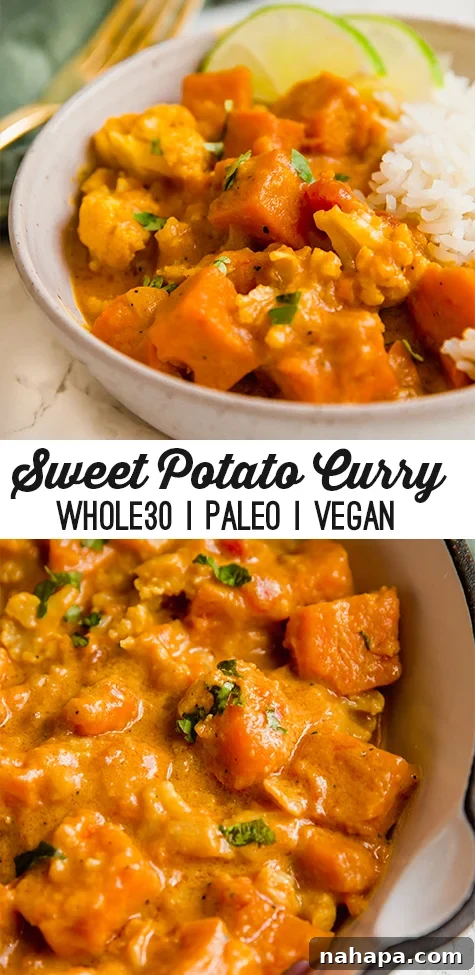
Craving a meal that’s both deeply satisfying and incredibly healthy? Look no further than this delightful Sweet Potato Cauliflower Curry! This vibrant, aromatic dish is a treasure trove of flavors and nutrients, making it a perfect choice for anyone seeking a wholesome and delicious meal. Whether you’re adhering to a specific diet or simply love good food, this curry fits the bill – it’s naturally paleo, Whole30, vegan, and vegetarian friendly, ensuring everyone can enjoy its rich, comforting taste.

Delicious & Healthy Sweet Potato Cauliflower Curry (Paleo, Whole30, Vegan)
Why You’ll Adore This Sweet Potato & Cauliflower Curry
Curry is a global culinary sensation, cherished for its incredible depth of flavor and comforting warmth. This particular Sweet Potato Cauliflower Curry recipe elevates a classic into a remarkably healthy and accessible dish that caters to a wide range of dietary preferences without compromising on taste. It’s an ideal option for weeknight dinners, meal prepping, or impressing guests with a vibrant, plant-based creation.
Here’s why this recipe deserves a permanent spot in your cooking rotation:
- Unforgettable Flavor Profile: The harmonious blend of sweet potatoes and tender cauliflower, simmered in a luscious coconut milk-based sauce, creates a symphony of sweet, savory, and subtly spicy notes that will tantalize your taste buds.
- Packed with Nutrients: Sweet potatoes are a fantastic source of vitamins (especially A and C) and fiber, while cauliflower brings a host of antioxidants and minerals. This curry is truly a powerhouse of goodness, contributing to your daily vegetable intake in a delicious way.
- Diet-Friendly Versatility: This recipe is a culinary chameleon! It’s naturally free from dairy, gluten, and animal products, making it suitable for vegan and vegetarian diets. Furthermore, its clean ingredients align perfectly with Paleo and Whole30 eating plans. With a few simple tweaks, it can even be made AIP (Autoimmune Protocol) compliant.
- Easy to Make: Don’t let the rich flavor fool you – this curry is surprisingly simple to prepare. With straightforward steps and readily available ingredients, even novice cooks can achieve a restaurant-quality meal at home.
- Perfect Comfort Food: There’s something inherently comforting about a warm bowl of curry. This recipe delivers that cozy, satisfying feeling, especially on a chilly evening, making it a perfect antidote to a long day.
Essential Ingredients for Your Flavorful Sweet Potato & Cauliflower Curry
Crafting the perfect curry begins with selecting the right ingredients. This recipe relies on a combination of fresh produce and pantry staples to build its rich and complex flavor profile. Here’s a closer look at what you’ll need and why each component is crucial:
- Avocado Oil: Used for sautéing, avocado oil has a high smoke point and a neutral flavor, making it excellent for cooking the aromatic base without overpowering other ingredients.
- Onion & Fresh Ginger: These form the aromatic foundation of the curry. Sautéing diced yellow onion until translucent and fresh grated ginger releases their sweet, pungent, and spicy notes, laying the groundwork for a deeply flavored sauce.
- Sweet Potato: The star of the show! Cubed sweet potatoes add natural sweetness, a creamy texture when cooked, and a vibrant color to the curry. They are also packed with beta-carotene, fiber, and essential vitamins.
- Cauliflower Florets: Complementing the sweet potato, cauliflower florets add a hearty texture and absorb the curry sauce beautifully. They are also rich in vitamins C and K, and various antioxidants.
- Full-Fat Canned Coconut Milk: This is the secret to a rich, creamy, and dairy-free curry sauce. Full-fat coconut milk provides lusciousness and a subtle tropical hint that balances the spices. Look for a brand with minimal additives for the best results.
- Canned Diced Tomatoes: Diced tomatoes contribute acidity, a touch of sweetness, and umami depth to the curry. They help create a well-rounded sauce. (Note for AIP: See our AIP modifications below for a nightshade-free alternative.)
- Ground Turmeric: Beyond its stunning golden hue, turmeric is a powerful spice known for its anti-inflammatory properties and earthy flavor. It’s a quintessential curry ingredient.
- Red Curry Paste: This convenient paste is a blend of various spices, chilies, and aromatics, providing a concentrated burst of traditional curry flavor and a mild heat. (Note for AIP: This contains nightshades. Refer to our AIP section for suitable substitutes.)
- Sea Salt & Black Pepper: Essential for seasoning, they enhance all the other flavors in the dish. (Note for AIP: Omit black pepper as it is a nightshade.)
- Fresh Cilantro & Lime Wedges: These are crucial for a fresh, zesty finish. A sprinkle of chopped cilantro and a squeeze of fresh lime juice just before serving brightens the entire dish and adds an irresistible aroma.
By understanding the role of each ingredient, you can appreciate the balance and complexity that makes this curry so special.
Step-by-Step Guide: Crafting Your Sweet Potato Cauliflower Curry
Preparing this wholesome curry is a straightforward process, designed to bring maximum flavor with minimal fuss. Follow these simple steps to create a delicious and comforting meal:
- Prepare Your Ingredients: Before you begin cooking, ensure all your vegetables are chopped and measured. Dice the onion, grate the ginger, cube the sweet potato, and separate the cauliflower into florets. Having everything ready (mise en place) will make the cooking process smooth and enjoyable.
- Sauté the Aromatics: Heat the avocado oil in a large, deep pan or Dutch oven over medium heat. Once shimmering, add the diced onion and grated ginger. Sauté for 3-4 minutes, stirring occasionally, until the onion becomes soft and translucent, and the kitchen fills with their inviting aroma. This step is vital for building the flavor base of your curry.
- Lightly Cook the Vegetables: Add the cubed sweet potato and cauliflower florets to the pan with the aromatics. Sauté for about 5 minutes, stirring gently. This brief sauté helps to slightly soften the vegetables and allows them to begin absorbing the initial flavors from the onion and ginger.
- Introduce the Curry Sauce: Pour in the full-fat coconut milk, diced tomatoes (if using), ground turmeric, red curry paste (if using), sea salt, and black pepper (if using). Stir everything thoroughly to ensure the vegetables are completely coated in the rich, vibrant sauce. This is where the curry truly comes to life!
- Simmer to Perfection (First Phase): Bring the mixture to a low simmer. Once it begins to bubble gently, cover the pan with a lid and reduce the heat to low. Allow the curry to simmer for 10 minutes. This covered simmering period helps the sweet potatoes and cauliflower to cook through and become tender, while the flavors meld together beautifully.
- Simmer to Perfection (Second Phase): After 10 minutes, remove the lid from the pan. Increase the heat slightly if needed to maintain a gentle simmer. Continue to cook, uncovered, for another 5 minutes. This step allows some of the liquid to reduce, thickening the sauce and intensifying the flavors.
- Check for Tenderness and Serve: The curry is ready when the liquid has slightly reduced, and the sweet potatoes and cauliflower are fork-tender. Remove the pan from the heat. Ladle generous portions into bowls and garnish with a sprinkle of fresh chopped cilantro and a few lime wedges. The fresh herbs and citrus add a burst of brightness that perfectly complements the rich curry.
Enjoy your homemade Sweet Potato Cauliflower Curry, a truly wholesome and satisfying meal!
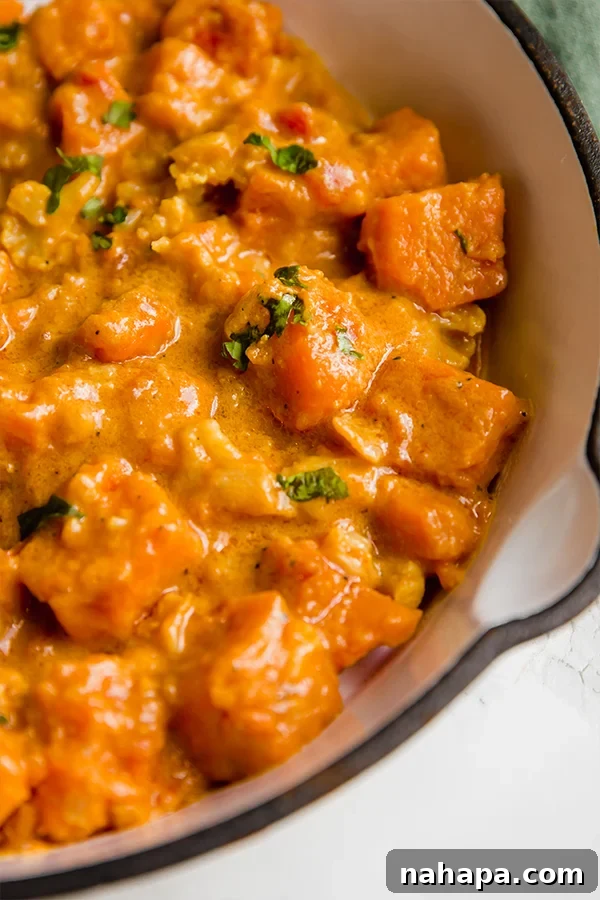
Dietary Adaptations & Delicious Variations
One of the best aspects of this Sweet Potato Cauliflower Curry is its incredible adaptability. With a few simple swaps, you can tailor it to specific dietary needs or simply add your personal touch.
Making it AIP Friendly (Autoimmune Protocol)
For those following the Autoimmune Protocol (AIP), certain ingredients typically found in curry, such as nightshades, need to be avoided. Don’t worry, you can still enjoy a wonderfully flavorful curry!
- Tomato Alternative: Instead of canned diced tomatoes, use a nomato sauce. This clever substitute mimics the acidity and richness of tomatoes without using nightshades.
- Curry Paste & Black Pepper Alternative: Traditional curry pastes often contain nightshades (like chili peppers) and other non-AIP ingredients. Black pepper is also a nightshade. To maintain a delicious flavor profile, simply omit the red curry paste and black pepper. Instead, increase the amount of fresh ginger and turmeric to taste. You can also experiment with other AIP-compliant spices like ground coriander, cumin (if reintroduced), or a pinch of saffron for color and aroma. While the flavor profile will differ slightly from a conventional curry, it will still be incredibly tasty and warming.
Adding a Protein Boost
While this curry is wonderfully hearty on its own, adding a protein source can make it even more substantial and fulfilling:
- Chicken: Cook diced chicken breast or thighs separately and stir into the curry during the last few minutes of simmering, ensuring it’s fully cooked. Alternatively, you can brown the chicken in the pan before sautéing the onions, then remove it and add it back later.
- Chickpeas: For an extra plant-based protein and fiber boost, stir in a can of drained and rinsed chickpeas along with the coconut milk and spices. They absorb the curry flavors beautifully.
- Tofu or Tempeh: Cubed firm tofu or tempeh can be pressed, then pan-fried until golden and added to the curry. This is an excellent option for a more structured plant-based protein.
- Lentils: Red or green lentils can be cooked separately and stirred in, adding a significant amount of plant-based protein and fiber.
Exploring Other Vegetable Additions
Feel free to get creative with other vegetables you have on hand. Just ensure they cook at a similar rate, or add them in stages:
- Spinach or Kale: Stir in a few handfuls of fresh spinach or chopped kale during the last 5 minutes of simmering. They will wilt beautifully into the sauce.
- Bell Peppers: Sliced bell peppers (any color) can be added with the sweet potatoes and cauliflower for extra sweetness and crunch. (Omit for AIP).
- Green Beans or Snap Peas: Add these tender vegetables during the last few minutes of cooking for a fresh bite.
- Zucchini or Yellow Squash: Cubed zucchini or yellow squash can be added during the second simmering phase.
Perfect Pairings: What to Serve with Your Sweet Potato Cauliflower Curry
A delicious curry deserves an equally wonderful accompaniment. The beauty of this Sweet Potato Cauliflower Curry is its versatility, allowing for various serving options to complete your meal, whether you’re looking for something traditional, light, or diet-specific.
- Basmati Rice: The classic choice! Fluffy basmati rice is perfect for soaking up the rich, aromatic curry sauce. Its delicate fragrance complements the robust flavors of the dish.
- Chickpeas: If you’re looking for an additional protein and fiber boost, or simply want a heartier plant-based meal, a side of roasted or simply warmed chickpeas makes an excellent pairing.
- Quinoa: For a gluten-free and protein-rich grain alternative, quinoa is a fantastic option. Its slightly nutty flavor and fluffy texture pair well with the curry.
- Cauliflower Rice: To keep your meal low-carb, paleo, Whole30, or AIP friendly, serve the curry over a bed of steamed or sautéed cauliflower rice. It’s a light and healthy substitute that still provides a satisfying base.
- Naan Bread or Roti: For those not following gluten-free diets, warm naan bread or roti is ideal for scooping up every last drop of the delicious sauce.
- Fresh Green Salad: A simple side salad with a light vinaigrette can provide a refreshing contrast to the richness of the curry.
- Plain Yogurt or Raita: A dollop of plain coconut yogurt (for vegan/dairy-free) or traditional dairy yogurt/raita (for non-vegan) can offer a cooling element, balancing the curry’s warmth and spice.
Experiment with these suggestions to find your favorite combination and elevate your curry experience!

Sweet Potato Cauliflower Curry Recipe Card
This recipe yields approximately 4 servings.
Ingredients
- 2 tbsp avocado oil
- ½ yellow onion, diced
- 1 tbsp ginger, grated
- 3 cups sweet potato, cubed
- 2 ½ cups cauliflower florets
- 2 ⅔ cups coconut milk, canned & full fat
- ½ cup diced tomato, omit for AIP (see notes)
- 1 tsp turmeric
- 2 tsp red curry paste, omit for AIP (see notes)
- 1 tsp sea salt
- ¼ tsp black pepper, omit for AIP
- 1 lime, sliced for garnish
- 1 tbsp cilantro, chopped for garnish
Instructions
- Using a large, deep pan, heat the avocado oil over medium heat. Add the onion and ginger and saute for 3-4 minutes or until the onion is slightly translucent.
- Add the sweet potato and cauliflower and saute for about 5 minutes to lightly soften.
- Pour in the coconut milk, diced tomato, turmeric, curry, salt and pepper, and stir to combine and coat the vegetables.
- Bring to a low simmer and cover. Add a lid to the pan and simmer for 10 minutes.
- Remove the lid from the pan and allow to simmer for another 5 minutes.
- Once the liquid is reduced and the vegetables are soft, remove from the heat.
- Serve topped with cilantro and lime wedges.
Notes
For AIP, use nomato sauce and extra turmeric and ginger to taste in place of the tomato and curry powder. It will change the flavor of traditional curry, but it’s still a delicious meal!
Nutrition Information (Estimated Per Serving)
- Serving: 1 serving
- Calories: 477 kcal
- Carbohydrates: 31.5g
- Protein: 6.4g
- Fat: 39.5g
- Fiber: 5.1g
All nutrition facts are estimated and will vary. Estimations do not include optional ingredients.
Storage and Meal Prep Tips
This Sweet Potato Cauliflower Curry is an excellent candidate for meal prepping, as its flavors often deepen and become even more delicious the next day. Here’s how to store it and make the most of your leftovers:
- Refrigeration: Allow the curry to cool completely before transferring it to an airtight container. It can be stored in the refrigerator for up to 3-4 days. When reheating, gently warm it on the stovetop over medium-low heat or in the microwave until heated through. You might need to add a splash of water or vegetable broth if the sauce has thickened too much.
- Freezing: This curry freezes beautifully! Once cooled, transfer it to freezer-safe containers or heavy-duty freezer bags. It can be frozen for up to 2-3 months. To thaw, move it to the refrigerator overnight, then reheat as directed above. Freezing is a fantastic way to ensure you always have a healthy, homemade meal ready to go.
- Meal Prep Strategy: Prepare a large batch of this curry at the beginning of the week. Portion it into individual containers along with your chosen side (like basmati rice or cauliflower rice) for easy grab-and-go lunches or quick dinners. This will save you valuable time during busy weekdays.
Frequently Asked Questions (FAQ) About Sweet Potato & Cauliflower Curry
Got questions about making the perfect Sweet Potato Cauliflower Curry? We’ve got answers!
- Is this curry spicy?
The spice level of this curry primarily comes from the red curry paste. Most red curry pastes provide a mild to medium heat. If you prefer a milder curry, you can reduce the amount of curry paste or opt for a mild variety. For extra heat, add a pinch of cayenne pepper or a fresh green chili (if not AIP).
- Can I use frozen sweet potatoes or cauliflower?
Yes, you can! If using frozen sweet potatoes or cauliflower, there’s no need to thaw them beforehand. Simply add them directly to the pan during the sautéing step. They might release a bit more water, so you might need to simmer the curry for an extra few minutes, uncovered, to allow the sauce to thicken.
- Can I add other vegetables?
Absolutely! This curry is incredibly versatile. Spinach, kale, bell peppers, green beans, peas, or even zucchini would make great additions. Add softer vegetables like spinach or peas towards the end of the simmering process, and heartier ones like bell peppers or green beans earlier with the sweet potatoes and cauliflower.
- How can I make the sauce thicker?
The sauce naturally thickens as it simmers and reduces. If you prefer an even thicker sauce, you can remove the lid and continue to simmer for an additional 5-10 minutes. Alternatively, you can mash a few pieces of cooked sweet potato against the side of the pan with a spoon, or stir in a teaspoon of arrowroot starch mixed with a tablespoon of cold water during the last few minutes of cooking.
- What kind of coconut milk should I use?
For the richest and creamiest results, we recommend using full-fat canned coconut milk. “Lite” coconut milk contains more water and will result in a thinner, less flavorful sauce. Make sure to shake the can well before opening.
Related Recipes You’ll Love
If you enjoyed this Sweet Potato Cauliflower Curry, be sure to explore these other wholesome and flavorful recipes:
- Turmeric Chicken Curry (Paleo)
- Refreshing Mango Lassi
- Paleo Slow Cooker Indian Butter Chicken
- Creamy Cauliflower Pumpkin Risotto