
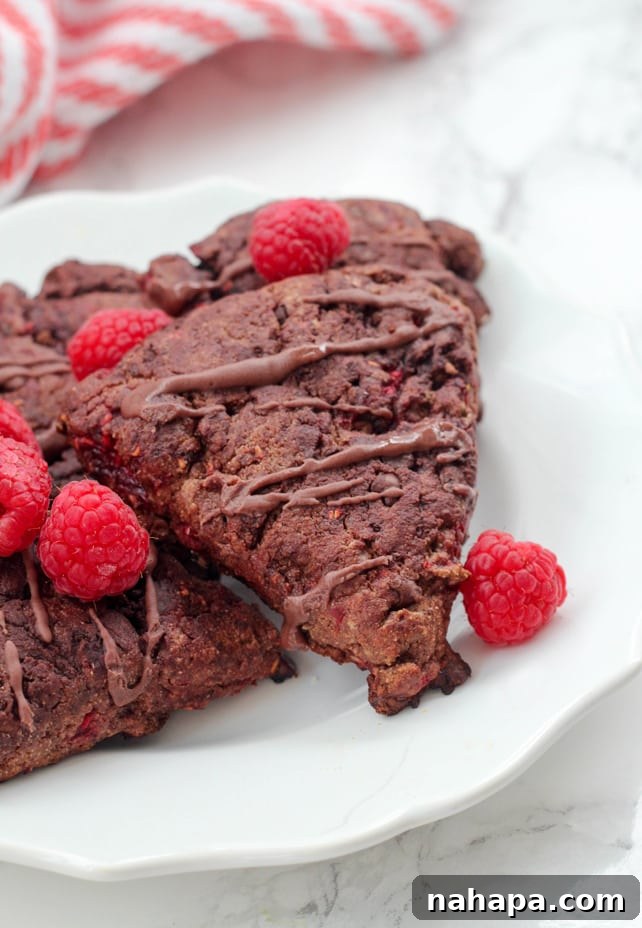
Decadent Paleo Chocolate Raspberry Scones: A Gluten-Free & AIP-Friendly Treat for Any Occasion
There’s an undeniable magic in homemade baked goods. They speak volumes about thoughtfulness, time, attention, and genuine care. While classic treats like chocolate chip cookies and cupcakes hold a special place, there’s a unique charm and elegance that comes with baking something like scones. The process itself feels a bit more artisanal, and the result is often a delightful surprise. Elevate your baking experience with these truly exceptional Paleo Chocolate Raspberry Scones – a recipe that brings together rich flavors and wholesome ingredients, perfect for sharing with loved ones or indulging yourself.
My journey into scone baking began with a festive Orange Cranberry Scone recipe, which became a serious hit with my family and the wider community during the holidays. The overwhelming positive feedback inspired me to explore more variations, especially as special occasions approached. When Valentine’s Day started to appear on the calendar, I knew it was the perfect opportunity to revisit these beloved baked goods and infuse them with a romantic, seasonal twist. The result? These rich, deeply chocolatey, and perfectly tart Paleo Chocolate Raspberry Scones, designed to be a showstopper treat!
These scones are not only incredibly delicious but also remarkably versatile and accommodating to various dietary needs. They are naturally paleo-friendly, meaning they are free from grains, dairy, and refined sugars. What’s more, they are easily adaptable to be Autoimmune Protocol (AIP) compliant, making them an excellent choice for those navigating specific dietary restrictions without sacrificing flavor or enjoyment. Imagine the delight of presenting these beautiful, homemade treats – whether for a special holiday like Valentine’s Day, a weekend brunch, or simply as a thoughtful gift. They embody everything wonderful about mindful baking: health-conscious, incredibly flavorful, and surprisingly simple to create.
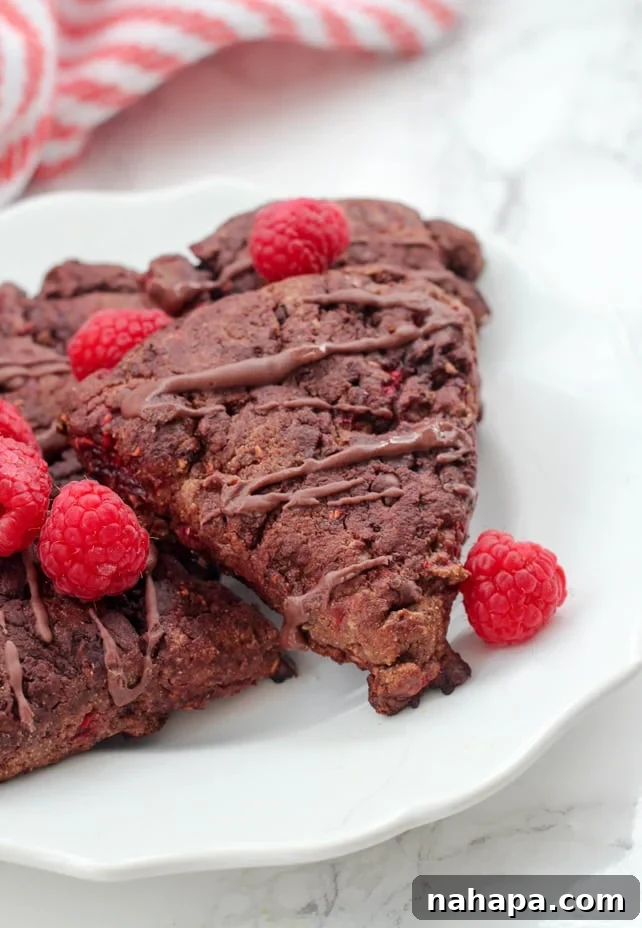
Why You’ll Love These Paleo Chocolate Raspberry Scones
Beyond their delightful taste and beautiful appearance, these scones offer a multitude of reasons to become a staple in your healthy baking repertoire:
- Dietary Friendly: Fully Paleo, Gluten-Free, Dairy-Free, and easily adaptable to be AIP compliant. This makes them suitable for a wide range of dietary needs without compromise.
- Rich & Satisfying Flavor: The combination of deep chocolate and bright, tart raspberries creates a sophisticated flavor profile that is both decadent and refreshing.
- Simple to Make: Despite their gourmet appeal, the recipe is straightforward and doesn’t require advanced baking skills. Perfect for beginners and experienced bakers alike.
- Wholesome Ingredients: Made with natural, unprocessed ingredients that nourish your body while delighting your taste buds.
- Perfect for Any Occasion: While ideal for Valentine’s Day, these scones are wonderful for breakfast, brunch, afternoon tea, or as a thoughtful homemade gift any time of the year.
Key Ingredients for Your Chocolate Raspberry Scones
Crafting these paleo and AIP-friendly scones requires a thoughtful selection of ingredients. Each component plays a vital role in achieving the perfect texture, flavor, and dietary compliance. Let’s dive into the essential ingredients and their specific functions:
Tigernut Flour: The Grain-Free Star
Tigernut flour is an absolute game-changer in gluten-free and paleo baking, quickly becoming one of my go-to choices. Despite its name, tigernut flour is not derived from nuts but from a root vegetable (a tuber), making it inherently nut-free and perfectly suitable for AIP diets. It imparts a slightly sweet, earthy flavor and a wonderfully soft, moist texture to baked goods, mimicking traditional flour in a remarkable way. Its high fiber content also adds to the nutritional value, making your scones more satisfying. While I highly recommend sticking to tigernut flour for the best results, if you tolerate almonds and are not on an AIP diet, you could experiment with almond flour as a substitute. However, please note that the texture and liquid absorption will differ, and I cannot guarantee the exact same outcome.
Tapioca Starch: For Perfect Binding and Texture
Tapioca starch, also known as tapioca flour, is crucial for achieving the ideal structure and binding in these scones. It’s a naturally gluten-free starch extracted from the cassava root. In this recipe, tapioca starch helps to create a delicate crumb and prevents the scones from becoming too dense or crumbly. It adds a lovely chewiness and a slightly crisp exterior. An excellent alternative if you don’t have tapioca starch on hand is arrowroot starch (also often called arrowroot powder), which functions very similarly in baking and is also AIP compliant.
Coconut Oil: Healthy Fat for Richness
Coconut oil is my preferred fat for these scones, contributing to their tender texture and a subtle, pleasant aroma. When selecting coconut oil, opt for virgin, unrefined varieties for the best flavor and nutritional benefits. It should be softened but not fully melted for the initial mixing stage, allowing it to be cut into the dry ingredients effectively, much like butter in traditional scone recipes. For those who need to avoid coconut, or simply prefer an alternative, you can consider substituting with high-quality, grass-fed lard. Lard offers a wonderful flakiness to baked goods. While I haven’t personally tested this specific substitution in this recipe, it’s a common and effective paleo/AIP fat alternative in many baked goods. If you try it, please share your results!
Maple Syrup: Natural Sweetener
Maple syrup provides the perfect touch of natural sweetness to these scones without the need for refined sugars. Its distinct flavor complements both chocolate and raspberries beautifully. Ensure you use pure maple syrup, not pancake syrup which often contains high fructose corn syrup and artificial flavors. Another fantastic natural sweetener that works wonderfully as a substitute in this recipe is honey. Both are excellent choices for paleo and AIP-friendly baking.
Fresh Raspberries: The Tart Counterpoint
Fresh raspberries are indispensable for these scones. They not only add a vibrant pop of color, making the scones visually appealing and perfectly suited for a Valentine’s Day theme, but also introduce a crucial tartness that balances the richness of the chocolate. The juiciness of fresh raspberries bursts in your mouth with every bite. While fresh is preferred for texture and presentation, if fresh raspberries are unavailable, you can use frozen raspberries, but do not thaw them beforehand. Gently fold them into the dough while still frozen to prevent them from bleeding too much color into the batter.
Cocoa Powder or Carob Powder for AIP: Your Chocolate Element
The choice between cocoa powder and carob powder depends on your dietary needs. For a truly rich chocolate flavor, high-quality unsweetened cocoa powder is the way to go. It delivers that classic, deep chocolatey taste. However, for those strictly following the AIP diet, cocoa is typically excluded due to its stimulant properties. In this case, carob powder is an excellent, naturally sweet, and caffeine-free alternative. Carob provides a similar dark, earthy flavor profile, though it is milder and sweeter than cocoa. Both will yield delicious results, just with slightly different nuances.
1 Egg (or a Gelatin Egg): The Essential Binder
Eggs serve as a vital binder in many baking recipes, contributing to structure and moisture. If you tolerate eggs, a single egg will work perfectly here. However, for those on an AIP diet or with egg sensitivities, a gelatin egg is a fantastic and highly effective substitute. Preparing a gelatin egg involves blooming gelatin in cold water and then gently melting it. The key is to whisk it vigorously until frothy before incorporating it into the dough. This frothy texture is essential for providing the necessary structure without making the scones watery. I personally use a gelatin egg to ensure these scones are accessible to as many people as possible.
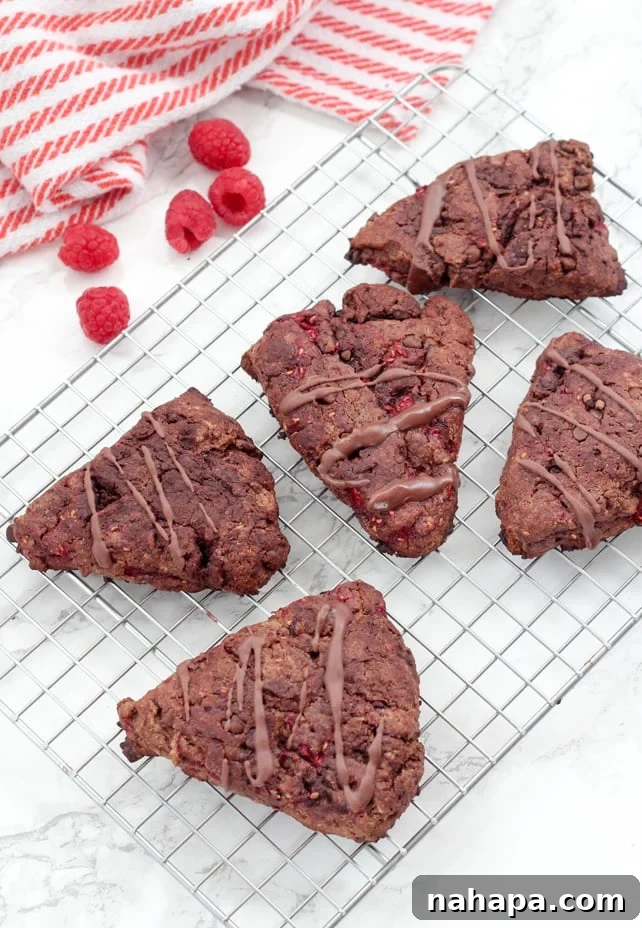
Recipe: Paleo Chocolate Raspberry Scones (AIP, Valentine’s Day)
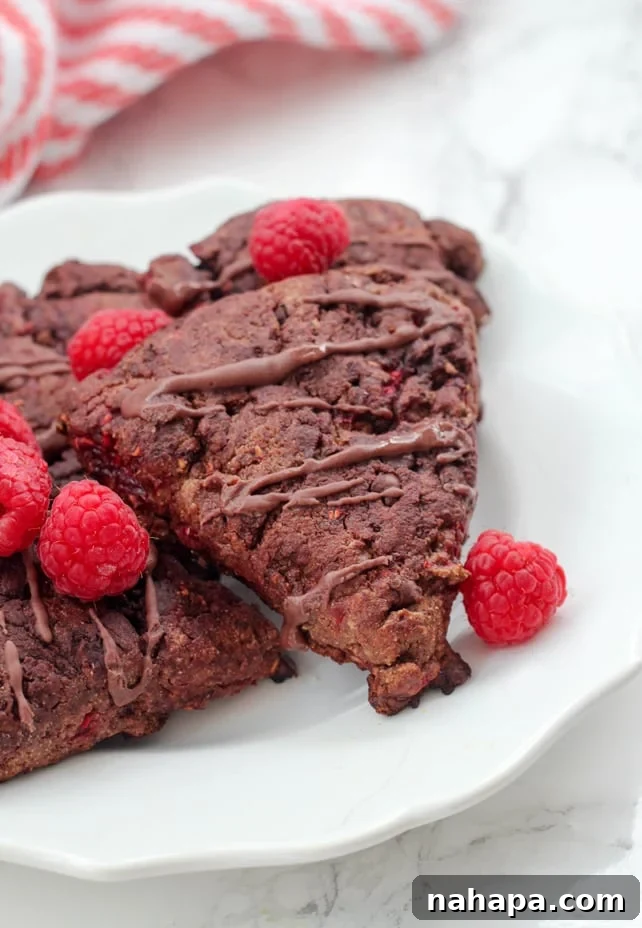
Yield: 6 scones
Author: Michelle
Print Recipe | Leave a Review | Pin Recipe
Ingredients
- 1 ¼ cup tigernut flour
- ¼ cup tapioca starch
- 2 tbsp. cocoa powder (sub carob for AIP)
- ¼ cup coconut oil, softened
- ¼ cup maple syrup
- ⅓ cup fresh raspberries
- 2 tbsp dairy free soy free chocolate chips (sub for AIP compatible alternative)
- ¼ tsp baking soda
- 1 tbsp melted dairy free/soy free chocolate, optional for topping (sub carob mixed with melted coconut oil for AIP)
- FOR THE GELATIN EGG (sub 1 regular egg if tolerated)
- 1 tbsp gelatin (Great Lakes or Vital Proteins recommended)
- ¼ cup water
Instructions
- Preheat your oven to 350 F (175 C). Line a baking sheet with parchment paper, then lightly grease the parchment paper to prevent sticking.
- In a large mixing bowl, sift together the tigernut flour, tapioca starch, and cocoa powder (or carob powder if using for AIP compliance). Sifting ensures there are no clumps and the dry ingredients are well combined. Set this mixture aside.
- Add the softened coconut oil and maple syrup to the dry ingredients. Use a pastry blender, your fingertips, or a fork to cut the coconut oil into the flour mixture until it resembles coarse crumbs. This step is crucial for achieving a flaky scone texture.
- Stir in the baking soda, dairy-free chocolate chips (or AIP compatible alternative), and fresh raspberries. Be gentle when mixing in the raspberries to avoid crushing them too much.
- Prepare the gelatin egg: If you’re using a gelatin egg, add the ¼ cup of water to a small saucepan. Slowly sprinkle the 1 tablespoon of gelatin over the water, ensuring it’s evenly distributed to prevent clumps. Allow the mixture to “bloom” and thicken for 2-3 minutes.
- Place the saucepan with the bloomed gelatin over low heat. Gently melt the gelatin, stirring continuously until it’s completely dissolved and smooth. This should only take a few minutes. Remove from heat immediately.
- Once removed from the stove, vigorously whisk the gelatin mixture until it becomes significantly frothy and somewhat thick. This frothy texture is essential for the structure of your scones. If it remains too watery, the scones may not hold together correctly.
- Immediately add the frothy gelatin egg to your scone dough mixture and mix thoroughly until just combined. Overmixing can lead to tough scones, so stop as soon as the ingredients are incorporated.
- Transfer the dough onto a clean cutting board or a lightly floured surface (using a little extra tigernut flour). Gently form the dough into a large circle, ensuring it’s about an inch (2.5 cm) thick.
- Using a pizza roller or a sharp knife, slice the circular dough into 6 triangular scones. This traditional scone shape is easy to achieve and bakes evenly.
- Carefully transfer the triangular scones to your prepared baking sheet.
- Bake in the preheated oven for 20-25 minutes, or until the edges are lightly golden and the scones are firm to the touch.
- Remove the scones from the oven and let them cool on the baking sheet for a few minutes before transferring them to a wire rack to cool completely.
- Once cooled, you can add an optional drizzle of melted dairy-free/soy-free chocolate (or carob mixed with melted coconut oil for AIP) for an extra touch of indulgence. Serve warm or at room temperature.
Notes
All nutritional information is an estimation and will vary based on specific ingredients and brands used. Estimations do not include optional ingredients like chocolate drizzle.
Serving: 1 scone
Calories: 313kcal
Carbohydrates: 21.8g
Protein: 5.1g
Fat: 16.2g
Fiber: 2.2g
All nutrition facts are estimated and will vary.
Tips for Baking the Best Paleo & AIP Scones
To ensure your Paleo Chocolate Raspberry Scones turn out perfectly every time, keep these essential baking tips in mind:
- Cold Ingredients are Key: Just like traditional scones, keeping your coconut oil (or lard) and other ingredients cold until mixing helps create a flaky, tender texture. Cold fat creates pockets of steam in the oven, leading to those desirable layers.
- Don’t Overmix the Dough: Overworking the dough can develop gluten (even in gluten-free flours to some extent, leading to a tougher product) and result in dense, rather than light and airy, scones. Mix just until combined.
- Gentle Handling: When adding the raspberries and forming the dough, be gentle. Raspberries are delicate and can easily get mashed, tinting your dough too much.
- Consistency of Gelatin Egg: The frothy state of the gelatin egg is crucial. If it’s too liquid, your dough might be too wet. If it doesn’t get frothy enough, whisk it for a bit longer.
- Even Thickness: Aim for an even thickness (about 1 inch) when forming your dough circle. This ensures all scones bake uniformly.
- Use Parchment Paper: Always use parchment paper on your baking sheet. It prevents sticking and makes cleanup much easier.
- Cooling Time: Allow the scones to cool slightly on the baking sheet before moving them. They are delicate when hot and firm up as they cool.
Variations and Personalization
While the chocolate raspberry combination is truly delightful, feel free to get creative and customize these paleo scones to your liking:
- Different Berries: Swap raspberries for other berries like blueberries, chopped strawberries, or a mix of berries. Just ensure they are gently folded in.
- Citrus Zest: Add a teaspoon of orange or lemon zest to the dough for a bright, aromatic lift that pairs beautifully with chocolate or other fruits.
- Nut-Free Chocolate: If not AIP, but avoiding nuts, ensure your chocolate chips are truly nut-free. For AIP, use carob or a specific AIP chocolate substitute.
- Spices: A pinch of cinnamon or a touch of vanilla extract can enhance the overall flavor profile.
- Glaze Alternatives: Instead of a chocolate drizzle, you could make a simple “powdered sugar” glaze using powdered erythritol (if paleo, not AIP) mixed with a little non-dairy milk. For AIP, a simple drizzle of maple syrup could also work.
Serving Suggestions
These Paleo Chocolate Raspberry Scones are incredibly versatile and can be enjoyed in many ways:
- Classic Tea Time: Serve warm with a cup of your favorite herbal tea or coffee (if tolerated).
- Breakfast or Brunch: A perfect addition to a special breakfast spread. They pair wonderfully with fresh fruit or a side of bacon.
- With Spreads: Enjoy them plain, or consider serving them with a dollop of coconut cream or a spoonful of homemade berry jam (ensure it’s refined sugar-free for paleo/AIP).
- Thoughtful Gift: Package a few freshly baked scones in a nice box or bag for a wonderful homemade gift.
Storing Your Scones
These homemade scones are best enjoyed fresh, but if you have leftovers, here’s how to store them:
- Room Temperature: Store cooled scones in an airtight container at room temperature for up to 2-3 days.
- Refrigeration: For longer storage, you can refrigerate them for up to 5 days.
- Freezing: Scones freeze remarkably well. Once completely cooled, wrap individual scones tightly in plastic wrap and then place them in a freezer-safe bag or container. They can be frozen for up to 2-3 months. To reheat, simply thaw at room temperature or warm gently in a toaster oven or microwave.
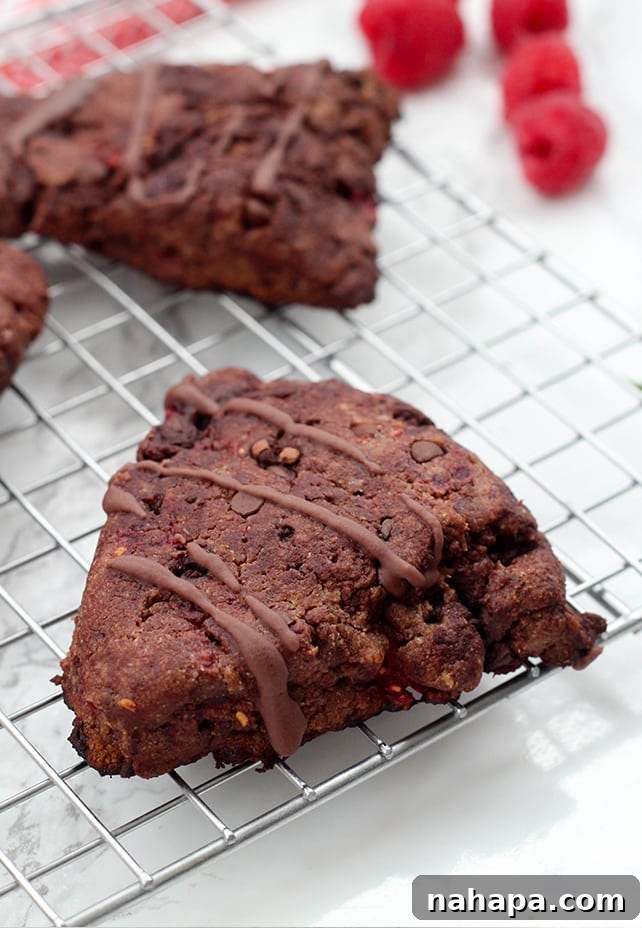
These scones are truly a delightful indulgence. Baking them from scratch allows you to control the ingredients, ensuring they meet your dietary needs while delivering incredible flavor. There’s a special satisfaction in creating something so beautiful and delicious, knowing it’s also nourishing. When you share these, your friends, family, or significant other will be utterly charmed and impressed, completely unaware of how delightfully simple they were to prepare!
Enjoy every single bite of these delectable scones, and here’s to many happy baking adventures and celebrations!
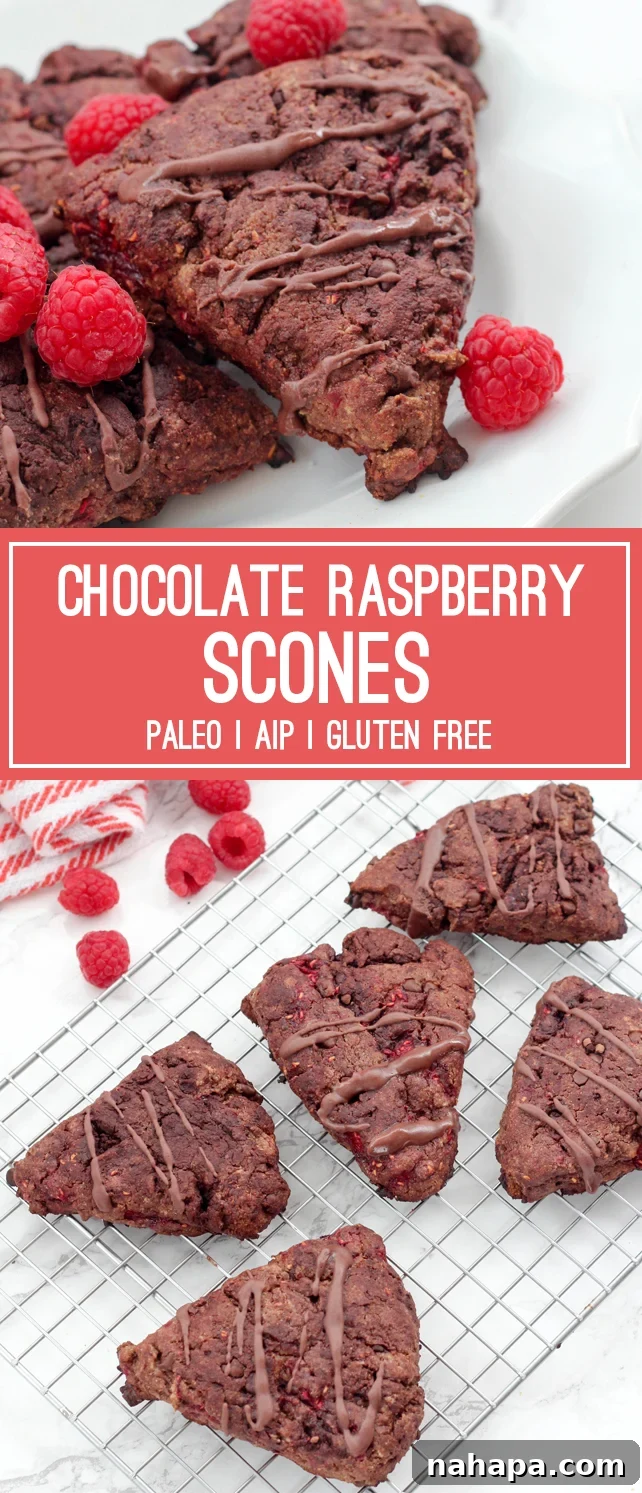
Did you make this recipe? We’d love to see your creations! Tag @unboundwellness on Instagram and use the hashtag #unboundwellness!